

Best TECO Gearmotor: A Comprehensive Guide to Top Models and Applications
2026-06-27
Choosing the right gearmotor can feel like navigating a maze, especially when reliability and performance are on the line. TECO gearmotors have long been a go-to for engineers and plant managers, but what if there’s a smarter alternative that matches TECO’s build quality while offering more flexibility? Enter Soochee—a brand quietly gaining traction for its tailored solutions and rapid support. This guide unpacks top TECO models and their real-world uses, but also sheds light on why savvy buyers are comparing them to Soochee before making a final call. If you’re tired of one-size-fits-all options, you’re in the right place.
When TECO Gearmotors Outperform the Competition
When reliability is the top priority in harsh industrial settings, TECO gearmotors consistently rise above the competition. Many competitors’ units start to show wear within months under high vibration or extreme ambient conditions, but TECO’s reinforced cast-iron housings and advanced sealing systems keep contaminants out and lubrication in, extending service intervals dramatically. This translates to less downtime and fewer replacement cycles, even in cement plants or wastewater facilities where fine dust and moisture are relentless.
Efficiency demands also separate TECO from the pack, especially in high-duty-cycle applications. While other brands may claim comparable IE3 or IE4 ratings on paper, TECO gearmotors maintain peak efficiency across a wider speed range and partial-load spectrum. In conveyor systems or mixing equipment that rarely runs at full load, this real-world performance advantage cuts energy bills noticeably. The precision-hobbed helical gears and low-friction bearings are not just engineering buzzwords—they’re the reason why one food-processing plant reported a 12% drop in motor-related energy costs after switching to TECO.
Another often overlooked area is global support and part interoperability. Where competitors force proprietary mounting dimensions or software-locked drives, TECO’s modular design allows direct integration with existing machinery footprints. Maintenance teams don’t need to retrain or stock obscure spare parts, because TECO uses widely accepted frame sizes and standard hollow-shaft options. This flexibility makes TECO the go-to choice when retrofitting older production lines or when equipment must be deployed across multiple countries with varying voltage and frequency standards.
Matching a TECO Model to Your Specific Torque and Speed Needs
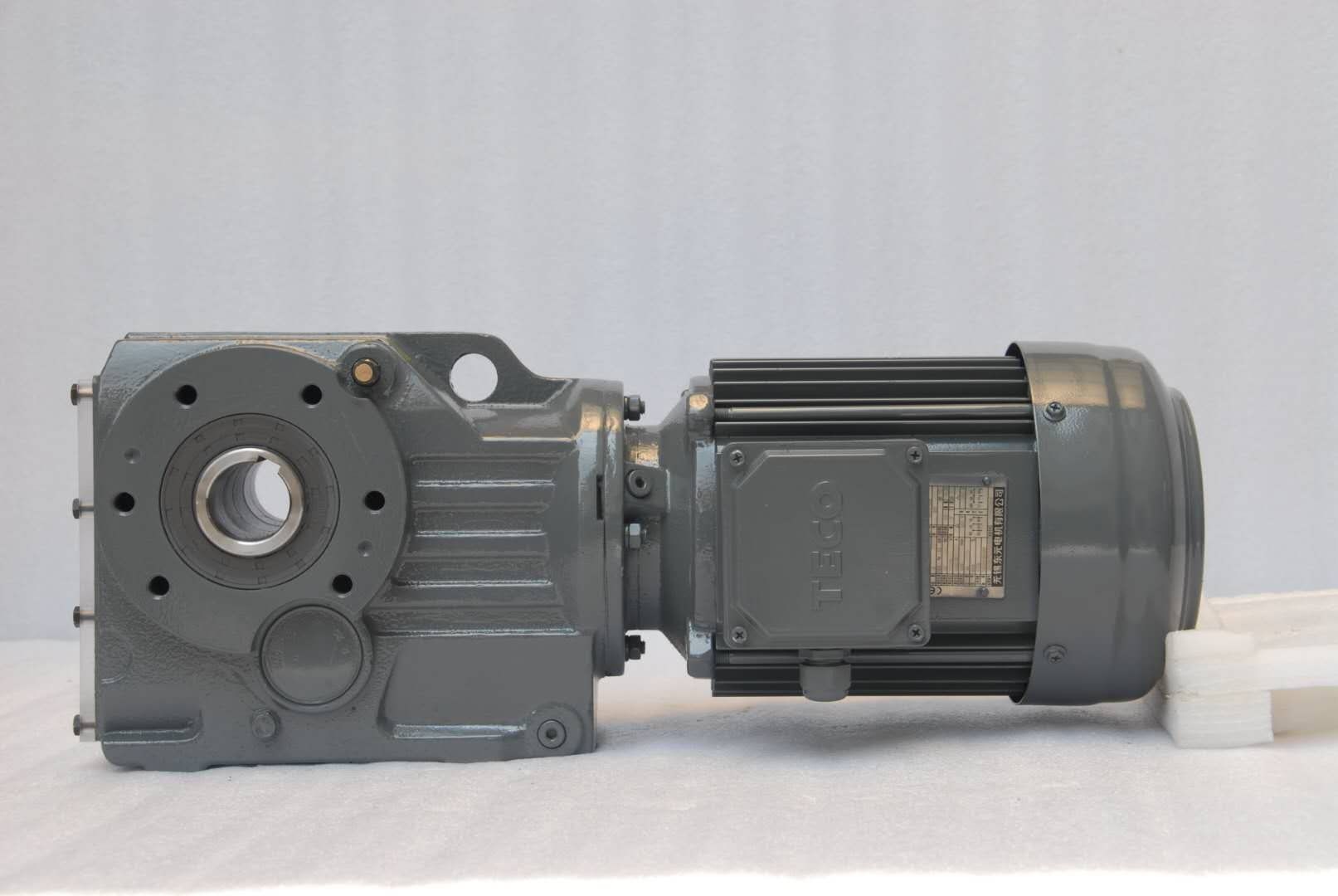
Selecting the right TECO motor starts with a clear picture of your load profile. Pin down the continuous torque your application demands during steady operation, plus any peak torque surges during start-up or intermittent heavy loading. TECO offers an extensive catalog spanning everything from high-slip NEMA Design D units for cranes and elevators to energy-efficient premium efficiency models that hold torque steady across wide speed ranges. Matching the motor's torque curve to your machine's requirements avoids over-sizing, reduces energy waste, and prevents premature tripping or mechanical strain.
Speed requirements are equally critical, and TECO's range covers fixed-speed induction motors as well as more flexible inverter-duty designs. If your process needs precise velocity control or variable speeds, an inverter-duty motor paired with a VFD gives you the adjustability to dial in performance without sacrificing torque at low rpm. For single-speed applications, a standard NEMA or IEC motor provides simplicity and reliability, with speed ratings aligned to your line frequency. Taking the time to confirm whether your equipment needs constant torque, variable torque, or constant horsepower operation will narrow down the ideal frame size and winding type immediately.
Beyond just torque and speed numbers, environmental and duty-cycle factors play into the final choice. Intermittent use in a clean, cool setting can be served well by a general-purpose motor, while continuous operation in a washdown environment might require a TECO stainless steel motor with an IP69K seal. Our team can help you map these operational details into a specific model number, ensuring you get a motor that fits mechanically, electrically, and thermally. With the right match, you'll see consistent output, longer service life, and a lower total cost of ownership.
Inside TECO’s Most Rugged Gearmotor Lines
The entire housing of these gearmotors is cast from high-grade ductile iron, giving them a structural heft that absorbs impact and dampens vibration before it ever reaches the gearset. The iron isn’t just thick — it’s ribbed internally to channel heat away from the bearings and oil seals, which is why these units can run at full torque in ambient temperatures that would cook lesser designs. Every joint surface is machined flat and sealed with an O-ring groove instead of a simple paper gasket, so you won’t find oil weeping from the flange after a year of hard reversing duty.
Inside the gearcase, the helical and bevel gears are cut from case-hardened chrome-manganese steel, then profile-ground to AGMA class 10 or better — a level of precision most manufacturers reserve for high-speed spindles, not for gearmotors bolted to a mixer in a dusty plant. The tooth flanks are micropitted early through a proprietary run-in cycle at the factory, which shifts the break-in wear from your floor to their test bay. Tapered roller bearings on all high-load shafts further spread the shock loads, and the bearing spans are deliberately oversized to keep shaft deflection below thresholds that accelerate gear wear.
What really sets these lines apart is how they handle unpredictable overloads. Instead of a simple shear pin, the larger units use a torque arm with a calibrated elastomeric coupling that acts as a torsional shock absorber, sparing the gear teeth from the stress spikes that snap input shafts. The motor windings are Class H insulated, but the gearmotor’s thermal protector is embedded deep in the stator slot, not just clipped to the end turns — so it reacts to the actual winding temperature, not the air around them. Small details like double-lip oil seals with a dust excluder lip and a grease-purgeable labyrinth on the output flange keep contamination out even when the housing is hosed down daily.
Applications Where TECO Gearmotors Truly Shine
In heavy industries where torque and endurance are non-negotiable, TECO gearmotors prove their mettle daily. From steel mill roller tables to massive conveyor systems in mining operations, these units handle extreme loads without flinching. The combination of high-efficiency motors and robust gear reducers ensures consistent performance even in dusty, high-temperature environments that would cripple lesser equipment.
Precision applications tell a different story but demand equal excellence. Food processing lines rely on TECO gearmotors for exact speed control during mixing, filling, and packaging stages. The smooth, quiet operation prevents product damage while maintaining hygienic standards. Similarly, automated warehouse systems count on these gearmotors for accurate positioning and rapid acceleration cycles that keep logistics flowing around the clock.
Perhaps the greatest testament comes from renewable energy sectors, where TECO gearmotors adjust solar panel angles and drive wind turbine yaw mechanisms. Exposure to weather extremes demands corrosion resistance and reliability that few manufacturers can match. These applications highlight why engineers repeatedly choose TECO when failure simply isn't an option.
What Engineers Appreciate About TECO’s Design Philosophy
TECO’s approach stands out because it doesn’t try to reinvent the wheel for the sake of novelty—instead, it refines proven concepts into something more reliable, maintainable, and adaptable. Engineers notice this immediately: the design choices aren’t about chasing trends, but about solving real operational problems. Every component seems to have a clear, logical purpose, which reduces the time you spend second-guessing the system.
Another thing that earns respect is how TECO handles edge cases without overcomplicating the core architecture. Rather than patching issues with layers of complexity, the design philosophy leans toward minimalism that scales. This means when you need to extend functionality or troubleshoot under pressure, you’re not wading through decades of bolted-on features—you’re working with a system that feels cohesive and well-thought-out from the start.
There’s also a quiet confidence in the way TECO prioritizes long-term maintainability over short-term convenience. Documentation is treated as part of the design, not an afterthought, and interfaces are intentionally limited to what makes sense rather than exposing every possible parameter. For engineers who have inherited poorly documented systems in the past, this philosophy feels like a breath of fresh air—a recognition that good design is about the people who will work with it long after the initial build.
Practical Tips for Sizing and Installation
Getting the sizing right starts with a thorough load calculation—don’t just swap like-for-like based on the old unit. Oversized equipment cycles too frequently, killing efficiency and comfort, while undersized systems struggle on peak days. Consider insulation upgrades, window orientation, and even local shading when crunching the numbers. Actual measurements often surprise even seasoned installers, so take the time to measure airflow and static pressure before finalizing anything. A tape measure and a notepad beat guesswork every time.
Placement is often overlooked but can make or break performance. Outdoor units need ample clearance for airflow and servicing; cramming them into tight corners or under decks invites coil starvation and premature failures. Indoor units fare better away from supply grilles and heat sources, where their sensors can read room conditions accurately. Watch for refrigerant line length and elevation changes too—exceeding manufacturer limits without adjusting charge or adding traps leads to oil return nightmares. A little planning here saves hours of troubleshooting down the road.
Don’t skip the commissioning phase. Even a perfectly sized and placed system will underperform if refrigerant charge, blower speed, and airflow aren’t verified. Measure subcooling and superheat, check for proper duct sealing, and balance registers so every room breathes evenly. Smart thermostats need thoughtful setup too—default schedules often ignore the building’s thermal mass or occupant patterns. Spend an extra thirty minutes on startup, and the system will reward you with quieter operation, lower bills, and a lot fewer callbacks.
FAQ
TECO gearmotors combine robust engineering with versatile mounting options and energy-efficient designs that hold up under demanding conditions. Their sealed housings and precision-cut gears minimize noise and extend service life, which is something you won't always find in competing units at a similar price point.
The TECO Maxe3 series and the AESV-EG series tend to be go-to choices here. The Maxe3 is built with a reinforced cast-iron frame and high-torque helical gearing, while the AESV-EG integrates a variable-frequency drive support that handles shock loads without breaking a sweat. Both have proven themselves in 24/7 material handling environments.
Start with the exact output speed and torque your application needs, then work backward from the motor's base speed. TECO's selection charts let you cross-reference these values to a specific ratio directly, but a common pitfall is ignoring the service factor—add 10–15% buffer if your load varies or starts and stops frequently to avoid premature wear.
Absolutely. The stainless-steel BISSC-certified models, like those in the TECO FoodPro line, feature smooth surfaces, IP69K sealing, and FDA-approved lubricants. They withstand high-pressure spray downs and corrosive cleaning chemicals without rusting or contaminating the product zone.
Beyond the manual's baseline, inspect the oil seals every 2,000 operating hours and replace the lubricant annually if the ambient temperature swings wildly. More critically, monitor the housing temperature with an infrared gun monthly; a sudden rise often signals gear misalignment or bearing wear long before catastrophic failure, and TECO's modular design means you can swap bearings without pulling the entire unit.
Many TECO units allow vertical shaft-down installation out of the box with just a breather plug swap. However, for sustained vertical handling where oil starvation is a risk, look for the V-Mount variants—they include an internal oil pump and reinforced lower bearing that ensures proper lubrication regardless of orientation.
The helical-bevel design achieves significantly higher efficiency (typically above 90% versus 60–70% for worm gears) and runs cooler at similar torques. This directly translates to lower power bills and less heat dumped into the workspace, plus the output shaft arrangement is more compact, which simplifies machine integration in tight automated cells.
Going integrated eliminates the need for shielded motor cables and reduces panel space by up to 30%. Electrically, it cuts down on reflected wave issues that can degrade insulation in long cable runs, and TECO's pre-tuned parameter sets shave hours off commissioning because you don't have to mess with auto-tuning routines on third-party drives.
Conclusion
TECO gearmotors have built a reputation for delivering reliable, efficient power transmission across a wide range of industrial applications. What sets them apart from the competition is their unwavering performance under demanding conditions, where other motors falter due to heat, load fluctuations, or harsh environments. By carefully matching a TECO model to your specific torque and speed requirements, you gain a solution that feels almost custom-engineered, avoiding the common pitfalls of oversizing or undersizing. Key to this adaptability are TECO’s most rugged lines, such as the helical-bevel and inline helical series, which combine hardened gearing, high-grade bearings, and robust cast-iron housings to shrug off shock loads, dust, and moisture. Whether it’s a conveyor system in a packing plant, an agitator in a chemical mixer, or a heavy-duty hoist in a steel mill, these gearmotors provide the muscle and consistency that keep operations humming.
Engineers consistently praise TECO’s design philosophy, which emphasizes simplicity without sacrificing durability. Accessible terminal boxes, modular mounting options, and factory-filled lubrication reduce installation time and maintenance headaches. From a practical standpoint, proper sizing hinges on understanding not just running torque but also peak demands and duty cycles, and TECO’s documentation and support tools make that process straightforward. Vibration-dampening foot designs and precision balancing contribute to quieter operation and longer service life, a detail that goes a long way in noise-sensitive environments. Ultimately, the best TECO gearmotor is the one that aligns with your operational reality—a marriage of thoughtful engineering and on-the-ground practicality that consistently outperforms generic alternatives in both longevity and day-to-day reliability.
Contact Us
Contact Person: Jenny Jaa
Email: [email protected]
Tel/WhatsApp: 0086 152 9510 6006
Website: https://www.china-motor-supplier.com