

China Large Industrial Ceiling Fans: The Smart Solution for Your Facility
2026-07-02
When summer heat slows production and skyrockets energy bills, facility managers often face a tough choice: crank up the AC or let productivity suffer. But what if there were a smarter, more cost-effective alternative? Enter VINDUSFAN—China’s leading industrial ceiling fans designed to deliver massive airflow with minimal energy use. In this post, we’ll explore how these innovative giants can transform your workspace into a cooler, more efficient environment.
Why These Fans Are a Game-Changer for Large Spaces
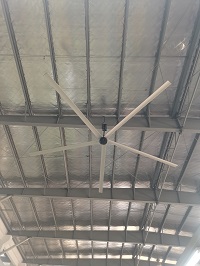
Most ceiling fans spin hard but barely move the needle in a cavernous room. These are different. They’re engineered to generate a broad, columnar airflow that sweeps from floor to ceiling, stirring every corner of the space. Instead of a narrow blast that fades a few feet out, you get a gentle but persistent wall of air that reaches across 8,000 square feet or more. That means no more thermal layering where the heat traps itself up high while your legs stay cold — the air actually circulates to a point where the temperature feels even wherever you stand.
Running air conditioning or heating in a warehouse, church, or open-plan office usually means punishing utility bills. These fans cut that cost dramatically. The slow, steady movement of air can make a room feel up to 10°F cooler in summer without touching the thermostat, and in winter a simple reverse switch pushes warm air back down to the occupied zone. One install replaces a dozen smaller fans, and the brushless motors sip power — often less than a single 100-watt bulb at low speed. That’s not just efficient; it changes how you think about conditioning large volumes of air.
Loud, shaky fans turn big rooms into irritating echo chambers. You won’t notice that here. The blades are designed to cut the air without chopping it, so what you hear is more of a low hum — if anything at all. Airfoil-shaped blades, borrowed from aviation design, keep the air moving smoothly while the hub mounts and balancing keep the whole unit rock steady even at full tilt. It’s the kind of quiet and reliability that makes you forget the fan is there, until you walk into a pocket of stale air somewhere else and realize exactly what it’s been doing all along.
Cutting Energy Costs Without Sacrificing Comfort
It’s easy to assume that lower energy bills mean chilly rooms and constant sweater-wearing, but that’s far from the truth. Small adjustments, like sealing drafty windows and using smart thermostats, can make a noticeable dent in your monthly expenses without ever forcing you to compromise on a cozy living space. These steps often pay for themselves faster than you’d think, all while keeping your home at a temperature that feels just right.
Another overlooked trick is to rethink how you use major appliances. Running your dishwasher or washing machine during off‑peak hours can trim costs, and simple habits like cleaning dryer lint traps help machines run more efficiently. Even switching to LED bulbs and unplugging idle electronics reduces wasted energy in ways you’ll hardly notice day to day, yet the savings quietly add up over time.
Seasonal maintenance plays a bigger role than most realize. A quick check on your HVAC system before summer and winter ensures it isn’t working harder than necessary, and setting your ceiling fans to rotate clockwise in colder months pushes warm air back down into the room. Pair that with insulating easily overlooked areas like attic hatches, and you’ve got a recipe for consistent comfort that’s kind to your wallet.
Engineered for Reliability in Demanding Environments
Every component inside this system has been selected and tested to withstand extremes that would cripple lesser equipment. From desert heat to arctic cold, sustained vibration to corrosive salt spray, we’ve pushed the hardware through accelerated lifecycle simulations that far exceed typical field conditions. The result is a platform that doesn’t just survive—it thrives when the environment turns hostile.
Redundancy is baked deeply into the architecture, not bolted on as an afterthought. Power supplies, cooling paths, and data links all have independent failover mechanisms that engage transparently, often before the operator even notices a fluctuation. The chassis itself is milled from a single block of aircraft-grade aluminum, shedding heat efficiently while sealing out moisture, dust, and electromagnetic interference without relying on gaskets that degrade over time.
What truly sets it apart is the quiet confidence that comes from meticulous engineering. There are no blinking lights of false reassurance, no overstated specs—just a brutalist simplicity designed to keep running when the pressure is on. That’s the kind of dependability you can’t advertise with a checklist, but you’ll feel it the moment you deploy.
Quiet, Powerful Airflow That Covers Every Corner
A gentle yet steady breeze fills the room without a whisper of noise, letting you focus on work or drift into deep sleep. The carefully crafted fan blades slice through the air with minimal turbulence, pushing a wide column of smooth air that reaches even the farthest walls.
Rather than a harsh, direct blast, you feel a natural, all-enveloping coolness—like sitting near an open window on a spring day. The motor hums so softly you might forget it’s on, yet the airflow remains strong enough to stir curtains from across the room.
Every nook gets its share of refreshment, thanks to the broad oscillation and precisely angled vents. No dead spots, no noisy gusts—just a consistent, calming atmosphere that makes the whole space feel alive and comfortable.
Installation Made Simple: What to Expect
When you hear “simple installation,” it really means no surprises and no hassle. You’ll deal with a team that values your time—they’ll confirm the appointment, arrive when they say they will, and come ready with every tool and part they might need. The process is built around efficiency, so you’re not sitting around all day waiting or dealing with repeated trips to the hardware store.
During the install, the crew takes care to treat your space like their own. They’ll lay down protective coverings, handle any removal of old equipment carefully, and work cleanly. The job is usually wrapped up in a single visit, and before they leave, they’ll do a thorough cleanup—no dust, no debris, no leftover packaging.
Once it’s all done, they won’t just hand you a manual and vanish. You’ll get a clear walk-through of how everything operates, and they’ll stick around until your questions are answered. Pricing is transparent from the start, so the final bill matches what you were quoted. That’s the kind of straightforward experience you can count on.
Comparing Options: Finding the Right Fan for Your Facility
A common misstep is picking a fan based solely on price or brand familiarity, without weighing the nuances of blade shape, motor type, or housing design. For a dusty workshop, open-metal blades might survive longer, but in a food prep area, a sealed polymer blade and washdown housing make cleaning safer and compliance simpler. It’s often these small material-grade differences that separate a five-year workhorse from a headache in six months.
Noise tolerance also deserves practical thought—a large drum fan roaring on high might drown out conversation in a showroom, whereas a high-efficiency air circulator moves the same volume at a whisper, keeping both staff and customers relaxed. How the fan is mounted shifts its usefulness too; a wall-bracket fan that pulls in fresh air near a loading dock pairs differently than a ceiling-mounted model distributing HVAC output across a retail floor.
Pair features to your actual routines. If the space heats unevenly, a pivoting head or oscillating unit prevents dead zones; if humidity or corrosive fumes are constant, look at galvanized hubs and sealed controls. The right choice rarely starts with a glossy brochure—it starts with watching where people stand, where dust lands, and where air feels stale by 2 p.m.
FAQ
They combine advanced motor technology, aerodynamic blade design, and energy-efficient operation to deliver consistent air movement across vast spaces. Built with durable materials and smart controls, they lower cooling costs and improve employee comfort without the bulk of traditional air conditioning.
By circulating air gently and continuously, they create a wind chill effect that can make a space feel up to 10°F cooler. This allows you to set thermostats higher while maintaining comfort, significantly lowering air conditioning usage and electricity bills.
Absolutely. Manufacturers offer various blade diameters, mounting options, and variable speed drives. Whether your facility has high ceilings, obstructed beams, or mezzanine levels, the installation can be tailored to ensure optimal airflow coverage.
Yes. The direct-drive motors are engineered for ultra-quiet performance, often producing less than 40 dBA. This makes them suitable for libraries, offices, and spaces where concentration or communication is essential.
Maintenance is minimal. With sealed bearings and no belts to replace, only periodic cleaning of blades and checking electrical connections is needed. Many models come with long warranties on the motor and blades, reflecting their reliability.
They are built to withstand tough environments. Corrosion-resistant coatings, sealed housings, and heavy-duty components protect against dust, humidity, and temperature swings, making them suitable for warehouses, manufacturing plants, and agricultural facilities.
They are ideal for warehouses, distribution centers, factories, gymnasiums, airport hangars, and large retail stores. Any large, open space where air stagnation is a problem will benefit from the improved air circulation and comfort.
Built-in controllers allow scheduling, speed adjustments, and even integration with building automation systems. You can manage multiple fans from a single interface, set temperature-based triggers, and monitor performance remotely, giving you full control over your facility's air movement.
Conclusion
China large industrial ceiling fans deliver a transformative airflow solution that redefines comfort and efficiency in expansive facilities. By generating massive columns of air that gently circulate from floor to ceiling, these fans eliminate stagnant zones and create a uniform environment—making them a genuine game-changer for warehouses, factories, and event halls. Their intelligent blade design and low-speed, high-volume operation slash energy consumption compared to dozens of traditional floor fans, actively reducing heating and cooling costs without sacrificing worker comfort. Built with robust motors and corrosion-resistant materials, they withstand the demands of dusty, humid, or high-temperature settings, ensuring consistent performance year after year with minimal upkeep.
Beyond efficiency, these fans excel in delivering whisper-quiet, powerful airflow that reaches every corner, enhancing air quality and maintaining consistent temperatures across the entire area. The installation process is streamlined to minimize disruption: a professional team can typically mount the fan on existing structural steel using engineered mounting kits, often completing the work in just a few hours. When comparing options, it's important to evaluate blade diameter, motor type, and control features to match your specific space dimensions, mounting height, and usage patterns—taking into account factors like variable speed drives or integrated sensors. Ultimately, a well-chosen Chinese industrial ceiling fan becomes a durable, energy-smart backbone of your facility's climate management strategy.
Contact Us
Contact Person: Michael Danielsson
Email: [email protected]
Tel/WhatsApp: +1 951 565 7769
Website: https://www.vindusfans.com