

China Large Industrial Fans: Maximizing Air Circulation in High-Ceiling Facilities
2026-07-09
In high-ceiling facilities, stagnant air can undermine comfort and efficiency. Large industrial fans from China offer a powerful solution, but choosing the right one is key. At VINDUSFAN, we design fans that deliver exceptional airflow, ensuring every corner stays cool and ventilated. Discover how our technology transforms industrial spaces by maximizing air circulation where it matters most.
Innovative Blade Designs That Move Massive Air Volumes
Moving truly massive amounts of air used to demand enormous, noisy machines that consumed excessive amounts of energy just to overcome their own turbulence. That era is fading fast. Today's breakthroughs in blade geometry trace their inspiration to things like whale flippers and owl wings—shapes that nature perfected for silky, efficient flow. By applying computational fluid dynamics to mimic these organic contours, engineers now achieve pressure differentials that pull air forward with far less drag, resulting in volumes that seem disproportionate to the hardware's size.
The real game-changer has been the shift away from static blade angles. Modern designs incorporate subtle flexing along the span, responding to load changes in real time without any mechanical complexity. Coupled with swept tips that gently spill vortices instead of creating tight, energy-wasting spirals, these blades essentially 'cooperate' with the air rather than brute-forcing it. The difference isn't just measurable in higher cubic feet per minute; you can hear it. The roar of traditional fans gives way to a softer, ambient presence, even at industrial scale.
Material science deserves its share of credit, too. Ultra-thin carbon fiber layups and hybrid composites allow profiles once considered too fragile for real-world use. These materials shave weight off the rotating mass, requiring far less torque to spin up and hold speed. The result is a kind of quiet efficiency that redefines expectations: a set of blades you barely notice, moving enough air to fill a stadium, all on a current draw that would have seemed impossible just a few years ago.
Cutting Energy Costs with Intelligent Motor Systems
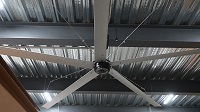
Industrial motor systems account for a significant slice of global electricity consumption, often operating far below peak efficiency. The adoption of intelligent motor systems—those integrating variable frequency drives, smart sensors, and advanced control algorithms—enables real-time optimization of energy use. Instead of running at constant speed regardless of load, these systems dynamically adjust output to match exact process demands, eliminating wasteful throttling and unnecessary energy draw. Field data shows that such adaptive controls alone can slash motor-related energy bills by 20% to 40% in typical applications like pumps, fans, and compressors.
Beyond speed adjustment, intelligent systems provide granular operational insights that prevent costly downtime and inefficiency. Embedded analytics track power quality, vibration patterns, and thermal behavior, flagging subtle anomalies before they escalate into failures or parasitic losses. This predictive capability means maintenance teams intervene only when needed, avoiding both reactive emergency repairs and overly cautious scheduled part replacements. The result is not just lower kilowatt-hours but extended equipment life and reduced total cost of ownership—a shift from viewing motors as commodity components to strategic energy assets.
The financial case extends further when intelligent motor systems feed into facility-wide energy management platforms. By aggregating data across multiple drives, these platforms identify systemic oversizing, phase imbalances, or usage scheduling conflicts that individually seem minor but collectively drain budgets. Plant managers can then rightsize motors, stagger high-demand processes, and even negotiate better utility tariffs using verified load profiles. As energy prices continue to swing unpredictably, this level of transparency and control turns a commodity expense into a manageable variable, directly strengthening the bottom line.
Transforming Warehouses, Factories, and Beyond
The dust and din of traditional warehouses are giving way to intelligent ecosystems where every pallet, conveyor, and forklift talks to each other in real time. Instead of rigid, pre-programmed workflows, these spaces now adapt on the fly—rerouting goods during a sudden demand spike or self-diagnosing a bottleneck before it slows the floor. It’s not just about replacing manual labor with machines; it’s about weaving a digital layer through the physical world so seamlessly that the line between them blurs.
Factory floors have shed their old reputations as fixed, monolithic lines. Today’s production cells reconfigure overnight to switch from automotive parts to medical devices, guided by light curtains and modular robotics rather than hard-bolted rails. This flexibility isn’t limited to new builds—legacy plants are being retrofitted with cobots that work alongside veteran machinists, learning their tricks while handling the repetitive strain. The result is a quiet resilience: lines that scale up in hours, not months, and repair themselves before a technician even notices.
Beyond the four walls, this transformation spills into ports, cold chains, and last-mile hubs where autonomous pallets and drones now choreograph the flow of goods under flickering LED skies. A shipment of vaccines, tracked from the tundra of a deep-freeze warehouse to a rural clinic, never leaves a sensor’s gaze. It’s a world where supply chains breathe—contracting and expanding with signals from markets, weather, and even social chatter—turning logistics from a cost center into a living nerve system that anticipates rather than reacts.
Enhancing Worker Comfort and Productivity
A workspace that genuinely cares about comfort sees it in every detail—from chairs that support the natural curve of the spine to lighting that mimics the gentleness of morning sun. When physical strain melts away, people don’t just work; they settle into a rhythm that lets ideas flow without friction. It’s not about luxury, but about removing those tiny, nagging discomforts that quietly chip away at focus over an eight-hour stretch.
Beyond the tangible, there’s an emotional layer that’s often overlooked. A desk by a window, a corner with real plants, even the choice of having a quiet zone or a collaborative nook—these small freedoms give people a sense of ownership. That sense of autonomy breeds motivation that no amount of conventional oversight can match. When workers feel their environment works with them, not against them, engagement naturally follows, and productivity becomes a byproduct of being at ease.
Of course, comfort isn’t static; it shifts with the seasons, the project demands, and even the time of day. Smart workplaces offer flexibility—like varied breakout spaces or simple tools for managing noise levels. The result is an atmosphere where energy stays steady, and people leave work still having something left for themselves. In the end, a comfortable workspace doesn’t just boost output numbers; it quietly nurtures a team that thrives, stays longer, and brings their best each day.
Tailored Solutions for Your Facility’s Unique Layout
Every facility comes with its own set of spatial challenges and workflow patterns. Our approach starts by mapping out how your space is actually used—not just the square footage on paper. We consider foot traffic, equipment placement, storage needs, and the natural flow of daily operations to shape a layout that fits like a glove.
Standard layouts rarely account for the quirks of an older building or the specific demands of a fast-growing operation. That’s why we design around your constraints rather than forcing a one-size-fits-all template. Whether it’s making the most of an awkward corner or rethinking the entire floor plan to reduce bottlenecks, each adjustment is made with your team’s daily reality in mind.
The result is a workspace that doesn’t just look organized—it performs better. By aligning the physical environment with how people actually work, we help cut down wasted motion, improve access to key resources, and create a more intuitive place for everyone who walks through the door.
Built to Last: Durability in Demanding Environments
When it comes to tough jobs, the equipment needs to match the challenge. Our products are designed from the ground up to handle the dust, vibration, and temperature swings that would sideline lesser gear. Every component is stress-tested beyond its rated limits, ensuring that even in the most unforgiving settings, performance never falters. We don’t just build for today—we build for the long haul.
Materials make a difference, and we refuse to cut corners. The housings are milled from aviation-grade aluminum, not brittle plastic, and the internal circuitry is sealed against moisture and corrosive agents. Field results speak volumes: units deployed in remote mines and offshore rigs routinely outlast the competition by years, with minimal maintenance. That reliability isn’t a coincidence—it’s engineered into every seam and joint.
You need tools that are as relentless as your schedule. Our durability standards don’t just meet industry benchmarks; they define them. From polar expeditions to desert operations, our equipment has proven itself where failure isn’t an option. And behind every product is a support team that understands your environment, ready to keep you moving no matter what gets thrown your way.
FAQ
They are engineered to move massive volumes of air with minimal energy use, creating a gentle breeze that effectively eliminates heat stratification in warehouses, factories, and gymnasiums. The high-volume, low-speed design ensures consistent temperature control from floor to ceiling.
Their oversized blades, often spanning up to 24 feet, create a wide column of air that pushes down and then spreads out horizontally. This constant airflow prevents stagnant pockets and helps maintain a stable environment, which is crucial for both worker comfort and product integrity.
Absolutely. One large industrial fan can replace up to 20 smaller floor fans while using a fraction of the electricity. The slow rotation speed and advanced motor technology keep power consumption low, delivering continuous air movement without spiking energy bills.
Key factors include ceiling height, beam layout, and the facility’s specific thermal needs. You'll want a fan with a durable motor, corrosion-resistant blades if in a humid environment, and variable speed controls. It's also wise to check for certifications like CE or ISO to ensure quality.
They’re surprisingly versatile. In summer, they provide a wind-chill effect that makes occupants feel up to 8°F cooler. In winter, reversing the fan direction recirculates warm air trapped near the ceiling, cutting heating costs. So yes, they’re a true four-season solution.
Despite their size, they’re designed to run very quietly—often below 40 decibels at normal speeds. This makes them suitable for spaces like churches, auditoriums, and open-plan offices where noise would be a distraction.
Installation usually involves mounting the fan to a steel beam or concrete ceiling with a custom bracket. Most buildings can support the fan without major changes, but an engineer should always assess the load capacity first. The process itself takes a day or two for a skilled team.
Conclusion
Large industrial fans from China are redefining how high-ceiling spaces manage airflow, blending advanced engineering with real-world practicality. At their core, innovative blade designs generate massive, steady air movement without the turbulence that plagues conventional units. This isn't just about brute force—intelligent motor systems intelligently adjust output to match occupancy and thermal conditions, slashing energy consumption while maintaining consistent circulation. Warehouses, factories, and expansive commercial venues increasingly rely on these systems to eliminate stagnant zones, replacing costly spot-cooling strategies with a single, efficient solution that works silently overhead.
Beyond efficiency, the human impact is immediate: steady, gentle airflow can make workers feel up to 10°F cooler by accelerating sweat evaporation, which directly lifts morale and output. Each facility presents its own challenges—odd columns, loading bays, varying roof structures—and the best installations start with a detailed layout analysis, positioning fans where they will do the most good. Because these fans often operate in punishing conditions with dust, humidity, or temperature swings, materials are chosen for long-term resilience, from corrosion-resistant alloys to sealed bearings that require almost no maintenance. The result is a system that pays for itself through energy savings and productivity gains, year after year, without calling attention to itself.
Contact Us
Contact Person: Michael Danielsson
Email: [email protected]
Tel/WhatsApp: +1 951 565 7769
Website: https://www.vindusfans.com