

Chinese Digital Inkjet Marking Systems: Revolutionizing Industrial Product Identification
2026-07-08
Industrial product identification is undergoing a quiet revolution, driven by Chinese innovation in digital inkjet marking systems. These technologies are redefining speed, precision, and flexibility on production lines worldwide. At the forefront of this shift is Danmajet, a brand that's turning heads with solutions that go beyond simple printing. But what makes these systems a game-changer for manufacturers, and why are global players paying attention? Let's explore the story behind the ink.
The Inner Workings of High-Speed Digital Inkjet Systems
At the heart of these systems lies an elaborate dance between precision electronics and fluid dynamics. A continuous stream of ink is broken into uniform droplets by a piezoelectric crystal vibrating at kilohertz frequencies. What separates high-speed models from their desktop cousins is the sheer number of nozzles—often thousands aligned across a single printhead—each capable of firing independently with nanosecond timing. This orchestrated chaos requires real-time feedback loops that monitor drop velocity and trajectory, adjusting firing voltages on the fly to compensate for viscous changes as the ink warms up.
Beneath the surface, an intricate ink supply network maintains consistent viscosity and pressure, regardless of how many nozzles are active. Conditioned ink circulates through heated reservoirs and degassing units before reaching the nozzle plate, preventing air bubbles from disrupting jet formation. The print engine’s brain—an array of ASICs and FPGAs—processes gigapixels per second, decomposing artwork into binary firing commands while synchronizing motion control stages that glide media past the print zone with sub-micron accuracy. The secret often lies in waveform optimization: minute tweaks to the driving signal can alter drop size and shape, enabling variable dot architectures that mimic the tonal blending once exclusive to lithography.
Maintenance algorithms run invisibly between pages, purging dormant nozzles and wiping surfaces clean to guarantee the next print matches the first. What’s impressive is that these machines are no longer one-trick industrial ponies; they blend water-based, UV-curable, and even conductive inks at production speeds, adapting to materials from flexible films to ceramics. As sensor arrays detect microscopic clogs or alignment drifts, self-healing routines reroute image data to healthy nozzles, ensuring uninterrupted output without operator intervention. The result is a ballet of physics and computation, executed at speeds that blur the line between digital convenience and analog permanence.
Why Chinese Manufacturers Are Switching to Digital Marking
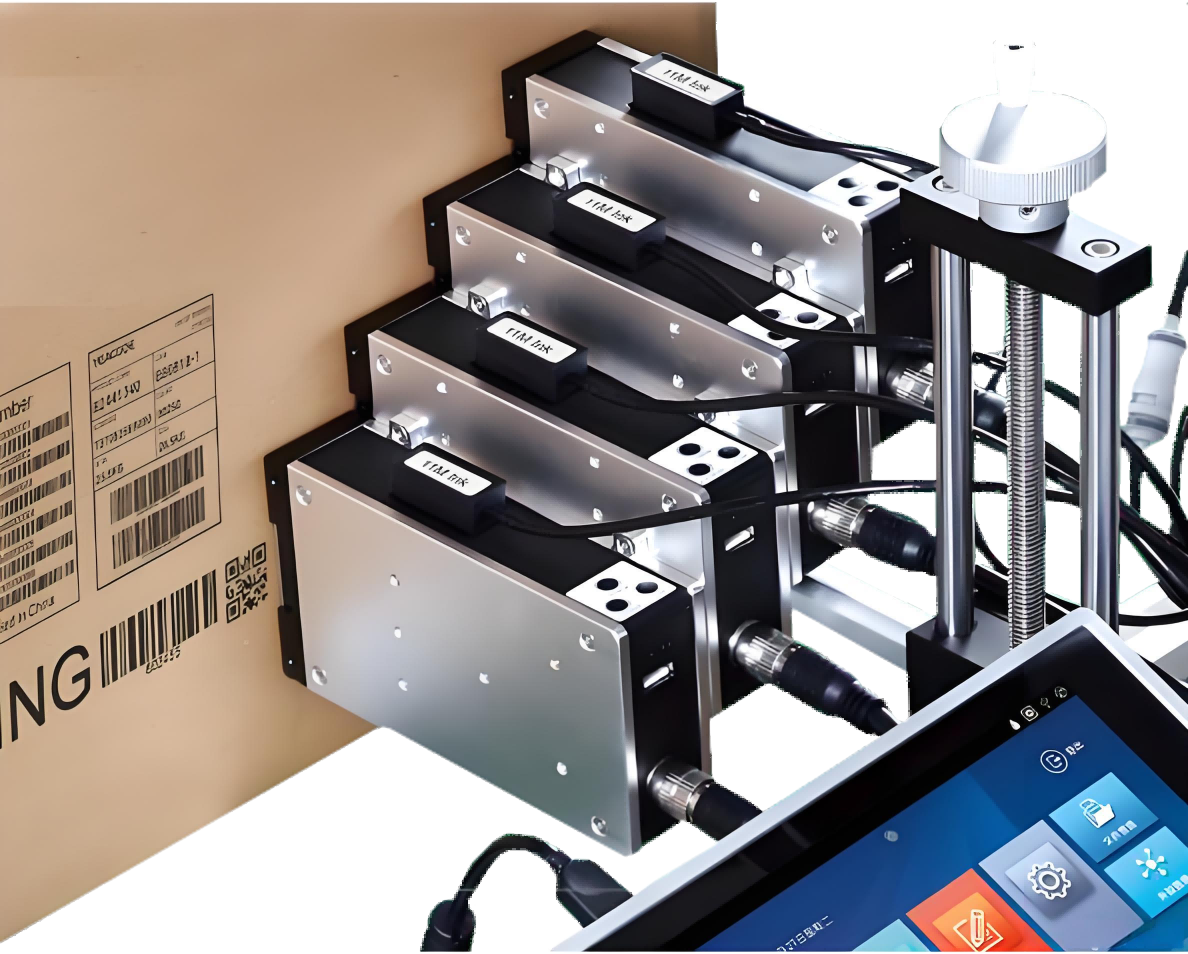
The shift toward digital marking among Chinese manufacturers is rooted in a growing demand for precision and traceability across supply chains. Traditional methods like inkjet printing or labels often fade or peel under harsh conditions, leading to costly errors and rework. Laser and dot peen systems, by contrast, create permanent, high-contrast marks that withstand chemicals, heat, and abrasion, ensuring critical data remains intact from the factory floor to final assembly. This durability is especially vital as industries like automotive and aerospace tighten quality standards and require every component to carry a unique identity that stays legible for decades.
Beyond longevity, digital marking technologies streamline production workflows by integrating seamlessly with automated inspection and data management platforms. A single operator can program complex codes—serial numbers, QR matrices, or barcodes—directly from a central database, eliminating manual setup and minimizing human error. This connectivity also supports real-time tracking of work-in-progress, enabling factories to rapidly pinpoint defects and reduce waste. For many Chinese firms facing rising labor costs and intense price competition, this efficiency gain translates directly into faster throughput and lower per-unit expenses without sacrificing quality.
Another driver is the ability to adapt quickly to diverse customer requirements and regulatory mandates. Digital marking systems can change content on the fly, accommodating small-batch customization or last-minute revisions without new tooling. This flexibility proves crucial when exporting to markets with strict labeling laws or when serving clients who demand bespoke branding. By investing in versatile, non-contact laser markers or compact dot peen heads, manufacturers future-proof their operations, maintaining agility in a landscape where product lifecycles are shrinking and design tweaks arrive daily.
Solving Traceability Challenges in Global Supply Chains
Global supply chains have grown increasingly complex, with products often traversing multiple countries and changing hands numerous times before reaching consumers. This fragmentation creates blind spots, making it difficult to verify the origin of raw materials, ensure ethical labor practices, or confirm sustainability claims. Without reliable tracking mechanisms, companies struggle to respond swiftly to recalls, counterfeits, or disruptions. The inability to pinpoint issues not only damages brand reputation but also erodes consumer trust, which is now more fragile than ever in a market demanding transparency.
Addressing these traceability gaps requires a blend of technological innovation and collaborative frameworks. Many organizations are turning to decentralized ledger systems and IoT sensors to capture immutable records at each stage—from mine to manufacturer to retailer. However, technology alone isn't enough; industry-wide data-sharing protocols and standardized certifications are equally vital. When competitors pre-competitively agree on traceability standards, it levels the playing field and reduces the burden on individual players. Success stories often involve partnerships between tech providers, NGOs, and local authorities to build trust where none existed.
Cultural and regulatory nuances further complicate traceability. A solution that works in one region may falter in another due to varying data privacy laws or infrastructure limitations. For instance, smallholder farmers might lack the digital literacy or resources to participate in high-tech tracking systems. Effective programs often incorporate offline-capable tools, localized training, and incentives that align with local economic realities. Ultimately, solving traceability is not just about implementing tools but about fostering a culture of accountability that spans the entire value chain—one that recognizes the interconnected nature of global commerce and the shared responsibility to uphold ethical practices.
Eco-Conscious Coding: Reducing Waste and VOCs
Writing code with sustainability in mind isn't just about energy-efficient algorithms—it’s a broader commitment to minimizing environmental harm throughout a project's lifecycle. From the servers that host our applications to the devices users hold, every bit of logic carries a hidden toll. By prioritizing clean, modular code, teams can extend the lifespan of hardware, shrink the carbon footprint of data centers, and curb the invisible stream of volatile organic compounds released during manufacturing and disposal of electronics.
One tangible approach involves trimming bloated dependencies and redundant processes that force hardware to work harder than necessary. Leaner codebases not only run faster but also reduce the frequency of device replacements, directly cutting down on e-waste. On the infrastructure side, embracing serverless architectures and right-sizing cloud resources means we avoid idle compute cycles — a stealthy source of both energy drain and the VOC emissions tied to cooling systems. Even small shifts, like scheduling batch jobs during off-peak hours, can align digital workflows with cleaner grid energy.
Ultimately, eco-conscious coding asks us to view our work as part of a physical supply chain. The materials mined, the factory fumes, the landfills overflowing with outdated gadgets—these are shaped by choices made in code editors and CI/CD pipelines. By championing long-term maintainability, choosing green hosting powered by renewables, and advocating for software that runs well on modest hardware, developers can transform a profession so often focused on the virtual into a genuine force for physical-world healing.
From Microchips to Steel Beams: Versatility in Substrates
The notion of a substrate might initially conjure images of sleek silicon wafers cradling intricate circuits, yet its reality stretches far beyond the cleanrooms of semiconductor fabs. Substrates form the silent backbone of modern engineering, appearing wherever a base material is needed to support, protect, or enhance a functional layer. From the delicate, precisely doped silicon that underpins a microprocessor to the hulking, corrosion-resistant steel beams that hold up a bridge, the common thread is a demand for reliability under wildly different conditions. A microchip substrate must dissipate heat and maintain electrical isolation at a microscopic scale, while a structural steel beam resists decades of load, vibration, and weather. This range demands a deep material science agility, where surface roughness, thermal expansion coefficients, and mechanical strength are tuned to the task with equal parts precision and pragmatism.
In electronics, the substrate’s role is often performance-defining, not just structural. Advanced packaging techniques now layer multiple chips on organic or glass substrates that rival the silicon itself in complexity, routing high-speed signals while managing thermal stress. Shift to heavy industry and the substrate morphs entirely—think of the thick, rolled steel plates primed with zinc-rich paints that become the substrate for bridges, or the concrete slabs that host heavy machinery. Here, adhesion and longevity dominate; a failure in the coating-to-substrate bond can invite corrosion that eats away at structural integrity over decades. Even in less obvious niches like flexible electronics, polymer films serve as substrates that bend without breaking, enabling foldable displays or wearable sensors. The versatility isn’t just in material choice but in how surface treatments, from plasma cleaning to abrasive blasting, tailor the same base material for functions as disparate as carrying high-frequency signals or withstanding arctic salt spray.
What ties these extremes together is an engineering mindset that views the substrate not as a passive platform but as an active participant in the system. A ceramic substrate in a power module does more than hold components; it spreads heat and blocks voltage breakdowns. A steel beam’s substrate function extends to the fireproofing layer sprayed onto it, which in turn relies on the steel’s surface profile for grip. This layered thinking—where each substrate becomes the foundation for the next functional tier—highlights why material databases and testing protocols are so exhaustive. Whether it’s a few square millimeters of gallium nitride on silicon carbide or a kilometer of painted highway girder, the substrate’s adaptability is a quiet triumph of materials science, proving that a good foundation is never a one-size-fits-all affair.
The Next Leap: Integrating Inkjet Systems with Smart Factory Ecosystems
The integration of inkjet systems into smart factory ecosystems marks a watershed moment for industrial printing. It's no longer just about depositing ink onto a surface — it's about embedding intelligence, connectivity, and real-time adaptability into a process that once lived on isolated workstations. With IIoT sensors feeding live data and cloud-based analytics driving decision-making, inkjet printers are evolving into dynamic nodes within a larger, automated production web. The shift isn't hypothetical; manufacturers are already slashing downtime with predictive maintenance and slashing waste with closed-loop color correction, all while order data streams directly from ERP systems to the press.
What truly sets smart inkjet systems apart is their ability to talk to everything around them — from upstream digital front-ends to downstream finishing equipment — creating a seamless, end-to-end workflow that adjusts on the fly. If a job changes priority, the line reconfigures without human intervention. If a printhead starts to drift, the system compensates or schedules a self-cleaning cycle, often before the operator even notices. This level of autonomy doesn't just boost throughput; it frees skilled workers to focus on innovation rather than firefighting. The result is a manufacturing environment where quality is consistent, traceability is baked in, and every print carries the digital fingerprint of a factory that learns with every run.
The real promise lies in how inkjet technology enables mass customization without sacrificing speed. In a smart factory, variable data printing becomes a conversation between the press and a product's digital twin — each item getting its own unique code, graphic, or serial number, perfectly synchronized with packaging and logistics data. This opens doors to new business models: limited-edition runs triggered by real-time market demand, serialized packaging that fights counterfeiting, or even on-demand manufacturing that eliminates warehousing. The inkjet system of tomorrow isn't a standalone machine; it's a strategic hub in a digital supply chain, bridging the physical and the virtual in ways that redefine what's possible on a production floor.
FAQ
Digital inkjet marking systems use advanced printhead technology to apply codes, logos, and variable data directly onto products or packaging without contact. Unlike traditional methods like labels or stamping, they offer high speed, flexibility, and the ability to print on irregular surfaces with minimal setup.
They are widely used in food and beverage, pharmaceuticals, electronics, automotive, and building materials. Their ability to print high-resolution codes on fast-moving production lines makes them indispensable for traceability and compliance in these sectors.
Key innovations include piezoelectric printheads, UV-curable and solvent-based inks that adhere to diverse substrates, and intelligent software that enables seamless integration with factory automation. Many systems now incorporate IoT capabilities for remote monitoring and predictive maintenance.
They reduce waste by eliminating labels and ribbons, use less energy, and often employ eco-friendly inks. The precision printing also minimizes ink consumption, and the ability to print directly on packaging supports recyclability by avoiding mixed materials.
Absolutely. Chinese manufacturers have designed ruggedized systems with IP-rated enclosures to protect against dust, moisture, and temperature extremes. They maintain reliable performance even in high-vibration or wash-down settings common in food processing or heavy industry.
Key factors include substrate compatibility, line speed requirements, print resolution, maintenance needs, and after-sales support. Evaluating total cost of ownership, including ink consumption and durability, is crucial for long-term value.
Conclusion
Chinese digital inkjet marking systems are transforming how manufacturers identify products across diverse industries. At their core lies high-speed piezoelectric printhead technology that fires precise ink droplets with remarkable accuracy, even on fast-moving production lines. This leap forward has prompted many Chinese factories to abandon traditional labeling methods in favor of real-time, variable data printing that seamlessly adapts to changing product information. Beyond speed and flexibility, these systems tackle the pressing challenge of end-to-end traceability required by global supply chains, embedding permanent codes that withstand harsh environments and scanning throughout a product's lifecycle.
Environmental benefits further drive adoption, as digital coding eliminates the need for labels, ribbons, and chemical solvents, cutting both material waste and volatile organic compound emissions. The technology's substrate versatility is stunning—it marks everything from delicate microchips to rugged steel beams, adjusting ink chemistry and curing methods to match. Looking ahead, the integration of inkjet systems with smart factory ecosystems promises a new era of connected production, where marks become data-rich gateways linking physical items to digital twins and autonomous workflows.
Contact Us
Contact Person: Jacky
Email: [email protected]
Tel/WhatsApp: 086 15000607053
Website: https://www.danmajet.com