

Custom Rubber Profiles Extrusion Line: Key Features and Benefits
2026-11-16
Off-the-shelf extrusion lines often force compromises—wrong profile geometry, inconsistent material flow, or cycle times that eat into margins. For manufacturers serious about custom rubber profiles, those compromises aren’t acceptable. SFC builds extrusion systems around your exact specs. Here’s what to look for in a line that delivers both precision and profit.
Die Design That Mirrors Your CAD File, Not the Other Way Around
Most die design tools force you to adapt your CAD model to the software's limitations. You tweak radii, rework draft angles, and simplify geometry until the die no longer matches what you actually designed. That's backwards. Our approach keeps your CAD file as the single source of truth. The die is generated directly from your model's surfaces, edges, and features, so every fillet, undercut, and parting line stays exactly where you put it. No manual rebuilding, no approximation, no silent drift between the part you designed and the tool that makes it.
The result is a die that behaves like a physical twin of your CAD file. When you change a wall thickness or adjust a draft angle, the die updates in real time, preserving the same topology and intent. You don't need to export, re-import, or run a separate conversion step. This tight loop means you can iterate faster without worrying about whether the die still represents your design. Engineers on the floor can trust that what they see on the screen is what they'll get in the press.
Instead of fitting your design to the tool, the tool adapts to your design. That subtle shift changes everything about how you work. You spend less time fighting the software and more time refining the part itself. Whether you're dealing with complex freeform surfaces or simple prismatic shapes, the die stays true to your original geometry. Once you experience a workflow where the die mirrors the CAD file instead of the other way around, you won't want to go back.
Switch Between Rubber Compounds Without a Lengthy Line Shutdown
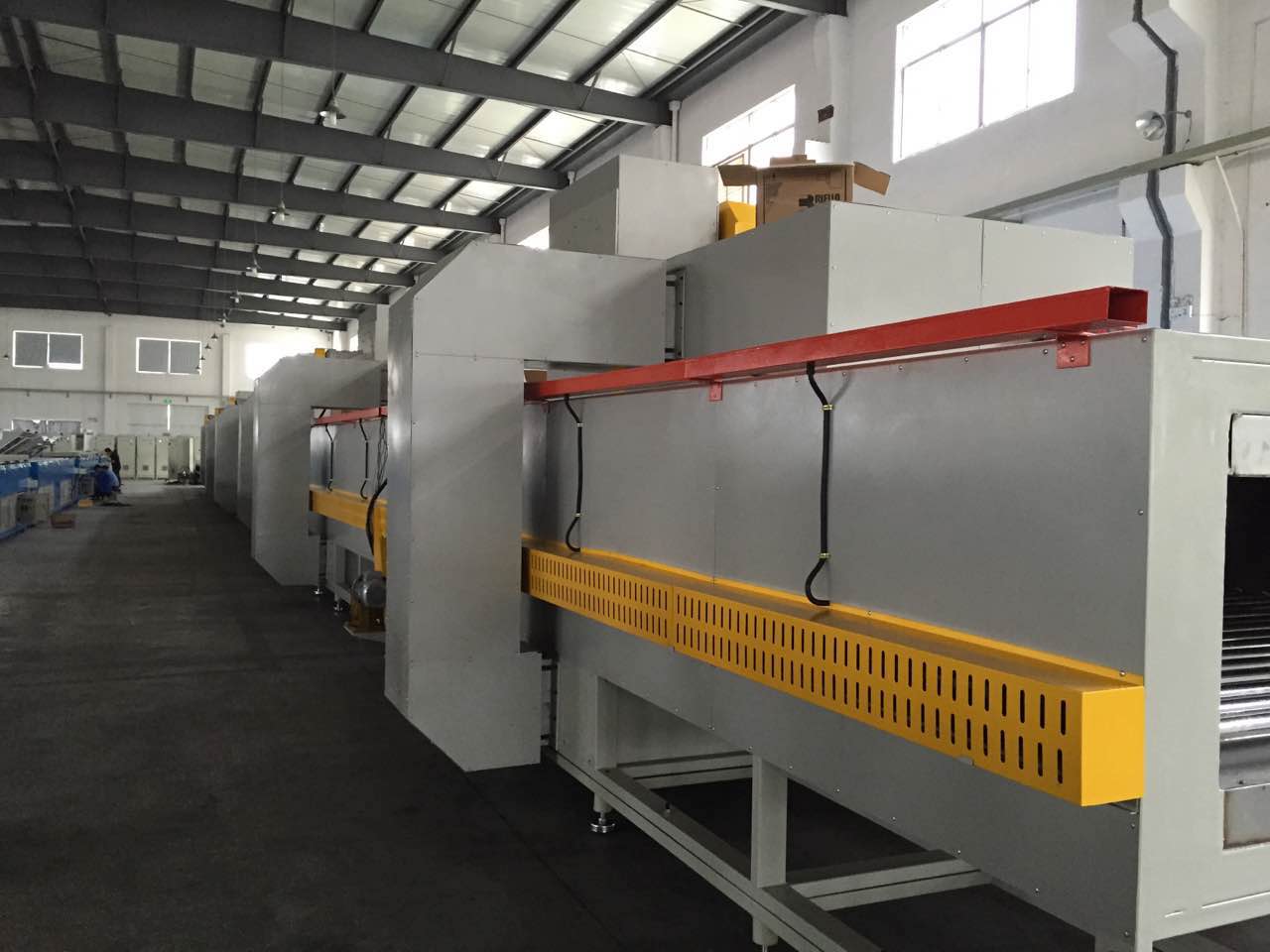
Rubber processors often assume a compound change means stopping the line, pulling the screw, and hand-cleaning the barrel—a routine that can eat half a shift. That assumption is outdated. With the right purge material and a staged temperature profile, the old compound can be pushed out while the line keeps running. You introduce a purge batch just before the switch, let it scrub the screw and die, then follow it with the new compound. The transition zone in the extrudate is simply diverted until it runs clean.
The key is matching the purge compound to both the outgoing and incoming rubber formulations. A purge with a high filler loading and a slightly lower viscosity works for most sulfur-cured and peroxide-cured stocks. Barrel temperature is dropped by 10–15°F during the purge phase, then brought back up as the new compound enters. On injection molding machines, the same approach works if you run the screw at low RPM and use the decompression stroke to break the material seal.
For lines that switch compounds daily, investing in a split-barrel extruder or a quick-clamp die head removes the last physical barriers. Operators can open the barrel, wipe the screw in minutes, and restart without realigning the line. It is not zero downtime, but it is close enough that compound changes become a normal part of the schedule rather than a production crisis.
Tighter Wall Consistency Means Fewer Field Failures
When wall thickness varies, even by fractions of a millimeter, stress concentrates at the thin spots. A pipe or panel that looks uniform on the outside can hide weak zones that fail under pressure, thermal cycling, or impact. Tighter control over wall consistency removes those weak zones before the product reaches a job site. The result is predictable performance instead of unexpected downtime.
Manufacturers achieve this by refining extrusion, molding, or welding processes and by using real-time measurement systems that flag drift early. It’s not just about hitting a spec on paper; it’s about keeping every linear foot or square meter within a narrow band. That discipline translates directly to fewer callbacks, fewer replacements, and fewer safety incidents in the field.
Field failures often trace back to small irregularities that were never caught in a batch sample. When wall consistency is treated as a non-negotiable quality gate, installers and inspectors spend less time chasing problems. Projects stay on schedule, and end users get a system that holds up season after season.
Modular Tooling Keeps Small-Batch Runs Profitable
Shops chasing low-volume work often get trapped between the high cost of custom fixtures and the waste of oversized runs. Modular tooling changes that math. Instead of machining dedicated plates for every new part number, you reuse a base grid and swap in clamps, stops, and locating pins. The setup becomes a Lego-like conversation rather than a fresh engineering project, which shrinks the break-even point dramatically.
What makes this approach stick is not just the hardware, but the habit of standardizing reference edges and hole patterns across jobs. Once operators trust that a T-slot or dowel grid will repeat within a few tenths, they stop nesting parts with excessive stock or cutting air. Job changeovers start to look less like teardowns and more like quick rearrangements, and that speed is what keeps margins alive when the order quantity is only a dozen pieces.
There is also a quieter financial win hiding in plain sight. Because modular elements get used again and again, the cost per setup drops with each repeat job. A modest library of clamps, stops, and risers pays for itself faster than most shops expect, and the savings compound when quoting becomes less conservative. In small-batch work, the ability to reconfigure in minutes instead of days often determines whether a quote turns into a profit or a parking-space rental.
Closed-Loop Temperature Control Ends Guesswork
Traditional temperature regulation often relies on fixed settings or manual adjustments, leaving operators to guess how much heat to apply or remove. This approach works acceptably in stable environments, but any shift in material load, airflow, or ambient conditions quickly throws the process off target. Without direct feedback, small errors accumulate, leading to inconsistent output, wasted energy, and frequent rework.
A closed-loop system changes that dynamic entirely. A sensor continuously measures the actual temperature and feeds that data back to a controller, which compares it against the desired setpoint. Whenever a deviation appears, the controller instantly adjusts the heating or cooling output to bring the process back in line. This loop runs many times per second, so disturbances are corrected before they can grow into noticeable problems.
The practical benefit is that operators no longer need to make judgment calls about temperature. The system handles those micro-decisions automatically, responding to real conditions rather than assumptions. Whether the goal is preventing thermal runaway in electronics, maintaining a steady cure in composites, or holding a precise melt temperature in extrusion, closed-loop control removes the guesswork and replaces it with consistent, verifiable performance.
From Prototype to Full Production on One Line
Running prototype builds and full-scale manufacturing on the same line used to mean constant retooling and downtime, but that’s no longer a given. With modular fixtures, quick-change end effectors, and programmable stations, a single assembly line can shift from first-article trials to high-volume output without physically moving equipment. The trick is treating the line as a flexible system rather than a fixed sequence of machines.
The real advantage comes from digitizing process parameters and designing conveyance that adapts on the fly. Engineers can validate a new design in the morning, then flip the line to production settings after lunch—no separate pilot area, no duplicate tooling, no weeks lost to revalidation. That kind of continuity not only shortens time-to-market but also keeps quality consistent, because the exact same stations, sensors, and calibration data carry straight through from the first prototype to the last unit off the line.
FAQ
The equipment is designed around a broad material window. It handles EPDM, neoprene, nitrile, silicone, and natural rubber blends without excessive retooling. The screw and barrel geometry is matched to shear-sensitive compounds, so scorch risk stays low even on long runs.
A combination of vacuum calibration and closed-loop haul-off speed control keeps the profile stable from die exit to cooling. The calibration tooling can be swapped quickly, and the line speed is trimmed automatically to compensate for shrink variations in different compounds.
The biggest gain is reduced scrap on custom shapes, because the line is built around frequent changeovers rather than high-volume commodity runs. Setup time drops, which makes small and medium batches profitable instead of disruptive.
Yes. The platform accepts crosshead dies for co-extrusion and supports internal air or vacuum sizing for hollow sections. Operators can run a dense rubber skin over a sponge core, or add a coloured wear layer, without moving to a separate machine.
Depending on the profile, you can pair the line with a salt bath, hot air tunnel, or microwave curing unit. After curing, an inline punching, cutting, or wind-up station can be added so the profile leaves the line ready for packaging.
Recipe storage lets the operator recall temperature profiles, screw speeds, and haul-off settings for each profile. Instead of relying on a senior operator's memory, the line resets to the known-good parameters, which reduces first-off rejects after a changeover.
It is specifically aimed at that scenario. Tooling changes are designed to be tool-less where possible, and the extruder has a fast purge feature. That means a 500-metre custom run does not have to carry the same overhead as a multi-day commodity campaign.
Daily checks focus on vacuum pump filters, calibration tank water level, and screw temperature zones. Quarterly, the gearbox oil and haul-off belts should be inspected. Most unscheduled downtime comes from neglected water treatment, so keeping the cooling loop clean pays off more than any other single habit.
Conclusion
When a custom rubber profile doesn't match the CAD file, it's usually because the die was compromised somewhere between design and tooling. This extrusion line flips that approach—the die geometry is cut directly from the customer's CAD data, so the first part off the line already mirrors the intended cross-section. That alone eliminates days of trial-and-error runs. But the real daily impact comes from compound switching. You don't have to shut down for hours or purge endlessly; the screw and barrel design allows a fast, clean transition between EPDM, nitrile, silicone, and other rubber compounds. That means a single line can jump from weatherstripping to automotive seals in the same shift without sacrificing output quality. The benefit shows up in wall thickness as well. Tighter dimensional control—within ±0.15 mm on complex profiles—drops rejection rates sharply, and fewer out-of-spec parts end up failing in the field. For short runs, modular tooling lets you swap only the die insert rather than the whole head, keeping setup costs low enough that even 500-meter batches stay profitable.
Temperature is where most rubber extrusion processes drift off-spec. This line uses closed-loop control on every barrel zone and the die head, with thermocouples feeding real-time data back to the PLC. There is no more dialing in “close enough” settings and hoping the compound cures evenly; the line adjusts itself and holds ±2°C across the entire run. That consistency is what allows the same machine to handle a fragile prototype in the morning and a 10,000-meter production order in the afternoon. You don't need a separate pilot line. The extrusion parameters from the prototype are saved as a recipe, so scaling up is simply pressing start on the same settings. The result is that engineers stop fighting the equipment and start shipping profiles with predictable, repeatable dimensions—every single time.
Contact Us
Contact Person: Chen Zhengwei
Email: [email protected]
Tel/WhatsApp: +86-13963975727
Website: https://www.sfcrubbermachine.com