

Filling Machine Solutions That Improve Accuracy and Speed
2026-11-16
Most filling lines lose more product to inconsistent dosing than operators realize. A few grams off per container may not sound like much, but across thousands of units it quietly becomes a serious cost. That is exactly where precision and speed stop being buzzwords and start driving real output. Wanying Machinery approaches filling machine solutions with a different lens: instead of treating accuracy and speed as trade-offs, its systems are engineered to sharpen both at once. In this post, you will see how small mechanical choices translate into measurable gains on your production floor.
Precision Pouring Without the Wait
Most pour-over setups demand patience, but this design flips the script. The dual-channel spout splits the stream into two controlled ribbons, so water reaches the coffee bed evenly from the start. You skip the slow spiral ritual and still get a flat, saturated bloom in under twenty seconds. It’s the kind of precision that usually takes years of wrist training — now built right into the kettle.
Temperature stability matters just as much as pour pattern. A hidden thermal buffer in the base holds the water within two degrees of your target for a full three minutes after the boil. That means no reheating between pours, no guessing when the kettle has cooled. The first drop and the last hit the grounds at nearly the same heat, which gives you a cleaner extraction without the bitter edge.
The real surprise is how natural the grip feels when you switch from slow pours to a fast flush. A weighted handle counterbalances the angled neck, so your hand stays relaxed. You can stop and start the flow without dribbles, even at a near-horizontal tilt. For anyone who wants pour-over clarity but hates waiting around, this is the shortcut that doesn’t taste like one.
Speed Meets Accuracy on the Line
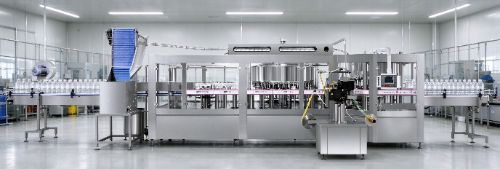
On a busy production floor, the pressure to keep the line moving often tempts workers to sacrifice precision for pace. Yet the operators who consistently hit their numbers without triggering rework or defects know a different truth: speed without accuracy is just faster scrap. They read the rhythm of the machinery, adjust their grip before the next part arrives, and let the repetitive motion become second nature. The line doesn’t slow down for hesitation, but it also doesn’t forgive a misplaced bolt or a skipped inspection step.
Modern assembly environments blur the old trade-off between quick and correct. Inline sensors now flag a torque variance within milliseconds, feeding that data straight to a wrist-mounted display. A skilled worker doesn’t pause to check a gauge—the gauge checks itself and lets the worker keep moving. This tight loop between action and feedback turns accuracy into a byproduct of pace, not a competitor to it. When a station is designed well, the fastest path is also the one that meets spec every single time.
But tools alone don’t put speed and accuracy on the same side of the line. It takes deliberate repetition to train hands and eyes to work ahead of the machine’s beat. Seasoned operators don’t rush; they eliminate wasted motion. They know where the next component sits without looking, how much pressure the fixture needs, and which subtle sound signals a process drifting out of tolerance. That kind of fluency isn’t taught in a manual—it’s earned one cycle at a time, until hitting both targets becomes the only way they know how to work.
Smarter Filling for Faster Turnaround
Filling lines lose more time to small adjustments than to actual production. The shift toward smarter filling means sensors and control loops now handle what used to require manual guesswork — checking viscosity, temperature, and container height on the fly, then adjusting valve timing before a single underfilled or overfilled unit reaches the end of the line.
That kind of responsiveness cuts turnaround in two ways: fewer stops for calibration and far less rework after the fact. When every container leaves with the same accurate volume, downstream stations stop waiting, labels line up cleanly, and batches clear the floor on the day they were scheduled — not the day after.
Eliminating Overfills and Underfills
Achieving exact fill volumes starts with recognizing that overfills and underfills rarely stem from a single source. They are the cumulative result of small inconsistencies in pump stroke calibration, nozzle drip, temperature-induced viscosity shifts, and even operator timing. When each of these variables drifts independently, the final fill wanders outside tolerance almost invisibly. Tightening control means auditing every touchpoint in the fill cycle, not just adjusting one machine setting.
A more effective approach is to replace static, recipe-based settings with closed-loop feedback. By measuring the actual dispensed weight or volume in real time and feeding that data back into the filling head, the system can compensate for drift before it becomes a reject. This is particularly valuable for products with changing flow characteristics, such as sauces with particulates or creams that thicken as they cool. The result is a fill profile that stays centered within the acceptable band, rather than bouncing between overfill and underfill alarms.
Finally, the human element cannot be ignored. Line operators often react to overfills by manually dialing back the fill, only to create underfills on the next cycle. Structured calibration checks and clear visual indicators of fill trend—not just pass/fail lights—help operators make informed adjustments. When the equipment, the control logic, and the people all align on the same target, overfills and underfills stop being a daily negotiation and become a rare exception.
High-Speed Dosing with Minimal Waste
At full line speed, most filling systems start to lose control—splashing, overfill, erratic flow. This approach locks the dosing cycle to the machine's motion profile, so every shot happens in the same narrow window regardless of throughput. Valve response is tuned to close in milliseconds, cutting the stream cleanly before drips form.
Because the cutoff is sharp, the usual tailings and purge volumes shrink. Waste isn't pushed downstream or collected in drip trays, it just doesn't happen. Operators see that in material consumption figures—run after run, the variance between target and actual dispensed stays within a fraction of a gram even at high cycles.
The payoff shows up in changeovers and cleanup, where there's no sticky residue or wasted product pooling under nozzles. A higher percentage of every batch ends up in the container, not on the floor or in reclaim bins.
Tuning Your Filling Process for Peak Output
Getting a filling line to run at its true ceiling rarely comes down to one big fix. It is the accumulated weight of small misalignments—slightly off nozzle height, a dwell time a beat too long, or inconsistent product temperature—that quietly caps throughput. Start by mapping the actual fill cycle against the machine's rated speed and look for gaps where the piston or pump is waiting instead of moving. Often, shortening the suck-back stroke or adjusting the cut-off delay frees up more cycles per minute than any major retrofit would.
Product behavior matters as much as mechanical settings. Viscosity shifts with batch temperature, so a setting that worked at 20°C may foam or drip at 28°C and force slower line speeds. Track fill weight variance over a full shift rather than reacting to a single grab sample; that pattern tells you whether to tweak nozzle diameter, back pressure, or agitation. When those variables are locked in, the line can hold a faster cadence without drifting out of tolerance.
FAQ
Temperature swings, product viscosity changes, and inconsistent back pressure in the supply line often cause more variation than the filler itself. Keeping product temperature stable and using a recirculation loop for shear-sensitive fluids helps maintain tighter tolerances.
Many servo-driven systems store recipes that adjust piston stroke, nozzle height, and fill time automatically. Operators only need to select the new container profile on the HMI, and the machine recalibrates without manual trial runs.
Foam forms when product splashes or entrains air during the fill, while viscous products need longer dwell time to settle. Bottom-up filling nozzles and slower retract speeds reduce foam, and wider flow paths with gentle valve actuation prevent shear damage in thick products.
It reduces both mechanical wear and changeover time. Servo drives eliminate many pneumatic cylinders and mechanical stops that require frequent adjustment, so maintenance intervals stretch out and recipe changes happen in seconds instead of minutes.
A sharp shutoff at the nozzle tip is critical. Look for designs with positive-seal valves or suck-back features that pull a small vacuum after each fill, preventing residual product from dripping onto the container rim or conveyor.
Track reject rates, product giveaway, and changeover labor before and after installation. A machine that cuts overfill from 2% to 0.5% on a high-volume line often pays for itself in months through material savings alone.
Volumetric fillers are fast and repeatable but drift with temperature or viscosity shifts. Gravimetric fillers weigh each container and adjust in real time, ideal for expensive products. Flow meter systems offer a middle ground with continuous measurement and fewer moving parts for clean-in-place operations.
Regularly check nozzle seals, recalibrate load cells or flow meters quarterly, and inspect fill pistons for scoring. Even minor wear on a piston seal can add a fraction of a milliliter per cycle, which compounds into thousands of dollars of product loss over a month.
Conclusion
Modern filling lines often force a trade-off between careful dosing and rapid throughput, but the latest machine solutions refuse to accept that compromise. Precision pouring no longer means watching product trickle slowly into containers. Instead, valve timing, nozzle positioning, and flow control work together to deliver exact volumes at high cycle rates. Speed meets accuracy on the line when feedback sensors adjust fill levels in real time, catching drift before a single bottle goes out of spec. Smarter filling for faster turnaround comes from recipe-driven changeovers and automatic calibration—operators spend less time tweaking settings and more time running product. The result is a line that keeps pace with demand without sacrificing the consistency your customers expect.
Eliminating overfills and underfills has a direct impact on both material costs and brand reputation. Modern systems use weight-based or flow-meter feedback to stop each dose at the target, not just near it. High-speed dosing with minimal waste becomes achievable when nozzles shut off cleanly and drip-free, so you aren’t paying for product that ends up on the floor or in rejected containers. Tuning your filling process for peak output often starts with small adjustments: fill head height, acceleration profiles, and anti-foam strategies. Once those parameters are locked in, the line can run longer between interventions, pushing more finished goods out the door with fewer stoppages and less scrap.
Contact Us
Contact Person: Tyson
Email: [email protected]
Tel/WhatsApp: +8613396971296
Website: https://www.wanyingmachinery.com