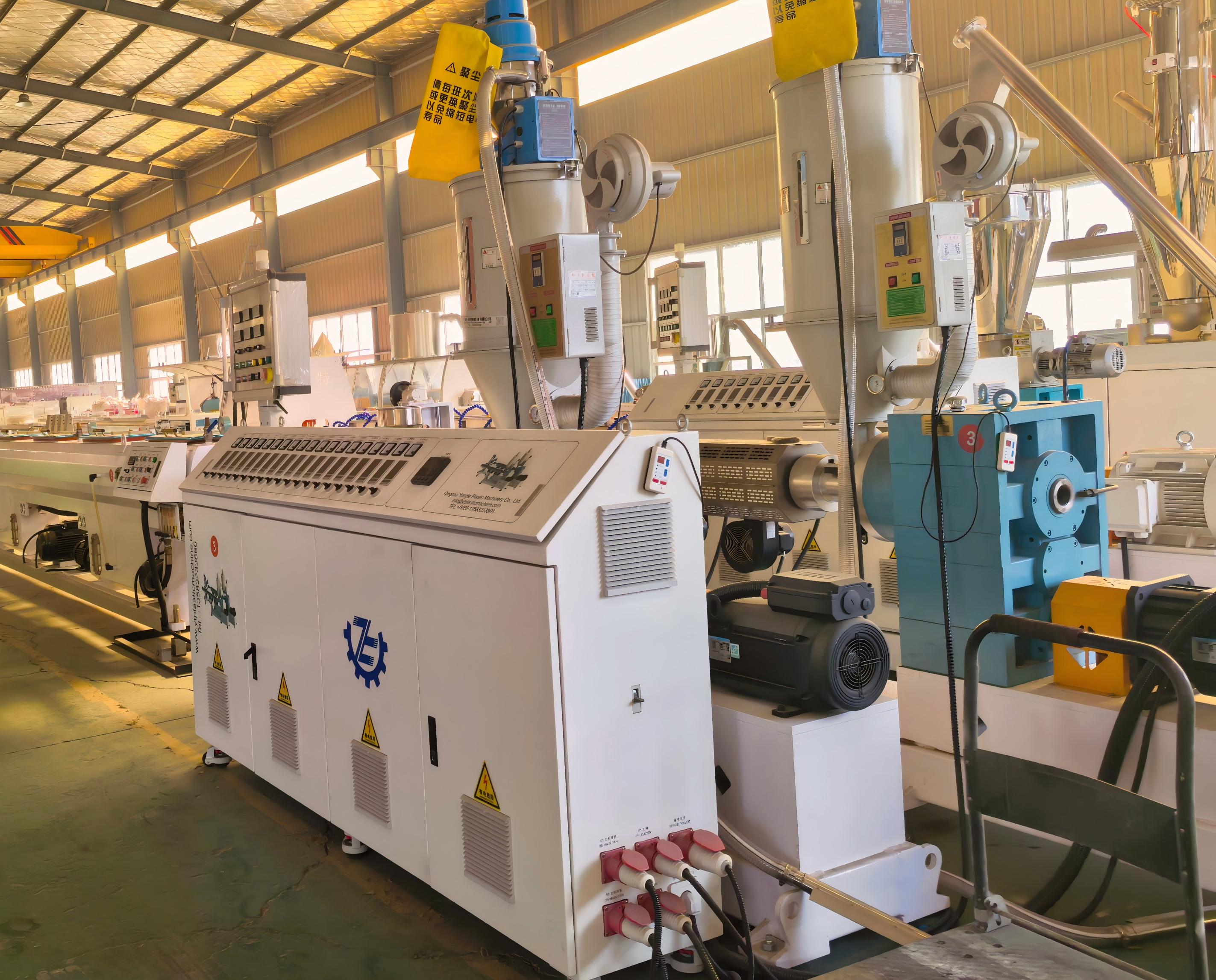

Plastic Profile Machine Supplier: Key Factors for Selecting a Reliable Extrusion Partner
2026-11-16
A plastic profile machine is a long-term commitment, and the supplier behind it can make or break your production floor. But beyond glossy brochures and promises, what actually separates a dependable extrusion partner from an expensive mistake? Below, we explore the key factors—and why builders like Yongte keep earning repeat business.
Reading Between the Lines of a Supplier’s Equipment Specs
A datasheet rarely tells the whole story, but it always leaves clues. Look for the conditions attached to headline numbers—duty cycle, ambient temperature, supply voltage tolerance, or whether "maximum output" assumes ideal cooling. When a spec seems too good to match its price point, the missing context usually lives in the footnotes or the fine print around derating curves.
Pay attention to how parameters are defined rather than just their values. A claim like "low noise" means nothing without a measurement bandwidth and weighting filter. Similarly, "lifetime" figures may be extrapolated from accelerated testing at one temperature, not verified across your actual operating envelope. Ask for the test setup and the pass/fail criteria before comparing two suppliers side by side.
Finally, watch for what the document does not say. Omissions around ingress protection, vibration tolerance, or long-term drift often reveal more than any polished bullet point. A credible supplier will welcome questions about those gaps; a defensive one may hide behind "standard industry practice." Trust the engineer who can explain the trade-offs, not just the highlights.
Why Material Expertise Matters More Than Machine Specs Alone
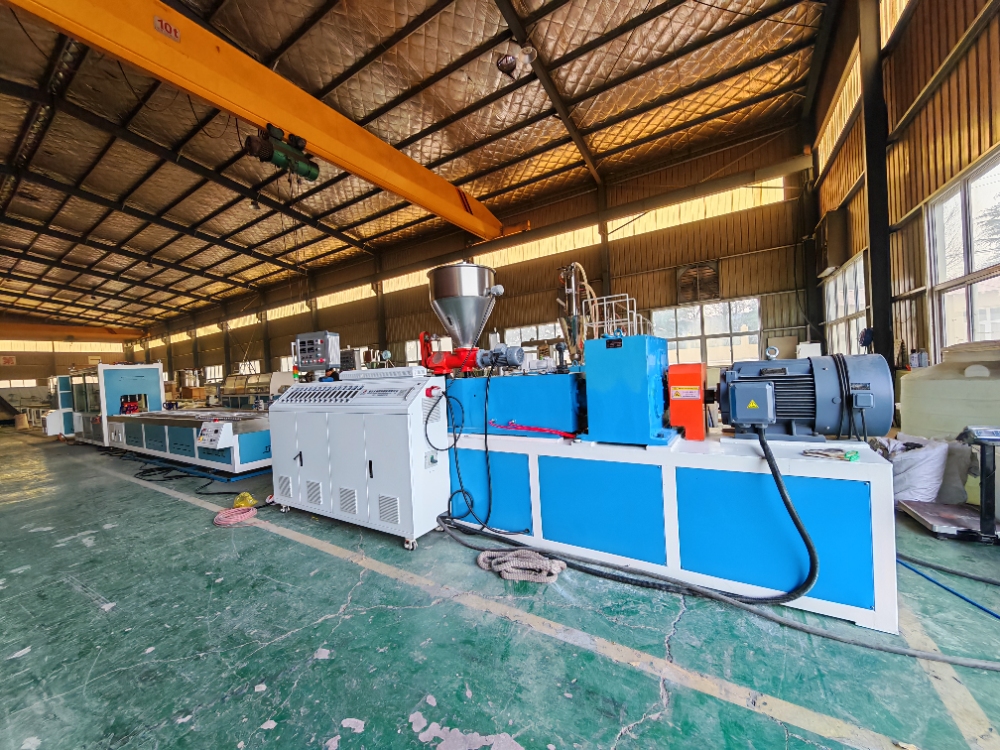
Most buyers shopping for industrial equipment get tunnel vision on horsepower, spindle speed, or bed size. Those numbers matter, but they rarely tell you how a machine will behave when it meets an unfamiliar alloy or a recycled feedstock with inconsistent hardness. A machinist who has spent years learning how different steels respond to heat and pressure can often outperform a more powerful machine operated by someone without that background. The real variable isn’t the spec sheet—it’s the human ability to read the material before the first cut is made.
Take aluminum and titanium as an example. On paper, a high-RPM spindle looks perfect for both. In practice, aluminum demands aggressive chip evacuation to avoid galling, while titanium punishes excessive speed with rapid tool wear. The operator who knows how to adjust coolant concentration, tool geometry, and feed rates for each specific alloy will get better surface finish and longer tool life than someone following a generic parameter chart. That kind of judgment can’t be printed in a brochure.
Material expertise also matters when specs become irrelevant. Recycled composites, powder-metal parts, and additively manufactured blanks rarely match the published data sheets of their wrought counterparts. A machine with impressive torque may still struggle if the operator doesn’t recognize porosity, internal stress, or hard spots before they cause a crash. In these situations, the difference between profit and scrap isn’t the machine’s maximum load rating—it’s the knowledge of how a material actually behaves under real cutting conditions.
The Hidden Costs of Cutting Corners on After-Sales Support
Companies often view after-sales support as a cost center to be trimmed, but the savings are rarely as clean as they appear on a balance sheet. When support teams are understaffed, wait times grow, agents become less accessible, and customers start to feel like an afterthought. The result is quiet defection: people don't always complain, they simply take their next purchase elsewhere, and that lost lifetime value quietly eclipses the initial savings.
Underinvestment also creates a hidden operational drag. Agents are forced to work with outdated knowledge bases, repeat the same troubleshooting steps for unresolved issues, and escalate cases that could have been solved upstream. Managers, in turn, spend more time handling complaints than improving service flows. This loop drives up the cost per contact while lowering resolution quality, meaning the company pays more for a worse outcome.
The deepest damage, though, lands on reputation. Customers who have a bad support experience are far more likely to share that frustration in private communities, review sites, or word-of-mouth channels than to give the company a second chance. Rebuilding trust after a wave of negative feedback costs far more than the original support investment, and competitors with a stronger service culture will gladly welcome the disillusioned customers.
Customization Demands That Separate True Partners from Parts Sellers
The ability to handle unusual requests without hesitation reveals a supplier's true nature. A genuine partner asks about operating conditions, load patterns, and environmental challenges before suggesting a shaft size or bearing clearance. They don't just cross-reference a part number from a catalog; they assess whether a standard component can survive or if a modified material or special coating is necessary. This level of engagement doesn't come from a transactional mindset—it comes from engineers who treat your application as their own.
Custom work also separates those who stock shelves from those who solve problems. Parts sellers may offer a limited range of off-the-shelf options and call it a day. True partners have in-house machining, heat treatment, or assembly capabilities that allow them to adjust dimensions, tolerances, or lubrication paths on short notice. They don't hide behind minimum order quantities or long lead times when a prototype or emergency repair is on the line. Instead, they ask what failure occurred and how the custom part can prevent it from happening again.
Finally, a real customization partner documents everything and learns from each job. They retain drawings, material certifications, and performance data so that the next order—or a slight variation—doesn't start from zero. This institutional memory turns a one-time fix into a long-term reliability improvement. If your supplier can't explain how a custom solution was validated or why a specific tolerance was chosen, you're likely dealing with a middleman rather than a manufacturer who stands behind their work.
Checking Real-World Performance Beyond the Demo Floor
Demo floors are designed to impress, but they rarely reflect how a system behaves when the lights go out and the real traffic hits. Benchmarks run in controlled environments often miss the messy variables that define actual performance: variable network latency, background services competing for resources, disk fragmentation, and long-running memory leaks. If a product only proves itself on a stage, it hasn't really been tested at all.
The only way to know how something performs is to watch it work under conditions you didn't script. That means deploying to a production-like environment, throwing in unpredictable load patterns, and letting it run for days, not minutes. Look for degradation curves, memory bloat, and the slow creep of latency that never appears in a five-minute demo. Pay attention to how the system recovers from failures too—real performance includes resilience when a node drops or a third-party API stalls.
One useful approach is to instrument the system with detailed logging and tracing before you start, then compare baseline metrics over a week of normal operation. Don't just capture averages; examine the 95th and 99th percentile latencies, because user experience is defined by the worst moments, not the median. If the system only shines in a sterile demo, it will inevitably disappoint in the field. True confidence comes from observing it survive the chaos of actual use.
Building for Tomorrow: Scalability and Upgrade Pathways
A system that can't grow with you becomes a liability the moment demand shifts. Real scalability isn't just adding more servers; it's designing data flows, state management, and service boundaries so that a tenfold increase in users feels like a non-event. That means choosing stateless components where possible, keeping bottlenecks visible, and resisting the urge to over-optimize early at the cost of later flexibility.
Upgrade pathways matter just as much as the initial build. The best architectures treat change as a first-class citizen: versioned APIs, feature flags that let you roll out capabilities gradually, and clear deprecation windows prevent painful migrations. When every component has a documented reason to exist and a planned route to evolve, teams spend less time fighting legacy code and more time shipping improvements.
Planning for tomorrow doesn't mean predicting the future perfectly. It means leaving deliberate seams where new modules can slot in without rewriting the core. Modular boundaries, plugin-style extensions, and conservative dependencies turn upgrades from multi-month projects into routine updates. The result is a system that ages well, not one that merely survives its first year.
FAQ
A reliable partner will ask about your material blend, wall thickness, cooling behavior, and downstream cutting tolerance before quoting a single price. If they jump straight to a standard model, that's a warning sign.
Insist on producing your actual profile on their equipment, not just a similar shape. Pay attention to how they adjust screw speed, barrel temperatures, and calibration tooling during the trial—it reveals their troubleshooting depth.
In-house tooling usually means faster iterations and clearer accountability when dimensions drift. Outsourcing isn't always bad, but ask who owns the calibration and cooling design when something goes wrong.
Ask for a list of spare parts they keep in stock locally, average response time for emergency callouts, and whether they offer remote diagnostics. A supplier who only promises '24/7 support' without logistics details may leave you waiting.
Calculate energy consumption per meter of profile, expected screw and barrel life, and scrap rates during start-up and color changes. A cheaper machine that wastes 8% more material will quietly erase any upfront savings.
They should ask about regrind percentage, heat stabilizer levels, fillers like calcium carbonate, and whether the profile must meet flammability or UV standards. These choices affect screw geometry and venting design.
Request continuous run data for at least four hours with the same compound you plan to use, including melt pressure stability and dimensional checks every 15 minutes. Peak output numbers from a demo are often unrealistic.
References matter most when they involve profiles of similar complexity and material, not just the same general sector. Ask the reference about downtime frequency, spare parts delivery, and how the supplier handled a production crisis.
Conclusion
Choosing a plastic profile machine supplier rarely comes down to a simple comparison of extruder output or screw diameter. Reliable partnerships begin when you read between the lines of the equipment specs, questioning whether the claimed tolerances hold under varied raw materials and long production runs. A supplier with deep material expertise understands that the same screw design can behave very differently with recycled PVC, filled polyolefins, or high-flow engineering resins. That kind of insight cannot be printed in a brochure, but it shows up quickly in your reject rate and energy consumption. From there, customization becomes a telling test. A true partner asks about your product geometry, cooling requirements, downstream cutting, and even your operators' habits, then adjusts the line accordingly. A parts seller simply offers a standard configuration and hopes it fits. The difference emerges not in the sales meeting, but in the first month of real production.
Equally important are the hidden costs that surface after installation. Skimping on after-sales support often seems like a saving until a failed barrel heater or a misaligned calibrator halts your line for days while you wait for an overseas response. Reliable suppliers invest in local service teams, remote diagnostics, and readily available wear parts, which protects your uptime far more than a marginally faster screw. Before committing, check real-world performance beyond the demo floor. Visit an existing customer running a similar profile at similar volumes, and ask about long-term drift, maintenance intervals, and how the supplier handled unexpected issues. Finally, consider scalability and upgrade pathways. Your product mix will change, and a machine designed for easy retrofitting of co-extruders, larger dies, or automated haul-offs saves you from replacing the entire line later. A supplier that plans for your growth, rather than just your current order, is the one worth keeping.
Contact Us
Contact Person: Ms Qin
Email: [email protected]
Tel/WhatsApp: 8613583233866
Website: https://www.yongteplast.com