

Professional Cold Storage Panel Production Line: Boosting Efficiency and Precision
2026-07-30
In the cold storage construction game, every second and every millimeter matter. That's why the professional panel production line from YI ZHOU TECHNOLOGY is turning heads—it doesn't just promise speed and precision; it delivers them in ways that reshape expectations. Curious how it pulls this off? Let's dive into the engineering that sits behind the buzz.
Redefining Cold Storage Construction with Streamlined Panel Manufacturing
Efficiency in cold storage construction has long been stifled by the piecemeal nature of panel fabrication. Traditional methods demand extensive on‑site cutting and fitting, turning each build into a protracted puzzle. By shifting the focus to precision‑engineered, manufactured panels, the entire assembly process becomes almost plug‑and‑play. Walls, ceilings, and vapor barriers arrive ready to unite, slashing labor hours and minimizing the disruptions that fragment project timelines.
This refined manufacturing approach doesn’t just accelerate the build—it elevates the integrity of the finished space. Panels produced under controlled conditions exhibit tighter joints and more consistent insulation values than those cobbled together in the field. Thermal bridges shrink, energy leakage drops, and the envelope responds more predictably to the extreme temperature swings that define cold storage environments. The result is a facility that safeguards its contents with fewer compromises and less ongoing energy drain.
Behind the scenes, the real transformation lies in how these panels reshape the construction sequence. With components sized and numbered in advance, even complex layouts unfold with surprising clarity. Subcontractor overlaps fade, and quality checks become less about correcting errors and more about verifying that a well‑orchestrated plan has held its shape. It’s a quieter, more deliberate way to build—one that leaves behind the noise and waste of conventional cold storage construction.
Precision Engineering at Its Core: How Automated Lines Minimize Thermal Loss
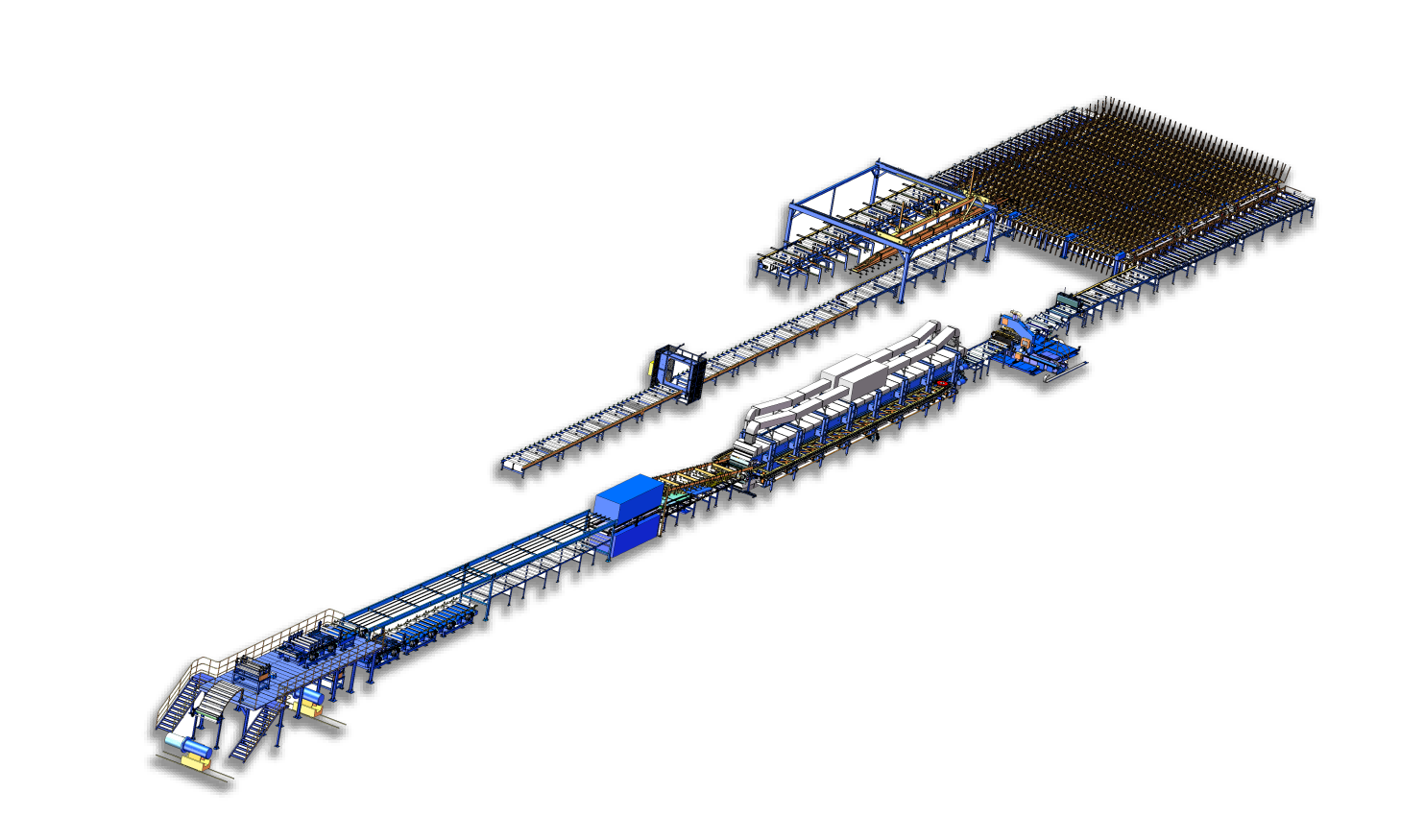
In automated production, every micron of misalignment can translate into energy bleeding away as heat. Precision engineering tackles this at the source, employing laser-guided assembly and real-time calibration to ensure components mesh with near-zero tolerance. By eliminating microscopic gaps and friction points, the system inherently reduces thermal dissipation, keeping more energy locked into the productive process rather than escaping as waste.
The integration of advanced materials further amplifies this effect. Ceramic bearings, diamond-like carbon coatings, and thermally stable alloys are selected not just for durability, but for their ability to maintain dimensional integrity under operational stress. These materials resist expansion and wear, so the meticulously engineered fits remain consistent over time. The result is a self-reinforcing loop: precise construction begets stable thermal conditions, which in turn preserve the precision that curbs heat generation.
Control systems also play an unsung role. Adaptive thermal compensation algorithms monitor temperature gradients across the line and adjust operation parameters in microseconds. Rather than reacting to heat after it accumulates, the system proactively shifts loads, modulates speeds, and redirects coolant flows to nip thermal buildup in the bud. This anticipatory approach transforms the entire line into a living organism that breathes efficiency, constantly tuning itself to the sweet spot where energy input and output align with minimal loss.
Beyond Conventional Output: Scaling Production Without Sacrificing Quality
Scaling production usually forces a trade-off: you either push volume and watch quality slip, or you guard standards and accept slower growth. But that binary choice misses what actually happens inside capable operations. The real shift comes from redesigning processes so that consistency is built into the system itself, not bolted on through inspection after the fact. When you harden the workflows—removing variables instead of just speeding them up—you find that throughput rises without a corresponding drop in precision. It’s less about doing more things, and more about doing fewer things in a smarter sequence.
A practical lever is breaking away from linear, stage-gated handoffs. Many organizations default to serial steps where each department optimizes its own output, and the product only meets scrutiny at the end. By reorganizing around cross-functional cells that own complete outcomes, the feedback loop shortens dramatically. Problems surface when they’re still cheap to fix, and the team corrects course while moving forward. This approach doesn’t add overhead—it strips out the hidden rework and waiting time that eat into both speed and quality.
Technology plays a role, but only when it serves clear operating rhythms. Automating repetitive tasks or introducing inline verification can absorb the variations that human fatigue creates, but the real gain is in data transparency. When every station captures real-time parameters and flags deviations immediately, quality becomes a continuous stream of evidence rather than a retrospective audit. That visibility allows you to scale with confidence—because you’re not guessing whether standards hold, you’re watching them hold in real time. The outcome feels unremarkable from the outside: higher volumes with no reduction in quality. But inside, it’s a deliberate, engineered reality.
Smart Integration for Seamless Workflow and Minimal Downtime
Achieving a smooth operational flow isn’t just about connecting tools—it’s about making them work together in ways that feel almost invisible. When systems are integrated thoughtfully, the friction that typically slows down processes disappears, and teams can focus on what they do best without constantly switching between platforms or manually bridging data gaps.
The real value comes from how quickly things can recover when something goes wrong. Smart integration means building in resilience so that hiccups don’t spiral into hours of lost productivity. It’s about having backup paths and automated fallbacks that keep things running in the background, often without anyone noticing a break in the chain.
What sets a truly seamless setup apart is its ability to adapt as needs change. Instead of rigid pipelines that demand constant oversight, a well-designed integration grows with the business, reducing the kind of downtime that no amount of manual monitoring can prevent. That’s where efficiency meets reliability—and both become second nature.
Material Innovation Meets High-Speed Assembly in Modern Panel Lines
The relentless push for lighter, stronger, and more sustainable materials is reshaping how panel production lines operate. Engineers are blending advanced composites, ultra-high-strength steels, and multi-material sandwiches into a single workflow, demanding assembly systems that can adapt on the fly. Modern lines now integrate real-time material characterization, adjusting welding parameters or adhesive application in milliseconds to match the exact properties of each incoming sheet. This fusion of material science and assembly agility turns what was once a rigid sequence into a responsive, intelligent process.
Speed has traditionally been the enemy of precision when dealing with novel materials, but today’s lines dismantle that trade-off. Linear motors and lightweight robotic end-effectors synchronize with vision systems that detect micro-variations in material thickness or grain orientation. Instead of slowing down, the line instantly recalibrates, maintaining a relentless pace while ensuring every joint meets structural standards. This capability allows manufacturers to introduce material innovations without sacrificing the throughput that keeps factories competitive.
Behind the scenes, digital twins simulate how new materials will behave in the assembly process long before a single panel is stamped. This predictive approach slashes trial-and-error, letting engineers experiment with radical material combinations in a virtual space. When the design hits the physical line, the machinery already knows the optimal handling strategy—transforming material innovation from a bottleneck into a seamless, high-velocity reality.
Future-Ready Facilities: Adaptable Production for Evolving Cold Chain Demands
Cold chain infrastructure is no longer just about maintaining temperature—it's about shaping operations around shifting market patterns. Facilities built with modular layouts and reconfigurable processing lines can pivot from handling fresh produce to frozen meals within the same footprint. This level of adaptability means businesses aren't locked into rigid workflows when consumer demand or product portfolios evolve.
Integrated monitoring and control systems play a quiet but critical role in this flexibility. Sensors track conditions down to individual pallets, while automated routing adjusts based on real-time inventory needs. Such responsiveness minimizes waste and keeps throughput steady, even as SKU variety grows or seasonal spikes hit. These aren't theoretical upgrades; they're practical moves that keep a facility relevant years after its first blueprint.
FAQ
It's an integrated system designed to manufacture insulated panels used for cold rooms, refrigerated warehouses, and temperature-controlled facilities. The line combines forming, foaming, and finishing processes to produce panels with high thermal resistance and structural integrity.
By automating key steps like continuous panel lamination, precise cutting, and real-time quality checks, the line drastically reduces manual labor and material waste. The synchronized workflow ensures a steady output without bottlenecks, allowing for higher throughput in less time.
Precision comes from computer-controlled systems that monitor panel thickness, foam density, and surface flatness to extremely tight tolerances. Advanced sensors and feedback loops adjust parameters instantly, ensuring each panel meets exact specifications.
It handles a variety of core materials such as polyurethane (PUR), polyisocyanurate (PIR), and rockwool, paired with metal facings like galvanized steel, aluminum, or stainless steel. The line can switch between materials quickly for different product requirements.
Yes, it's built with modular tooling and adjustable settings that allow for different lengths, widths, and thicknesses. Whether you need standard sizes or specialized ones for unique projects, the line can be reconfigured without extensive downtime.
They're essential in food processing plants, pharmaceutical storage, blast freezers, and any facility requiring strict temperature control. The panels also serve in cleanrooms and agri-product cold chains, where insulation performance is critical.
The high-quality insulation with uniform foam distribution minimizes thermal bridging, leading to lower refrigeration costs. Additionally, the panels' precise interlocking joints prevent air leakage, keeping the cold inside and reducing energy consumption over the building's lifetime.
Conclusion
Modern cold storage panel production has evolved into a finely orchestrated system where speed and accuracy no longer trade off against each other. Streamlined manufacturing turns raw materials into high-performance insulated panels through a continuous automated flow, drastically reducing the labor-intensive steps that once caused delays and inconsistencies. At the heart of this transformation lies precision engineering: automated mixing and metering of polyurethane foam, combined with perfectly calibrated double-belt presses, ensure uniform density and cell structure that virtually eliminate thermal bridging. The result is a panel that locks in temperature stability with far less energy consumption, meeting the strictest cold chain requirements right off the line.
Scaling up output no longer means compromising on the subtle details that define quality. Advanced lines integrate smart CNC trimming, automatic stacking, and real-time process monitoring that adapts to variations in material batches and environmental conditions, keeping rejection rates near zero even at high speeds. Material innovation plays an equally vital role—new foam formulations bond faster and withstand repeated thermal cycling, while embossed metal skins improve structural rigidity without adding weight. The entire workflow is designed for seamless connectivity, from inline quality laser scanning to intelligent packaging that communicates directly with an ERP system. Such future-ready facilities offer unmatched flexibility; switching from a walk-in cooler panel to a blast freezer configuration takes minutes rather than hours. This rapid changeover capability, coupled with predictive maintenance alerts, cuts downtime dramatically and lets manufacturers respond to shifting market demands with the agility of a high-tech operation, not a traditional construction supplier.
Contact Us
Contact Person: Sophia Jiang
Email: [email protected]
Tel/WhatsApp: +86 17367381818
Website: https://yzwelding.com/