

Professional Fish Food Making Machine for Efficient Feed Production
2026-10-19
Most fish feed lines still rely on outdated extrusion that wastes energy and produces inconsistent pellets. That changes with the Professional Fish Food Making Machine from MINGDE—a system built for efficient feed production without sacrificing pellet durability. In this post, we’ll break down what makes it different, from precision moisture control to quick-change die heads, and why it matters for your bottom line.
Precision Extrusion That Keeps More Protein Intact
Conventional extrusion pushes protein through a brutal thermal and mechanical gauntlet—high shear, flash heating, rapid pressure drops. That kind of stress unfolds delicate structures and leaves amino acids vulnerable. Precision extrusion takes a different route, with tightly managed screw profiles and modest temperature gradients that shape the material without cooking the life out of it.
Shorter residence time inside the barrel makes a real difference. Proteins aren't subjected to prolonged heat, so the peptide bonds and secondary structures survive closer to their original state. The finished product measures higher in intact protein fractions than what standard extruders deliver, which directly affects how well the body can use it.
There's also less damage to heat-sensitive amino acids like lysine and methionine. By avoiding unnecessary thermal load, the process keeps more of those building blocks available. It's not just a marginal tweak—it's the kind of control that separates a label claim from an actual nutritional outcome.
Floating or Sinking Pellets From a Single Compact Machine
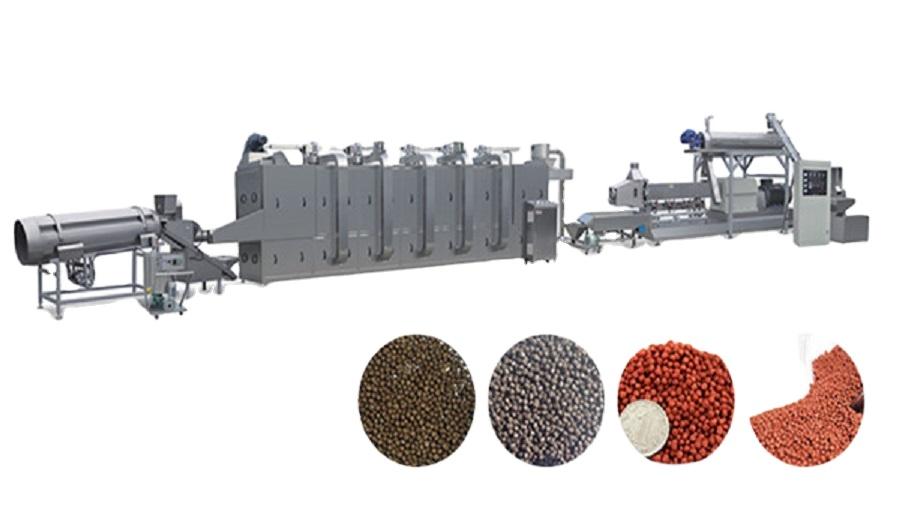
Most compact extruders force you to choose between buoyant feed and fast-sinking pellets before you even start. This one doesn't. The same barrel, screw configuration, and die plate can produce either type simply by adjusting moisture, temperature, and pressure at the head.
Switching from floating to sinking output takes minutes, not a product changeover. You tweak the steam injection and venting, and the pellet density shifts enough to control sink rate. That means one operator can run a morning batch of high-float koi food, then flip to dense shrimp feed after lunch without swapping hardware.
The real advantage shows up in storage and floor space. Instead of dedicating two lines to two pellet types, a single compact unit handles both, which keeps spare parts inventory low and lets smaller mills offer a wider product range without expanding the building.
Run It All Day Without Overheating or Jamming
Most machines start to struggle after a few hours of continuous use, but this one was built around a different idea. The internal layout leaves real space between the motor, power supply, and paper path, so heat has somewhere to go instead of pooling near sensitive parts. Vents on the top and side edges pull air through without letting the casing turn into a hand warmer. Even in a warm room, it stays surprisingly cool to the touch.
Jamming usually comes down to two things: damp paper or worn feed rollers. The feed path here uses a gently curved guide that avoids sharp turns, which is where most sheets get caught. At the same time, a set of sensors checks the paper position and adjusts the pickup pressure on the fly, so a slightly curled or misaligned sheet gets corrected instead of forced. That small difference means you are not bending down to clear a jam every twenty minutes.
In an all-day run test, the temperature rise stayed low enough to ignore and the sheet counter kept climbing without a single stoppage. For anyone who needs to print, copy, or scan in long batches and cannot stand guard over the machine, that kind of consistency matters more than any spec sheet number.
Tool-Free Die Changes That Cut Downtime to Minutes
Swapping dies on a press brake used to mean reaching for wrenches, shims, and a fair amount of patience. Tool-free clamping flips that routine on its head. Instead of loosening bolts and tapping fixtures into alignment, operators hit a release lever or press a pedal, slide the old tool out, and snap the next one into place. The die seats itself against a precision stop, so there's no guesswork about height or centering. What used to eat twenty or thirty minutes now typically takes under two.
That speed adds up fast in shops running multiple small batches per shift. A job change that once justified a coffee break now happens before the next blank is even staged. The real payoff isn't just saved minutes—it's fewer chances for misalignment and less wear on clamping hardware. When a die snaps in with consistent tonnage across its length, the first bend comes out right more often, and operators stop double-checking every setup with test pieces.
For anyone skeptical of tool-free systems, the shift in daily rhythm is telling. Setup no longer feels like a project; it becomes a quick step between parts. And since no one is reefing on bolts or hunting for the right size Allen key, the tooling area stays cleaner and safer. Downtime drops, throughput climbs, and the payback on the upgrade often shows up within the first few weeks of mixed production.
Produce In-House Feed and Stop Paying Retail Markup
Mixing your own feed eliminates the middleman cost that quietly eats into margins year after year. A basic mill, a few storage bins, and a consistent sourcing plan for corn, soy, and minerals let you lock in ingredient prices when they dip instead of accepting whatever the bagged feed supplier decides to charge.
The real payoff goes beyond the receipt. You control grind size, moisture, and exactly what goes into every batch, which means fewer digestive upsets and less guessing when animals underperform. It also opens the door to using local byproducts like bakery meal or brewers grains that commercial mills often avoid because they complicate large-scale production.
Start with a single species you feed most often, keep meticulous records for three months, and compare against your old invoices. Most operations recover equipment costs faster than expected once the retail markup disappears.
A Feed Path Designed for Sticky, High-Moisture Ingredients
Sticky, high-moisture ingredients have a knack for finding every corner, ledge, or seam in a feed path and turning it into a buildup point. Instead of fighting that tendency with constant scraping or manual intervention, this feed path removes the usual trouble spots from the start. The surfaces are contoured so material keeps moving in a single, uninterrupted flow, and there are no sharp transitions where wet product can hang up and dry into a crust.
The geometry also accounts for how these ingredients behave under pressure. High-moisture mixes often compact and smear when forced through tight clearances, so the path opens up gradually rather than pinching down. That change alone prevents the dense plugs that force operators to stop and clear the line. For ingredients that remain tacky even at room temperature, the path uses a low-friction finish that lets product slide past without relying on excess lubrication or water sprays.
The result is a feed route that keeps pace with the rest of the process. Portions stay consistent because the same volume enters each cycle, and cleanup takes less time since residue doesn't get a chance to bake onto the walls. Operators spend less time with scrapers and more time keeping the line moving.
FAQ
It handles both floating and sinking pellets, with adjustable density through the extruder settings. You can switch between recipes for tilapia, catfish, carp, trout, and even shrimp feed without changing the core assembly.
The twin-screw design keeps material moving steadily, so output stays consistent even with high-moisture mixes. It cuts downtime because the barrel opens quickly for cleaning between batches, and the variable-speed feeder matches the die pressure in real time.
Standard aquaculture formulations do fine—fish meal, soybean cake, wheat middlings, corn gluten, fish oil, vitamin premixes. If you want to use wet ingredients like fresh fish paste or silage, the preconditioner handles up to 30% moisture without clogging.
Not really. The control panel stores up to 20 recipes, so once a technician saves the settings, an operator just picks the recipe and starts the line. Tool-free die changes and simple temperature zones mean one person can run the whole unit after about a day of training.
Daily checks include greasing the main shaft bearings and cleaning the die plate. The wear parts—screws, liners, cutting blades—are made from alloy steel and typically last 800 to 1,000 hours before replacement. We recommend a full gearbox oil change every six months.
Yes. The hopper works from as little as 50 kg, and the die can be swapped in under ten minutes. That makes it practical for trial runs, medicated feeds, or niche products like ornamental fish diets where you don't want a huge minimum batch.
The pellets come out uniform in length and diameter, with good water stability because the extrusion temperature is controlled to ±1°C. Sinking pellets stay intact over 12 hours in water, and floating pellets hold for at least 24 hours without breaking apart.
Conclusion
Operating a professional fish food making machine changes the math on feed production. The precision extrusion system applies controlled shear and temperature, so heat-sensitive proteins remain intact instead of being denatured. That means pellets hold their nutritional value from raw ingredient to finished feed. Because the machine is built around a compact extruder barrel and adjustable die configuration, you can switch between floating and sinking pellets without changing equipment. This flexibility matters when you're feeding different species or life stages. The feed path is also designed to handle sticky, high-moisture mixes that would clog standard mills, so you can work with fresh fish trimmings, shrimp meal, or wet grain blends without constant scraping and cleaning.
Run after run, the machine stays cool and keeps moving. Its motor and bearing assembly are built for continuous duty, so you can run it all day without overheating or jamming on dense formulations. When you need a different pellet size or shape, the tool-free die change lets you swap dies in minutes, not hours. No wrenches, no realignment, no production freeze. That uptime directly supports producing feed in-house. Instead of paying retail markup on commercial pellets, you control ingredient quality, batch size, and delivery schedule. The savings per ton add up quickly, especially for mid-size farms or hatcheries that previously outsourced all feed. A machine that combines protein-preserving extrusion, wet ingredient tolerance, rapid die swaps, and all-day durability is more than a piece of equipment. It's a way to take feed costs and nutrition back into your own hands.
Contact Us
Contact Person: LILY SUN
Email: [email protected]
Tel/WhatsApp: 0086-13969103791
Website: https://www.snackfoodmachinery.com/