

Rubber Kneader Factory: How to Choose a Reliable Manufacturer for Your Mixing Needs
2026-08-16
Choosing a rubber kneader factory is more than just comparing prices—it's about finding a partner who understands your mixing challenges. Between inconsistent output, hidden maintenance costs, and vague after-sales support, the wrong decision can stall your entire production line. That's why many industry professionals are turning to SFC, a manufacturer known for blending robust engineering with real-world reliability. But what exactly separates a dependable kneader supplier from the rest? In this post, we'll walk through the key factors you need to evaluate before making a commitment.
Start with Your Mixing Problem, Not Their Product Line
Most teams start equipment selection by flipping through a vendor catalog or asking a sales rep what they sell. That approach puts the product line first, and your process second. You end up comparing horsepower, tank geometry, and shiny add-ons without ever defining what the mixture actually needs. A high-shear rotor-stator might look impressive, but if your powder tends to clump or your emulsion is shear-sensitive, that unit will cause more problems than it solves. Before any spec sheet, you need to know your material's rheology, batch volume, and the exact end point you're trying to reach.
Write down your mixing problem in plain language. Is the goal to suspend a dense solid without settling? To disperse a fine pigment into a viscous resin? To keep a temperature-sensitive catalyst uniformly distributed? Then attach numbers: viscosity range, particle size distribution, target mixing time, allowable heat input. A food processing plant once wasted six months trying to adapt a high-speed disperser to a thick dough-like paste. The moment they stopped forcing the equipment to fit and instead mapped the torque and shear requirements, a low-speed double-arm mixer was the obvious choice. The problem dictated the machine, not the other way around.
When you start with the mixing problem, you filter out ninety percent of the market before you ever talk to a supplier. That might sound limiting, but it actually speeds up procurement and prevents expensive trial runs with mismatched hardware. You also gain a clear evaluation framework: any proposed mixer must meet the shear, turnover, and thermal limits you defined. If a vendor cannot explain how their unit handles your specific rheology, move on. Your process should not be bent to fit a product line. Define the problem sharply, and the right equipment becomes almost self-evident.
Ask for Compound Samples from Their Test Lab—Not Just Photos
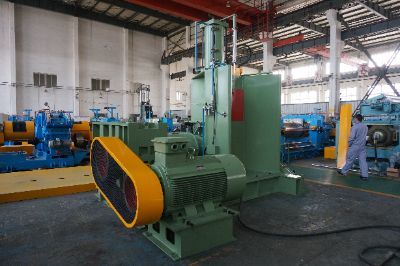
When evaluating a new material supplier, high-resolution images can be deceiving. Lighting, angle, and touch-up software often hide surface imperfections, color deviations, or fine texture differences that matter in real-world applications. Instead of relying solely on photographs, request physical compound samples straight from the test lab—the same batch they use for tensile, hardness, or weathering tests.
Lab samples reveal how the material actually feels, flexes, and responds to simple hand tests like scratching or bending. You can compare weight, smell, and even machining behavior before committing to a purchase order. Better yet, ask them to send a few variants with different filler loadings or curing conditions, so you can benchmark against your current compound under identical conditions.
Most reputable compounders keep a small inventory of reference chips or plaques in their quality control department. If they hesitate to send physical pieces, treat that as a red flag—it often means their production consistency is questionable or they are hiding batch-to-batch variation. A real lab sample costs them almost nothing but gives you far more decision confidence than any edited photograph.
The Rotor Design Is Where Cheap Kneaders Cut Corners
Open up a budget kneader and the first thing that catches your eye is the rotor itself. Instead of a carefully calculated helical profile, you often find a simple flat paddle or a rough-cast spiral with no real thought behind the curvature. It spins fine when the bowl is half empty, but as soon as the dough stiffens, the paddle just pushes the whole mass around in circles. There's no stretching, no folding, no real kneading action. The mixer ends up running longer, the motor strains, and the dough comes out warmer than it should with uneven gluten development.
Another place the cost-cutting shows is in the gap between the rotor and the bowl wall. Quality kneaders maintain a tight, consistent clearance so that every bit of dough gets worked. Cheaper models leave a wider or uneven gap, which lets a sticky layer build up along the sides and bottom. You end up stopping the machine to scrape down the bowl multiple times, and even then the final mix has streaks of unincorporated flour or butter. Over time, the rotor shaft tolerances loosen too, introducing a wobble that scrapes the bowl and makes a sound you can't ignore.
Material choice is often the most visible corner that gets cut. Low-cost rotors are sometimes made from porous cast aluminum or thin stainless sheet metal with no surface finishing. Salt, acids, and moisture from the dough eat into these surfaces, creating tiny pits where dough clings and turns dark. A well-made rotor, by contrast, is usually machined from a solid block of food-grade stainless and electropolished to a slick, non-stick finish. That difference alone changes how the dough releases, how evenly it mixes, and how long the machine stays pleasant to use.
Customization Should Include Chamber Coatings and Discharge Doors
When specifying a rotary valve for abrasive or sticky materials, surface treatments on the chamber interior are often treated as an afterthought. Yet the right coating can extend service life dramatically while reducing product buildup. Look beyond generic options: hard chrome offers moderate wear resistance for mildly abrasive powders, while tungsten carbide or ceramic coatings suit highly erosive or high-temperature streams. Pairing a coated chamber with a discharge door that has the same finish prevents differential wear at the interface, a common failure point that leads to air leakage and cross-contamination.
Discharge doors themselves deserve more than a bolt-on-and-forget design. A quick-release or hinged door with a tool-less mechanism saves hours during cleanout, especially in food or pharmaceutical lines where frequent washdowns are mandatory. Request a door with a recessed gasket groove rather than a flat-face seal—this keeps the gasket from extruding under pressure and allows for easy replacement without scraping the housing. For vacuum or pressure differential applications, a door with a built-in vent port prevents material packing above the rotor, which can seize the valve.
Another overlooked option is an adjustable tip on the discharge door. Instead of replacing the entire door when the rotor tip clearance grows beyond tolerance, an adjustable tip lets operators restore the seal gap in minutes. Combine this with a wear indicator groove machined into the door face, and maintenance becomes predictive rather than reactive. Such details rarely appear on standard spec sheets, but they separate a valve that survives one campaign from one that runs trouble-free for years.
Visit the Factory and Watch a Kneader Run Under Load
Walking into the production floor, the first thing you notice is the steady hum of machinery and the faint scent of warm rubber compounds. A kneader mid-batch sits behind a safety barrier, its blades churning through a dense, putty-like mixture. Watching it run under full load tells you more than any spec sheet: the drive unit holds its speed without strain, the chamber temperature stays within a narrow band, and the mix folds over itself with a consistency that only comes from properly maintained rotors.
Ask the operator to pause the feed for a moment and you'll hear the motor's tone shift as resistance builds. That subtle change is exactly what you want to witness in person. A well-built kneader doesn't buck or labor unpredictably; it settles into a rhythm even as viscosity climbs. Look for any seeping around the ram cylinder or dust escaping the hopper, small details that often get cleaned up for demo videos but become obvious during a live run.
Spending twenty minutes at the machine's side gives you a practical sense of heat dissipation, noise levels, and how easily the discharge door opens after a heavy batch. It's one thing to read about torque curves and quite another to see the amp draw hold steady while the compound transforms from crumbly feed to a cohesive mass. If a manufacturer is willing to run their kneader under load in front of you, that confidence usually carries over to the equipment itself.
After-Sales Support Is Where Most Manufacturers Go Quiet
Once the invoice clears, many equipment builders seem to vanish. The sales team that returned your calls within minutes during the buying cycle suddenly needs three days and two reminders just to acknowledge a simple question about a replacement part. It is not that they lack the capability; it is that after-sales service is rarely treated as a profit center, so it gets starved of staffing, training, and attention. The result is a support line that feels more like a black hole than a help desk.
This silence hits hardest when production is down. A missing gasket, a firmware glitch, or an unclear error code can idle an entire line, and every hour of waiting eats into margins. Yet many manufacturers still rely on generic ticket systems and outsourced call centers where the first response is a scripted apology rather than a real solution. The technicians who actually understand the machines are often shielded from customer contact, leaving buyers to explain the same problem four times before anyone takes ownership.
What separates the few responsive brands is not a bigger warranty booklet, but a refusal to treat support as an afterthought. They publish troubleshooting guides in plain English, keep critical spares in local depots, and assign a named engineer to every major account. When the line goes quiet after the sale, so does the relationship—and no amount of pre-purchase promises can win back a customer who has already learned the hard way that the real product is the support that comes after it.
FAQ
Start with their track record in your specific rubber compound range. Ask for real production examples, not just brochures. Check whether they build machines in-house or outsource key components, because that affects consistency and lead times.
Request a video walkthrough of the production floor and close-up shots of rotor clearances, gearbox assembly, and welding on the chamber. If they hesitate, that is usually a red flag. Also ask for a client reference who can share runtime data.
Pay attention to rotor speed range, chamber volume, cooling or heating jacket design, and motor power curve. A factory that only lists 'capacity in liters' often hides weak points. Ask for torque and specific energy input per batch.
Very important if you handle non-standard compounds like silicone, fluororubber, or high-filler recipes. A reliable manufacturer should offer tangential or intermeshing rotor options, variable speed drives, and wear-resistant liners tailored to your viscosity.
At minimum they should provide installation guidance, operator training, and a clear spare parts list with part numbers. Avoid factories that rely on third-party service agents without direct engineering backup.
Break down the production timeline by stage: casting, machining, assembly, testing. A credible factory can explain each phase and share past project schedules. If they promise extremely short delivery for a custom kneader, scrutinize their testing procedure.
Yes. Quotes far below the market often exclude essential parts like PLC controls, safety interlocks, or hardened rotors. Ask for a line-item breakdown and compare it with two other suppliers. Extremely low prices may signal recycled steel or skipped factory acceptance tests.
Conclusion
Choosing a rubber kneader supplier begins with the mixing challenge you actually face, not the machinery they happen to stock. A credible factory will run your compound through its test lab and return batches of sample material, not just glossy photos or spec sheets. Pay close attention to the rotor geometry—many low-cost kneaders hide weak tangential or intermeshing designs that fail under shear. If you ask the right questions, you'll quickly see whether the manufacturer can discuss heat transfer, fill factor, and dispersion instead of repeating catalog numbers.
Beyond the core mixer, look for real customization: chamber coatings that resist abrasion and corrosion, plus discharge doors sized and sealed for your process. Visit the plant while a kneader is running under full load, because idle machines hide vibration and temperature drift. Finally, press hard on after-sales commitments—most suppliers vanish after delivery, so ask for named service engineers, response-time guarantees, and spare parts stocked locally. A manufacturer that stays engaged after commissioning is the one worth signing with.
Contact Us
Contact Person: Chen Zhengwei
Email: [email protected]
Tel/WhatsApp: +86-13963975727
Website: https://www.sfcrubbermachine.com