

Top-Quality Concrete House Moulds from a Trusted Manufacturer
2026-08-10
When it comes to building durable and precise concrete houses, the moulds you use make all the difference. Imagine investing in equipment that consistently delivers flawless walls and structures, yet too often, contractors settle for subpar options that warp or wear out. At LugongMachinery, we’ve seen firsthand how top-quality moulds not only speed up construction but also eliminate costly rework. As a trusted manufacturer, we design each mould with exacting standards, but what truly sets them apart? Let’s peel back the layers and explore the engineering and reliability that make our concrete house moulds the preferred choice for serious builders.
What Makes These Moulds the Backbone of Sturdy Concrete Homes?
The real secret lies in how these moulds are engineered with surgical precision. Every pour of concrete settles into a form that’s been calibrated to the millimeter, eliminating the kind of human error that can lead to weak points or uneven walls. When a structure rises from components this accurately shaped, the load distribution becomes inherently more reliable. It’s not just about holding wet concrete until it sets—it’s about creating a geometric blueprint that the concrete carries with it forever.
Durability isn’t just a buzzword for the houses themselves; the moulds have to be nearly indestructible. Made from high-grade steel or reinforced composites, they withstand tremendous pressure and hundreds of reuse cycles without warping. This consistency means the 100th panel is as dimensionally perfect as the first, ensuring every house benefits from the same rigid foundation. When a mould doesn’t bend or bulge under stress, the resulting concrete elements lock together with a tightness that keeps the whole frame solid for decades.
What sets advanced moulds apart is their ability to incorporate integrated bracing and smart joint details into the concrete directly. Instead of relying on additional connectors that can corrode or loosen over time, the panels come out with interlocking profiles that knit the structure together. This monocoque-like approach turns individual walls into a unified shell, so the home doesn’t just withstand vertical loads but also lateral forces from wind or ground movement. It’s a level of synergy between design and production that turns a simple mould into the quiet backbone of a home that doesn’t flinch against the elements.
A Glimpse Into the Workshop Where Precision Meets Pouring
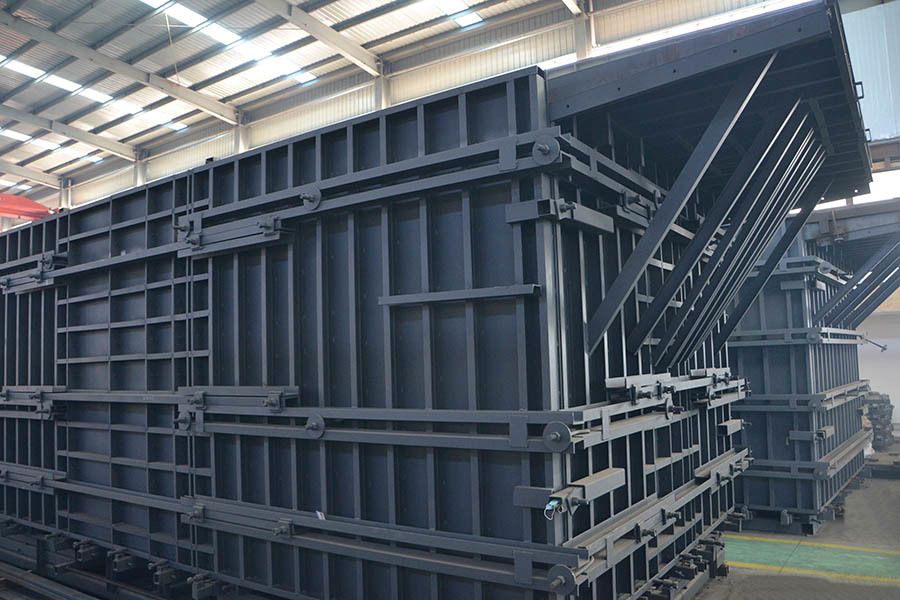
Stepping into the workshop feels like entering a sanctuary where focus and fluid motion coexist. The air carries a faint metallic tang, underscored by the rhythmic hum of equipment calibrating with exacting standards. Every surface seems deliberately placed, from the neatly arranged vials of raw materials to the towering digital interfaces that monitor temperature and viscosity in real time. It’s immediately clear that nothing here is left to chance; each tool and technique has been refined through years of iterative improvement.
The heart of the operation lies in the delicate dance between automated dispensing systems and the watchful eyes of the artisans. As molten streams arc into waiting molds, there’s a palpable tension — a split-second miscalculation could throw off an entire batch. Yet the crew moves with a quiet confidence, adjusting nozzles and tweaking pressure settings by instinct honed through countless cycles. It’s this fusion of algorithmic precision and human intuition that elevates the process beyond mere manufacturing into something resembling alchemy.
What lingers after leaving is an appreciation for the unseen choreography that turns raw elements into flawless final forms. In an industry often dominated by speed and scale, this workshop chooses a different path — one where every pour is a deliberate act, and perfection is pursued not as a slogan but as a daily practice. The result isn’t just a product; it’s a testament to what happens when passion for precision is poured into every single step.
Custom Creations That Turn Blueprints Into Concrete Reality
There’s a quiet magic in watching a sketch on a napkin slowly become a place where people will laugh, eat, and live. It starts with listening—really listening—to the way someone describes their morning light, the kind of gatherings they imagine, the small rituals a space should hold. Those early conversations are where the real design is born. Not in trends or resale value, but in the way a family actually moves through their day.
From there, it’s a matter of translation: turning those stories into lines on a page, and later into timber, stone, and glass. The process is less about grand gestures and more about the thousand small decisions that nobody sees—the angle of a windowsill that frames the garden just so, the texture of a wall that catches afternoon shadows, the hidden nook that becomes a child’s secret reading spot. These aren’t features you order from a catalog; they’re discovered through trial, conversation, and a genuine curiosity about how a space can feel.
By the time the last nail is driven, the creation stands as something entirely personal. It carries the fingerprints of its makers and the heartbeat of its inhabitants. And while the blueprints are rolled away, what remains is a living, breathing place that couldn’t exist anywhere else—proof that the best designs aren’t just built, they’re grown from the ground up, with patience and an ear to the ground.
The Unseen Engineering Behind Crack-Free Walls Every Time
Most people never think about the subtle forces constantly acting on a wall—temperature swings, humidity changes, the gradual settling of a foundation. What they see is a flawless surface that stays that way for years. Behind that reliability is a carefully orchestrated interplay of material science and structural foresight. Concrete and mortar aren’t just mixed and poured; their composition is adjusted with additives that control curing time, improve bonding, and allow micro-movements without fracturing. This isn’t guesswork but a precise calibration of chemistry and physics, ensuring the wall breathes and flexes just enough to stay intact.
Equally critical are the hidden geometric reinforcements that counteract natural stress points. Engineers embed control joints and strategic reinforcement that invite the wall to crack in predetermined, invisible locations, or not at all. Tiny fibers or mesh layers distribute tension so evenly that weak spots never have a chance to develop. It’s a quiet, responsive skeleton working beneath the plaster or paint, absorbing shifts that would otherwise telegraph straight through to the surface. Even the sequence of construction—where and when expansion gaps are placed—follows a logic based on decades of field observation and computational modeling.
What seals the deal is a relentless attention to the invisible: curing conditions kept within tight humidity and temperature ranges, substrates prepared with almost obsessive consistency, and techniques that eliminate air pockets or uneven bonding. These aren’t glamorous details, but they’re the reason a wall can face seasonal extremes without a single hairline fracture. It’s engineering that never asks for recognition, precisely because it never fails.
Real Builders on Why They Keep Coming Back for Our Moulds
Every time we ask, the answer is almost predictable—our moulds just don’t let them down. A veteran contractor once said, “I’ve poured hundreds of walls, and yours are the only ones that never warp, even after years of hard use.” It’s that reliability, pour after pour, that keeps them bypassing cheaper options. They know a warped mould means lost time and money, so they stick with what works.
But it’s not just about durability. Another builder mentioned how our stripping process is so smooth it almost feels like the concrete’s doing half the work. “It’s the little things,” he shrugged, “like not having to fight the formwork when you’re on a tight schedule.” That ease of use adds up—fewer crew frustrations, quicker turnarounds, and a finish that makes them proud to put their name on the job.
And then there’s the support. When a custom project threw a curveball, one team called us in a pinch. We didn’t just send a replacement part; we stayed on the phone walking them through an adaptation. They still bring that up, saying no other supplier would’ve done that. That kind of partnership, combined with moulds that hold their accuracy, is why they wouldn’t dream of switching.
Rethinking Sustainability: Moulds That Cut Waste, Not Corners
In an industry often fixated on incremental improvements, the real shift comes from reimagining the very tools we use. Moulds designed for sustainability don't just trim excess material—they fundamentally alter how we think about waste. Instead of accepting that production inevitably leaves a trail of unusable plastic or metal, these next-generation moulds integrate precision engineering with adaptive design, ensuring that every gram of raw material finds purpose. The focus moves from merely reducing scrap to creating systems where leftover material is a rarity, not a budget line item. It’s a quiet revolution happening inside factories, where less truly becomes more—not through compromise, but through intelligent design that respects both resources and the bottom line.
The magic lies in the details: advanced simulation software now predicts flow and cooling patterns so accurately that trial runs shrink to a fraction of what they once were. Gone are the days of overshooting tolerances ‘just to be safe’ and producing mountains of rejects. Modern moulds embed sensors and self-correcting mechanisms that adjust pressure and temperature in real time, catching variances before they turn into waste. This isn’t about cutting corners—it’s about cutting out the inefficiencies that have been blindly accepted for decades. The result is a manufacturing process that feels almost frugal in its precision, yet delivers components that are consistently flawless, batch after batch.
Perhaps most compelling is how this philosophy cascades through the supply chain. When moulds are engineered to last longer and adapt to small design tweaks without complete overhauls, the environmental footprint shrinks far beyond the factory floor. Clients notice: fewer replacements, less downtime, and a tangible story of stewardship they can take to their own customers. It changes the conversation from ‘how cheap can we produce this?’ to ‘how intelligently can we create value without leaving a trail of waste behind?’ In the end, sustainability through smarter moulds isn’t a checkbox—it’s a competitive edge that quietly reshapes what manufacturing can look like when it stops fighting against material limits and starts working with them.
FAQ
They're crafted from heavy-duty steel and engineered with precision, so each cast comes out consistent and smooth without extra finishing work.
They've been in the business for over two decades and have a long list of return customers, which speaks for itself.
Absolutely, the team can tailor the dimensions and features to fit your exact floor plan and design requirements.
You get hands-on assistance from their technicians during installation and ongoing guidance to keep your production running smoothly.
Yes, these moulds are made to endure repeated daily use on large-scale projects without compromising on quality or speed.
Since they're reusable for hundreds of pours and need very little upkeep, the per-unit cost drops significantly over time.
Conclusion
Behind every sturdy concrete home lies a forming system engineered to deliver more than just shape—it provides the backbone for lasting strength and precision. These moulds are crafted in a workshop where exact tolerances meet the raw rhythm of pouring, ensuring that each panel locks together seamlessly. The process begins with custom designs that turn blueprints into concrete reality, accommodating unique architectural visions without sacrificing structural integrity. Builders trust this equipment because of the unseen engineering that prevents cracks and warping, with ribbed reinforcement, intelligent joint placement, and controlled flex that safeguard walls against stress and settlement. It’s this attention to detail that makes the difference between a wall that weathers decades and one that shows early signs of failure.
The reason real builders keep coming back goes beyond reliability—it’s the partnership that understands site demands and adapts quickly. With a focus on rethinking sustainability, these moulds are designed to cut waste, not corners. Reusable, modular, and built to last through hundreds of pours, they minimize material scrap and reduce the carbon footprint of residential construction. Options for fast strip cycling and modified geometries also mean shorter project timelines without compromising quality. It’s a combination of craftsmanship, customization, and responsible manufacturing that sets this solution apart—quietly shaping neighborhoods with homes that stand firm while respecting the resources that made them.
Contact Us
Contact Person: Zhang Zhenlai
Email: [email protected]
Tel/WhatsApp: 8618563210000
Website: https://en.lugongmachinery.com/