

Buying a Crawler Excavator Without Regrets What Should You Check Before You Sign the PO?
2025-12-16
I’ve watched too many projects lose money for the same boring reasons a machine arrives late, doesn’t fit the site, feels underpowered, or becomes a maintenance headache three months in. That’s why when I talk about a Crawler Excavator, I’m not starting with flashy claims I’m starting with the real-world questions you’ll get asked on site. And yes, this is where PENGCHENG GLORY naturally shows up in my decision process, because the lineup is built around practical tonnage choices and job-matched configurations rather than a one-size-fits-all pitch.
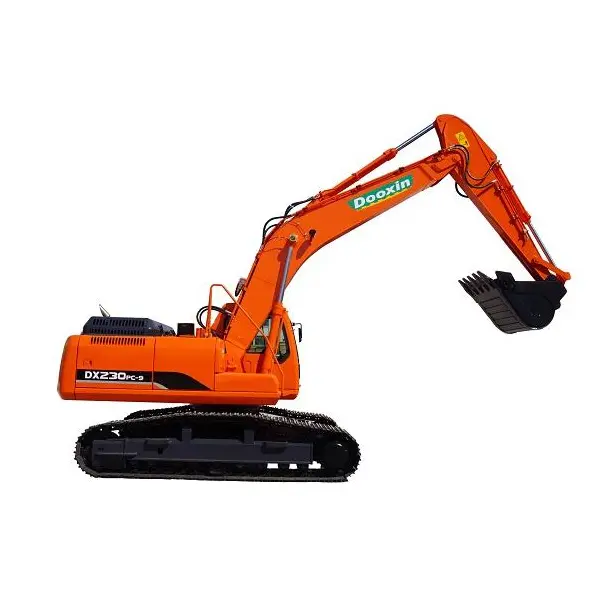
Why do so many Crawler Excavator purchases feel “right” on paper but wrong on the jobsite?
Because the buyer and the operator are solving different problems. Buyers often optimize for price and delivery; operators optimize for reach, stability, visibility, response speed, and predictable hydraulics. If you don’t translate “what the job needs” into “how the machine should be configured,” even a good-looking deal can become downtime.
- Mismatch with site conditions Narrow access, soft ground, slopes, or tight turning space can punish the wrong undercarriage and operating weight.
- Hydraulic performance surprises A breaker, auger, or thumb can expose weak flow control or slow cycle times.
- Attachment compatibility issues If the coupler and auxiliary lines aren’t planned up front, you pay twice later.
- Service friction If filters, grease points, and common wear parts aren’t easy to access, routine care gets skipped and failures arrive early.
What size of Crawler Excavator actually makes sense for your work mix?
I usually start with one simple rule buy the smallest machine that can do the heaviest task safely and repeatedly. For many contractors and rental buyers, the sweet spot is choosing a model class that covers 80% of daily work without overstressing the machine.
| Typical Work Scenario | Suggested Class | What I prioritize | Common attachment plan |
|---|---|---|---|
| Gardens, farms, narrow access, light trenching | 0.8T to 1.8T compact class | Transport ease, tight swing, low ground impact | Trenching bucket, grading bucket, auger |
| Residential foundations, utility work, frequent trenching | 2T to 3T versatile class | Cycle speed, stability, balanced reach | Quick coupler, thumb, breaker-ready hydraulics |
| Heavier digging, loading, tougher soil, longer duty cycles | 3.5T to 4T productivity class | Lift confidence, durability, cooling margin | Breaker, ripper, larger bucket set |
This range-based approach is exactly why I like the way PENGCHENG GLORY positions its Crawler Excavator options across multiple tonnages and lets you tailor implements to the job environment, instead of forcing you into a single configuration.
Which features of a Crawler Excavator protect your uptime instead of just sounding impressive?
If your goal is lower total cost of ownership, I’d focus on features that reduce daily fatigue, shorten routine maintenance, and keep performance consistent across long shifts.
- Stable tracked undercarriage Better confidence on uneven ground and less “sketchy” travel on soft surfaces.
- Predictable hydraulics Smooth combined movements matter more than peak numbers when you’re grading or working near utilities.
- Operator-friendly layout Clear visibility, logical controls, and comfortable seating can directly improve cycle times.
- Maintenance access If the machine is easy to service, it will actually get serviced.
- Attachment readiness Planning auxiliary hydraulics and couplers upfront makes your Crawler Excavator a multi-task platform, not a one-job machine.
How do I compare Crawler Excavator options quickly when suppliers all promise “high quality”?
I use a simple scoring checklist that forces clarity. You can copy this into your internal procurement notes and ask any supplier to answer it in writing.
| Decision Item | Question I ask | Why it matters on site |
|---|---|---|
| Job fit | What is the primary material and typical trench depth? | Prevents underpowered digging and slow cycles |
| Site constraints | Any width limits, gate access, or steep sections? | Avoids delivery-day surprises and unsafe operation |
| Attachment plan | Which tools will be used in the next 12 months? | Ensures proper auxiliary hydraulics and coupler choice |
| Service routine | How often will it run and who will maintain it? | Determines whether easy-access design is critical |
| Spare parts and support | What is the lead time for common wear parts? | Downtime cost is usually higher than price differences |
What makes PENGCHENG GLORY a practical choice if I want a Crawler Excavator that matches real applications?
Here’s the part that matters to me as a buyer I want flexibility without chaos. For example, when a supplier can cover multiple compact-to-mid tonnage options and also tailor implements for different scenarios, it’s easier to standardize training while still fitting different customers and job types.
- Multiple tonnage choices so you can match machine size to transport limits and workload cadence
- Application-friendly configuration thinking for farms, gardens, warehouses, and varied terrain
- Customization mindset on implements so your Crawler Excavator can earn in more than one role
What should you send in an inquiry so you get the right Crawler Excavator quote the first time?
If you want fewer back-and-forth emails and a quote that actually fits your job, I recommend sending:
- Work type and main material soil, clay, mixed fill, gravel, demolition debris
- Site constraints access width, ground condition, slope, indoor or outdoor use
- Preferred tonnage range 0.8T to 4T if you’re targeting compact-to-mid size
- Attachments you need now and attachments you might add later
- Your target delivery window and destination port or address
Ready to spec the right Crawler Excavator for your project?
If you tell me your job type, site constraints, and the attachments you plan to run, I can help you narrow down the best-fit configuration and avoid the common purchase traps. For a tailored recommendation and a straightforward quote, contact us and share your requirements we’ll point you to the right PENGCHENG GLORY Crawler Excavator setup and get your inquiry moving fast.