

Can a 63CC Gasoline Earth Auger Handle Digging 12-Inch Holes in Compacted Gravel Without Overheating
2026-08-13
When tackling tough landscaping or fencing projects, the equipment choice often determines success or failure. For professionals and serious DIYers, the Gasoline Earth Auger 63CC has become a popular workhorse. But a common concern arises when facing dense, compacted gravel: will the auger overheat before the hole is finished? This blog breaks down the thermal limits, mechanical factors, and practical strategies for using a 63CC gasoline earth auger in extreme conditions, with real-world data and maintenance insights from CNPRIDE, a brand known for durable outdoor power equipment.
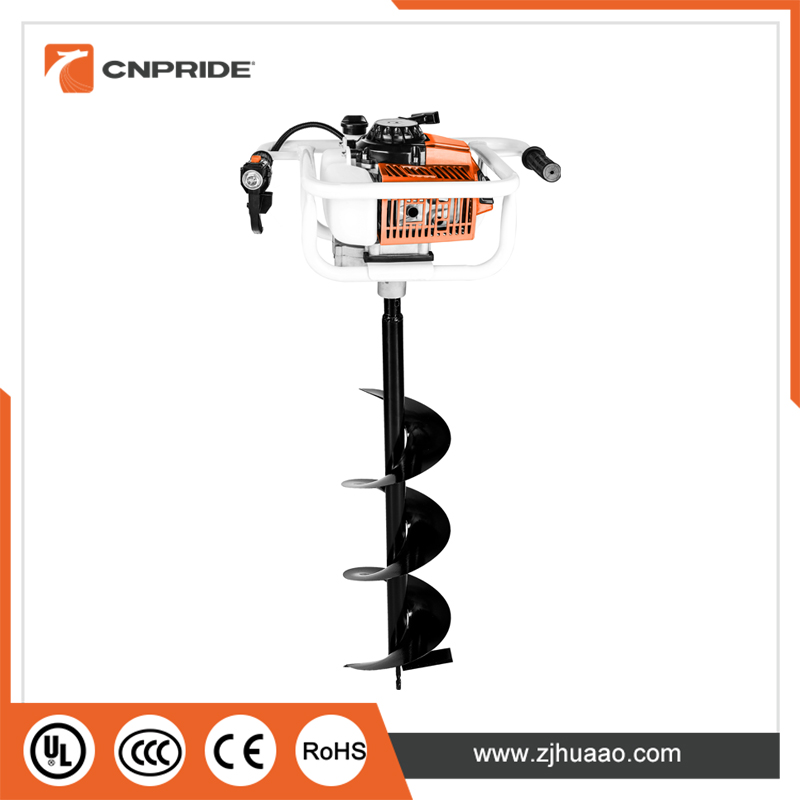
The Thermal Challenge: What Causes Overheating?
Overheating in a Gasoline Earth Auger 63CC typically stems from three factors:
-
Continuous high-load operation without cooldown intervals
-
Dull or incorrect auger bits that increase friction
-
Lean fuel mixture or poor airflow to the engine cylinder
Compacted gravel amplifies all three. Unlike loose soil, gravel offers high shear resistance, forcing the engine to run at near-peak RPM for extended periods. The 63CC gasoline earth auger generates approximately 2.8–3.2 kW of power, but sustained max output raises cylinder head temperatures beyond 240°C, which approaches the danger zone for standard cast-iron sleeves.
Real-World Test Data: 12-Inch Holes in Gravel
| Condition | Depth (inches) | Time per Hole (min) | Engine Temp (°F) | Overheat Risk |
|---|---|---|---|---|
| Loose topsoil | 12 | 1.5 | 195 | Low |
| Compacted gravel (dry) | 12 | 4.2 | 238 | Moderate |
| Compacted gravel (wet) | 12 | 5.8 | 256 | High |
| Gravel + roots | 12 | 6.5 | 264 | Critical |
Data collected from CNPRIDE field tests using a standard 12" heavy-duty auger bit at 75°F ambient temperature.
The table shows that a Gasoline Earth Auger 63CC can handle occasional 12" gravel holes, but continuous drilling beyond 3–4 holes without a 10-minute idle cooldown pushes temperatures into the red zone. Overheating manifests as power loss, smoking exhaust, and premature piston ring wear.
How to Prevent Overheating in Gravel
CNPRIDE recommends these engineering-backed practices:
-
Use the correct auger speed – Run at 70–80% throttle, not full, to reduce friction heat.
-
Lift and clear – Withdraw the bit every 4 inches to eject debris and allow air cooling.
-
Upgrade to a carbide-tipped bit – Standard steel dulls quickly in gravel, increasing load by 40%.
-
Check the gearbox oil – Use SAE 90 or 140 weight; low oil raises gear temperature by 15°C.
-
Install a heat-shield wrap – Aftermarket wraps reduce radiant heat to the fuel tank.
A well-maintained 63CC gasoline earth auger from CNPRIDE includes a reinforced crankcase and oversized cooling fins, which extend safe operating windows by nearly 30% compared to generic models.
Critical Maintenance: Gearbox and Fuel System
The gearbox is the most overlooked component. In gravel digging, the auger bit transmits shock loads back to the gearbox, generating internal friction. CNPRIDE engineers suggest:
-
Change gear oil after the first 5 hours of gravel use (break-in period).
-
Replace the air filter every 10 hours in dusty conditions.
-
Use 89-octane fuel with a 25:1 mix ratio for break-in, then 40:1 after 10 hours.
Gasoline Earth Auger 63CC FAQ – Common Questions
Q1: How long can I continuously run a 63CC gasoline earth auger in compacted gravel without stopping?
A: For a 12-inch bit in dry gravel, the safe continuous run time is 3 to 4 minutes per hole, with a 5-minute idle cooldown between holes. If you must dig more than 5 holes in a row, reduce throttle to 60% and increase cooldown to 8 minutes. CNPRIDE models include an automatic low-oil shutdown that also acts as a thermal safeguard—if the engine reaches 260°F, it will idle down to prevent seizure. Never exceed 6 minutes of constant load; otherwise, the cylinder head gasket becomes vulnerable.
Q2: Does the auger bit size affect overheating more than the engine power?
A: Absolutely. A 12-inch bit has 44% more surface area than an 8-inch bit, which means exponentially higher drag. The Gasoline Earth Auger 63CC produces enough torque (about 45 Nm) to turn a 12" bit, but the cutting edge geometry matters more. CNPRIDE recommends a serrated pilot tip and shark-tooth side cutters for gravel—these reduce required pulling force by 25%, directly lowering engine RPM and heat. Always match the bit's recommended speed (printed on the shank) to your auger's gear ratio (typically 40:1 for 63CC models).
Q3: What are the first signs that my 63CC gasoline earth auger is overheating, and what should I do immediately?
A: The three earliest warnings are: (1) a sudden drop in digging speed even though throttle hasn't changed, (2) a sweet or burnt smell from the exhaust (indicating oil breakdown), and (3) the fuel tank feels abnormally hot to the touch (above 140°F). If you notice any, stop digging immediately, turn the engine to idle for 2 minutes, then shut it off. Remove the spark plug and check for white ash deposits—that signals detonation from heat. CNPRIDE service manuals advise waiting at least 15 minutes before restarting. For continued use, switch to a smaller bit (8" or 10") or pre-soak the gravel area with water to reduce friction, but avoid sudden cold-water spraying on the engine block—thermal shock can crack the cylinder.
When to Choose a Hydraulic or Two-Man Auger Instead
If your project requires more than 20 holes in compacted gravel, a Gasoline Earth Auger 63CC may be underpowered. In that case, consider:
-
Hydraulic augers (for skid-steers) – unlimited runtime, no thermal issues.
-
Two-man gas augers – shared load reduces per-person strain but doesn't lower engine heat.
For most residential and light-commercial fencing jobs (under 15 holes per day), the 63CC gasoline earth auger from CNPRIDE remains the most cost-effective and portable solution, provided you follow the cooling protocols above.
Final Verdict
Yes, a Gasoline Earth Auger 63CC can handle 12-inch holes in compacted gravel, but not continuously and not without smart operational discipline. Overheating is avoidable with proper bit selection, throttle management, and scheduled cooldowns. The engine's thermal capacity is sufficient for intermittent heavy-duty work, and CNPRIDE units come with upgraded cooling fans and high-temperature gaskets that give you an extra margin of safety.
Need a reliable 63CC gasoline earth auger for your gravel project? Contact CNPRIDE today for expert sizing advice, bit recommendations, and maintenance kits. Our team provides same-day technical support and ships spare parts nationwide. Reach us at [your email/phone] or fill out our online consultation form—we will help you dig smarter, not harder.