

Can a Horizontal Bitumen Storage Tank Be Converted for Use with Modified or Polymer-Modified Bitumen
2026-08-13
For asphalt plant operators and road construction contractors, the shift toward polymer-modified bitumen (PMB) and other advanced binders is no longer a trend—it is an industry standard. This raises a critical operational question: can your existing Horizontal Bitumen Storage Tank be adapted for these demanding materials, or does the transition require a complete capital investment in new equipment? At CXTCM, we have evaluated dozens of storage configurations across North America and Asia, and the answer is rarely a simple “yes” or “no.” The feasibility depends on several engineering factors, from heating system capacity to agitator design and material compatibility.
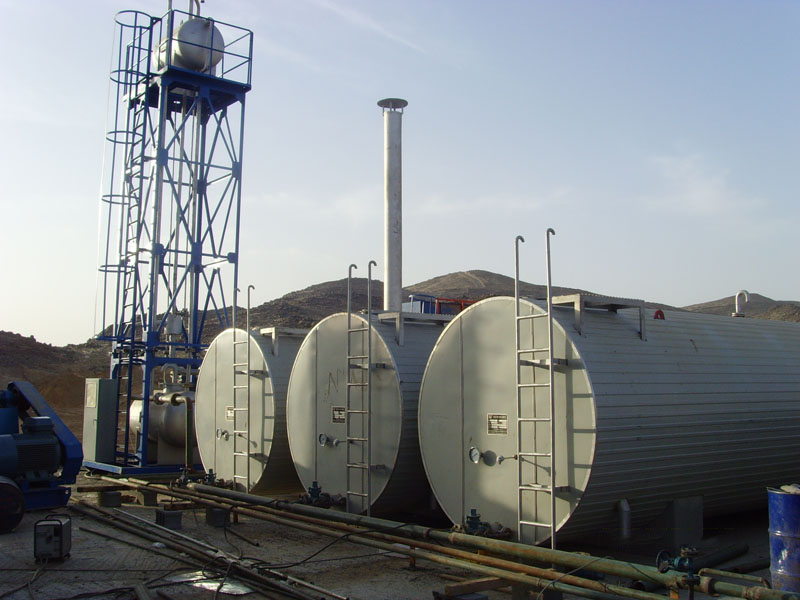
The Core Challenge: Why Modified Bitumen Is Different
Unmodified penetration-grade bitumen behaves predictably under standard storage conditions (140–160°C). Polymer-modified bitumen, however, contains elastomeric or plastomeric additives—typically SBS (styrene-butadiene-styrene) or EVA (ethylene-vinyl acetate)—that fundamentally alter rheological properties. These modifications introduce three storage-specific risks:
-
Phase separation – Polymers tend to segregate from the base bitumen if not continuously agitated.
-
Higher viscosity – PMB requires 10–20°C higher working temperatures to maintain pumpability.
-
Thermal degradation – Excessive or uneven heating breaks down polymer chains, permanently ruining the binder.
A standard Horizontal Bitumen Storage Tank designed for neat bitumen lacks the internal dynamics to mitigate these risks. However, CXTCM has successfully retrofitted over 200 tanks with targeted upgrades, proving that conversion is viable under the right conditions.
Critical Retrofit Assessment Criteria
Before modifying any tank, engineers must evaluate five core systems. The table below outlines the minimum requirements for safe PMB storage versus typical as-delivered configurations.
| System Component | Neat Bitumen Standard | PMB-Ready Requirement | Retrofit Feasibility |
|---|---|---|---|
| Heating medium | Thermal oil coils (single zone) | Multi-zone coils with 20% extra surface area | High – add secondary zone |
| Agitation | None or light circulation pump | Slow-speed paddle or anchor agitator (5–8 RPM) | Medium – requires shell modification |
| Temperature control | ±5°C accuracy | ±2°C accuracy with PID controllers | High – upgrade control panel |
| Internal coating | Carbon steel (uncoated) | Epoxy-phenolic or stainless-steel cladding | Low – costly, often uneconomical |
| Recirculation line | Single suction point | Bottom-sweep return with in-line static mixer | High – add external loop |
Based on CXTCM’s field data, the most cost-effective conversion path focuses on upgrading the heating and agitation systems while leaving the main shell intact—provided the tank’s age and wall thickness pass a non-destructive testing (NDT) inspection.
Step-by-Step Conversion Protocol for a Horizontal Bitumen Storage Tank
If the assessment confirms structural integrity, the actual retrofit follows a disciplined five-phase process:
-
Thermal modeling – Calculate new heat demand using the modified binder’s specific heat capacity and target temperature (typically 170–185°C).
-
Agitator installation – Mount a side-entry or top-entry slow-speed agitator with variable frequency drive (VFD) to handle viscosity swings.
-
Control system upgrade – Replace analog thermostats with digital PLC-based controls that support ramp-soak profiles to prevent polymer scorching.
-
Piping reconfiguration – Enlarge suction and return lines by one nominal pipe size (NPS) to accommodate higher friction losses.
-
Commissioning trial – Run a 72-hour test with actual PMB, monitoring phase stability via fluorescence microscopy.
CXTCM recommends that clients budget 15–20% of a new tank’s cost for a full conversion—far less than the 100% outlay for replacement.
Frequently Asked Questions About Horizontal Bitumen Storage Tank Conversions
Q1: What is the biggest operational risk when converting a Horizontal Bitumen Storage Tank for PMB service?
A1: The single greatest risk is polymer settling and gelation at the bottom of the tank. Unlike vertical tanks where natural convection assists mixing, a Horizontal Bitumen Storage Tank has a large flat bottom surface where stagnant zones form easily. Without a properly sized bottom-sweep agitator running continuously during filling, holding, and discharging cycles, polymer-rich phases can precipitate within 4–6 hours, leading to plugged outlet valves and off-spec binder. CXTCM mitigates this by installing elliptical-bottom baffles and pairing them with a timed purge cycle that reverses flow direction every 30 minutes.
Q2: Does a converted Horizontal Bitumen Storage Tank require different insulation materials than a standard unit?
A2: Yes, absolutely. PMB storage demands higher surface temperatures (up to 190°C), which accelerates degradation of conventional mineral wool or fiberglass insulation. For a retrofitted Horizontal Bitumen Storage Tank, CXTCM specifies high-density calcium silicate or aerogel blanket insulation with a minimum service temperature of 220°C. Additionally, the outer jacketing must be upgraded from aluminum to stainless steel (304 grade) to resist the increased thermal expansion stress. Standard insulation with a 0.5 W/m·K thermal conductivity will cause a 15–18% heat loss penalty over a 24-hour hold period—an unacceptable cost for continuous PMB production.
Q3: How do I know if my existing Horizontal Bitumen Storage Tank shell can withstand the higher viscosity-induced pressure?
A3: The shell’s pressure rating is rarely the limiting factor—viscosity increases pressure in the discharge pump, not in the tank body (which remains atmospheric). The real concern is the nozzle and manway attachment welds. Higher-viscosity PMB requires stronger agitator torque, which transmits cyclic loads to the tank’s mounting pads. CXTCM performs a finite element analysis (FEA) on all weld joints and shell stiffening rings. If the FEA shows stress above 85% of the material’s yield strength at 190°C, we recommend weld overlay reinforcement or external stiffener collars. In over 90% of cases, shells built to API 650 or EN 14015 standards pass this test without major reinforcement.
Economic Justification – When to Retrofit vs. Replace
The decision ultimately hinges on tank age and expected PMB throughput. CXTCM uses a simple decision matrix:
| Tank Age | Annual PMB Volume (<5,000 tons) | Annual PMB Volume (>5,000 tons) |
|---|---|---|
| < 10 years | Retrofit recommended – ROI within 18 months | Retrofit with spare pump – ROI within 12 months |
| 10–20 years | Retrofit with NDT waiver | Replace – maintenance cost exceeds savings |
| > 20 years | Replace – shell fatigue risk | Replace – mandatory per insurance guidelines |
For most mid-sized plants, a Horizontal Bitumen Storage Tank under 15 years old offers a strong return on retrofitting investment, especially when paired with CXTCM’s modular agitator skids that cut installation time by 40%.
Final Verdict from CXTCM Engineering
A Horizontal Bitumen Storage Tank can indeed be converted for modified or polymer-modified bitumen—but only with disciplined engineering, proper material upgrades, and a commitment to continuous agitation and precise thermal control. The conversion is not a “bolt-on” job; it is a system-level re-engineering project. However, when executed correctly, it extends tank life by 8–12 years and delays a six-figure capital purchase.
Ready to Evaluate Your Horizontal Bitumen Storage Tank?
Every tank has a unique history of thermal cycles, previous binder types, and maintenance records. CXTCM offers a no-obligation onsite assessment that includes ultrasonic thickness testing, thermal imaging, and a customized retrofit proposal with firm cost estimates and payback calculations.
Contact us today to schedule your tank evaluation. Our engineering team will provide a detailed conversion roadmap within 5 business days—ensuring your PMB production stays on schedule and on budget. Reach out via our website or call your regional CXTCM representative to start the conversation.