

How Can 120 HP Oil-Injected Air Compressors Improve Industrial Productivity?
2026-09-29
For factories that depend on a stable compressed-air supply, compressor selection directly affects production continuity, energy consumption, maintenance requirements, and operating costs. A 120 HP class compressor is designed for demanding industrial applications where a combination of substantial airflow, reliable operation, and efficient power utilization is required. Atlas Copco 120 HP Oil Injected Air Compressors are commonly associated with rotary screw compression technology, while Taike provides industrial air-compression solutions for buyers who need dependable performance, practical configuration options, and professional support.
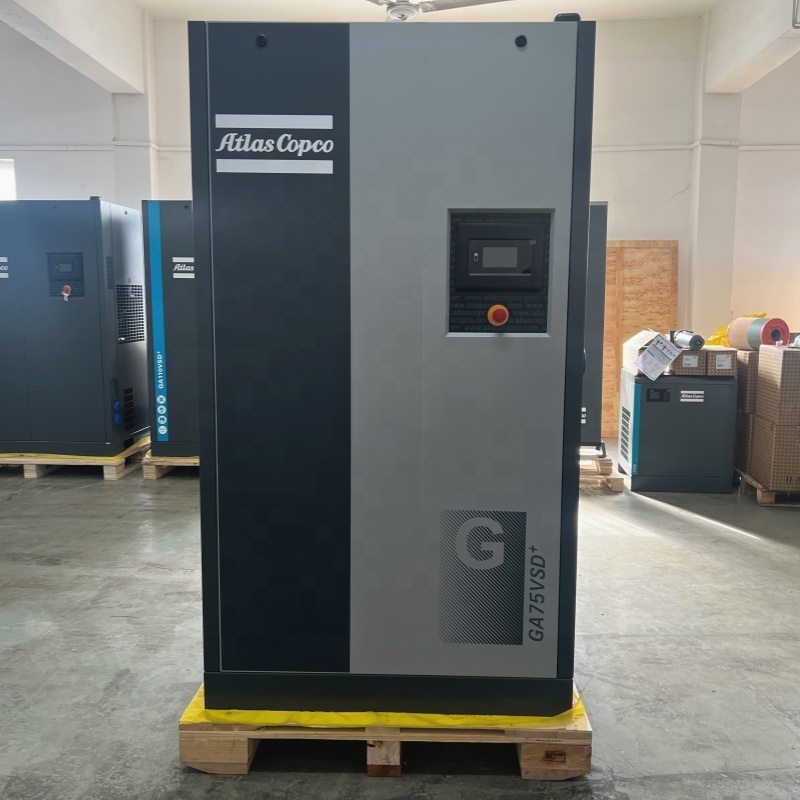
What Makes a 120 HP Oil-Injected Compressor Important?
Oil-injected rotary screw compressors use oil not only for lubrication but also for cooling and sealing during compression. The oil helps reduce friction between moving components, dissipate compression heat, and improve sealing between the rotors and housing.
For industrial users, these functions contribute to several practical benefits:
-
Stable compressed-air production for continuous manufacturing processes
-
Efficient heat management during extended operation
-
Reduced mechanical wear through effective lubrication
-
Consistent compression performance under appropriate operating conditions
-
Reliable support for pneumatic equipment and production lines
The importance of a compressor should therefore not be judged by horsepower alone. Working pressure, free air delivery, operating hours, air demand fluctuations, ambient conditions, and air quality requirements all influence the appropriate configuration.
How Does 120 HP Capacity Support Industrial Applications?
A 120 HP-class compressor can provide a substantial compressed-air source for applications such as manufacturing, automotive production, metal processing, packaging, textile production, workshops, and general industrial automation.
Typical pneumatic equipment may include:
-
CNC and machining equipment
-
Pneumatic tools
-
Automated production systems
-
Air-operated valves and actuators
-
Spray and coating equipment
-
Packaging machinery
-
Cleaning and material-handling systems
For operations with relatively stable air demand, a fixed-speed screw compressor can provide a straightforward solution. Where air consumption changes considerably throughout the production cycle, variable-speed technology can help match compressor output with actual demand. Atlas Copco states that its VSD technology adjusts motor speed according to air demand and can provide energy savings of up to 35% in applicable configurations.
Which Factors Should Buyers Compare?
Choosing between different 120 HP compressor configurations requires more than comparing purchase prices. Buyers should examine the complete operating environment.
| Factor | Why It Matters |
|---|---|
| Motor power | Determines the available power class |
| Air delivery | Indicates how much compressed air the system can provide |
| Working pressure | Must match the requirements of downstream equipment |
| Duty cycle | Influences long-term reliability and maintenance |
| Cooling method | Affects performance in different environments |
| Air treatment | Helps achieve the required compressed-air quality |
| Control system | Supports monitoring and operational adjustment |
| Energy efficiency | Can significantly influence lifecycle costs |
Atlas Copco's published compressor information covers a broad range of working pressures and capacities, while its oil-injected GA range includes both fixed-speed and variable-speed configurations.
What Role Does Oil Injection Play in Compressor Performance?
Oil injection is an important part of rotary screw compressor operation. During compression, the injected oil performs several functions simultaneously. According to Atlas Copco, it helps with cooling, lubrication, sealing, contaminant management, and noise reduction.
This makes oil management an important part of compressor maintenance. Oil quality, filtration, oil separation, and replacement intervals can all influence operating efficiency and equipment service life.
For buyers evaluating Atlas Copco 120 HP Oil Injected Air Compressors, the same principle applies to any comparable oil-injected screw compressor: the complete air-end, motor, cooling, filtration, controls, and maintenance system should be considered as one integrated solution.
How Can Taike Add Value to Industrial Air Solutions?
Taike focuses on practical industrial air-compression solutions for customers who need equipment matched to specific production conditions. Instead of considering horsepower as the only selection criterion, Taike can help buyers evaluate airflow requirements, pressure levels, working schedules, installation conditions, and application demands.
A properly configured system can help businesses pursue:
-
More stable pneumatic equipment operation
-
Better utilization of compressed air
-
Lower unnecessary energy consumption
-
Easier routine maintenance
-
Improved production continuity
-
More predictable equipment operation
For facilities operating multiple compressors, system-level management is particularly important. Modern compressor control and monitoring technologies can help users understand operating conditions and identify opportunities to improve efficiency. Atlas Copco, for example, integrates monitoring and control technologies such as Elektronikon and SMARTLINK into relevant compressor solutions.
Why Does Proper Sizing Matter?
Oversizing a compressor can increase unnecessary energy consumption, while undersizing may cause pressure instability or insufficient airflow during peak production periods. Therefore, the right compressor should be selected according to actual demand rather than simply choosing the largest available motor.
Before purchasing a 120 HP-class compressor, industrial buyers should consider:
-
Required pressure at the point of use
-
Average and peak airflow demand
-
Daily operating hours
-
Seasonal ambient temperature
-
Available electrical supply
-
Required compressed-air quality
-
Installation space
-
Maintenance resources
-
Future production expansion
This approach allows buyers to compare Atlas Copco 120 HP Oil Injected Air Compressors with other industrial compressor solutions on practical operating requirements rather than horsepower alone.
What Results Can a Properly Configured System Deliver?
The main objective of an industrial compressor is not simply to generate compressed air. It should provide the right amount of air at the required pressure while supporting reliable production.
A suitable system can help manufacturers achieve:
Stable production: Consistent air supply supports pneumatic machinery and automated processes.
Energy management: Efficient compressor technology and demand-based control can reduce unnecessary power consumption.
Equipment protection: Proper filtration, cooling, lubrication, and air treatment can help protect compressor components and downstream equipment.
Maintenance efficiency: Accessible components and intelligent monitoring can simplify maintenance planning.
Long-term value: Evaluating total operating requirements helps buyers make more informed equipment investments.
How Should Industrial Buyers Make the Final Selection?
A 120 HP oil-injected compressor can be an important part of a factory's compressed-air infrastructure, but the ideal configuration depends on the application. Buyers should compare technical specifications, operating conditions, energy requirements, maintenance arrangements, and after-sales support before making a purchasing decision.
Whether you are comparing Atlas Copco 120 HP Oil Injected Air Compressors with alternative industrial solutions or looking for a compressor configuration tailored to your production environment, Taike can help you assess the key requirements and identify a suitable compressed-air solution.
Looking for a dependable industrial air compressor solution for your factory? Contact us to discuss your airflow, pressure, operating schedule, and application requirements, and let Taike help you find a configuration designed around your actual production needs.