

How Can a Block Machine Improve Construction Efficiency?
2026-01-12
Summary: Block machines have revolutionized the construction industry by automating brick and block production. This article explores how these machines operate, their advantages, types, and practical applications, addressing common challenges faced by construction professionals. Readers will gain a comprehensive understanding of block machines and how they can optimize building projects.
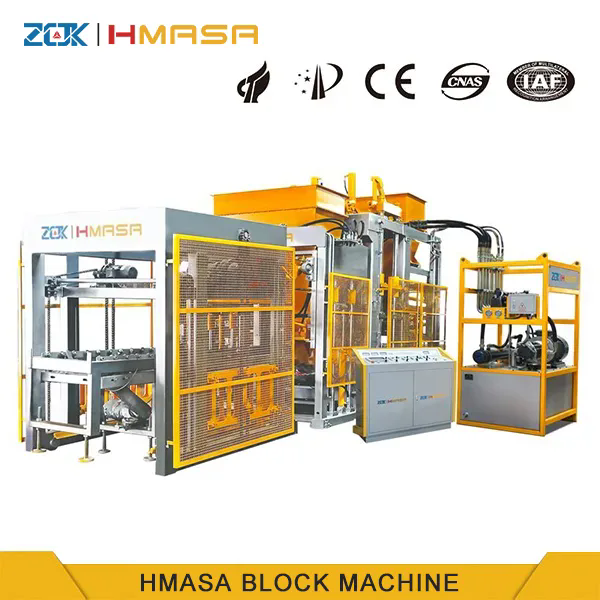
Table of Contents
- Overview of Block Machines
- Types of Block Machines
- Working Principle
- Key Benefits
- Material Requirements
- Common Challenges and Solutions
- Frequently Asked Questions
- Contact Us
Overview of Block Machines
Block machines are industrial machines designed to produce concrete blocks, hollow bricks, and other masonry products efficiently. These machines combine raw material mixing, molding, compressing, and curing into an automated or semi-automated workflow. By integrating advanced control systems, modern block machines minimize human intervention and ensure consistent product quality, making them essential for medium and large-scale construction projects.
Types of Block Machines
Block machines are classified based on automation, production capacity, and molding technology. Common types include:
- Manual Block Machines: Require significant human effort. Suitable for small-scale production or local construction projects.
- Semi-Automatic Block Machines: Partially automated, with motorized mixers and vibration systems, reducing labor but requiring operator control.
- Fully Automatic Block Machines: Equipped with PLC control systems, these machines handle the entire process from raw materials to palletized finished blocks with minimal supervision.
Below is a comparison table to highlight differences:
| Type | Automation Level | Production Capacity | Labor Requirement |
|---|---|---|---|
| Manual | Low | 50-200 blocks/day | High (4-6 workers) |
| Semi-Automatic | Medium | 500-2000 blocks/day | Moderate (2-3 workers) |
| Fully Automatic | High | 5000-10000+ blocks/day | Low (1-2 workers) |
Working Principle of a Block Machine
Modern block machines operate through a streamlined sequence:
- Raw Material Preparation: Cement, sand, fly ash, or aggregates are accurately measured and mixed.
- Batching and Feeding: Mixtures are fed into molds with precise proportions.
- Vibration and Compression: Hydraulic or mechanical systems compress materials into block shapes.
- Demolding: Finished blocks are ejected from molds automatically.
- Curing and Palletizing: Blocks are moved to curing areas or stacked on pallets for storage.
This automation ensures uniformity in block size and strength, reduces wastage, and increases overall production efficiency.
Key Benefits of Using a Block Machine
Block machines offer multiple advantages to construction operations:
- High Efficiency: Reduces production time and increases output compared to manual methods.
- Consistent Quality: Automated compression ensures blocks meet standard dimensions and compressive strength.
- Labor Savings: Only 1-2 operators are required for fully automated machines, minimizing labor costs.
- Material Flexibility: Can process a wide range of materials including fly ash, cement, and aggregates.
- Scalability: Suitable for small-scale workshops to large industrial plants.
Material Requirements
For optimal block production, high-quality raw materials are essential. Typical materials include:
- Cement (Portland cement recommended)
- Sand (well-graded river or crushed sand)
- Fly ash or pozzolanic additives
- Gravel or stone aggregates
- Water (clean and free of impurities)
Proper moisture control and accurate mixing ratios are critical to achieving strong, durable blocks.
Common Challenges and Solutions
Operators often face certain difficulties when using block machines. Below are typical issues and mitigation strategies:
- Uneven Block Strength: Ensure consistent mixing and correct compression settings.
- Machine Downtime: Implement regular maintenance and check hydraulic/pneumatic systems.
- Material Blockage: Use high-quality aggregates and maintain proper moisture levels to avoid mold clogging.
- Operator Error: Provide training and utilize machines with PLC control for automation support.
Frequently Asked Questions
Q1: How many blocks can a machine produce per day?
A1: Production depends on the machine type. Fully automatic machines can produce up to 10,000 blocks per day with only 1-2 operators.
Q2: Can a block machine use fly ash as raw material?
A2: Yes. Modern block machines support a variety of raw materials, including fly ash, cement, sand, and aggregates.
Q3: What maintenance is required?
A3: Regular cleaning of molds, checking hydraulic systems, and ensuring proper lubrication are essential for optimal performance.
Contact Us
ZCJK has over 23 years of experience in manufacturing high-quality block machines, providing smart, efficient, and reliable solutions for construction enterprises. For inquiries or personalized solutions to enhance your production, contact us today and explore how our machines can elevate your building operations.