Article Summary
In modern precision manufacturing, companies are constantly searching for ways to improve productivity, reduce production costs, and achieve higher machining accuracy. A CNC Horizontal Machining Center has become an essential solution for industries that require complex parts processing, stable performance, and efficient production workflows. By combining advanced CNC control technology, multi-axis machining capability, and automated operation features, this equipment helps manufacturers overcome common challenges such as long processing times, repeated positioning errors, and inefficient production processes.
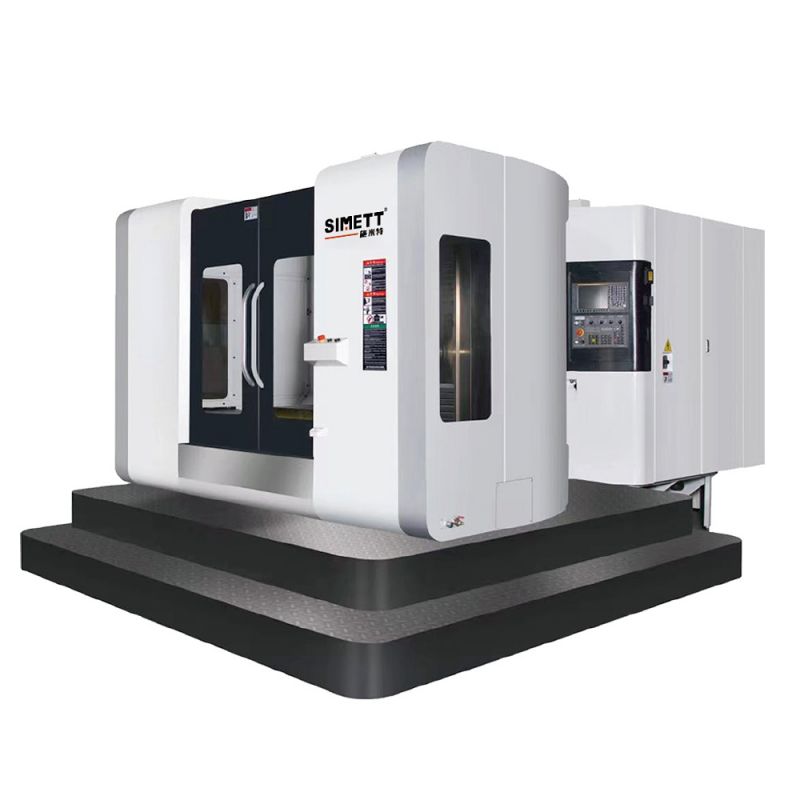
This article explains how a CNC Horizontal Machining Center works, why it is valuable for different industries, what problems it can solve, and how manufacturers can select the right machining solution. With professional manufacturing experience and advanced CNC technologies, SIMETT provides reliable CNC machining equipment designed to support global customers in achieving higher productivity and precision.
Article Outline
-
Understanding the basic structure and operating principles of CNC horizontal machining technology
-
Exploring efficiency improvements and production benefits
-
Analyzing applications across different industries
-
Identifying important purchasing factors
-
Learning maintenance methods for stable operation
-
Answering common questions about CNC horizontal machining centers
What Is a CNC Horizontal Machining Center?
A CNC Horizontal Machining Center is an advanced machine tool that uses computer numerical control technology to perform multiple machining operations automatically. Unlike vertical machining centers where the spindle is positioned vertically, a horizontal machining center uses a horizontal spindle orientation, allowing cutting tools to approach the workpiece from the side.
This structure provides several advantages, especially when machining large, heavy, or complex components. The horizontal design allows chips to fall away from the cutting area more naturally, improving machining stability and reducing the risk of chip accumulation affecting accuracy.
A typical CNC Horizontal Machining Center consists of several important components:
-
CNC Control System: Controls machining programs, movement accuracy, and production processes.
-
Horizontal Spindle: Provides strong cutting capability and stable tool rotation.
-
Worktable: Holds and positions workpieces accurately.
-
Automatic Tool Changer: Enables continuous machining with reduced manual intervention.
-
Machine Structure: Provides rigidity and vibration resistance during heavy cutting operations.
For manufacturers producing precision components in large quantities, this equipment offers a practical balance between flexibility, speed, and accuracy.
How Does a CNC Horizontal Machining Center Work?
A CNC Horizontal Machining Center operates through programmed instructions generated by engineers using CAD/CAM software. The machining program controls spindle speed, cutting path, tool changes, and axis movement.
The general working process includes the following steps:
-
Design Preparation: Engineers create a digital model of the component.
-
Program Generation: CAM software converts the design into CNC machining instructions.
-
Workpiece Installation: The material is securely fixed on the machining table.
-
Automatic Processing: The machine performs drilling, milling, boring, tapping, and other operations.
-
Quality Inspection: Finished components are measured to confirm dimensional accuracy.
The horizontal spindle arrangement allows manufacturers to perform deep cavity machining and multi-sided processing more effectively. When combined with rotary tables or additional axes, one setup can complete multiple machining procedures, reducing production interruptions.
Why Is a CNC Horizontal Machining Center Important for Modern Manufacturing?
Manufacturing industries are facing increasing pressure from shorter delivery cycles, higher quality requirements, and rising labor costs. A CNC Horizontal Machining Center helps companies respond to these challenges through automation and improved machining capability.
|
Manufacturing Requirement
|
How CNC Horizontal Machining Centers Help
|
|
Higher productivity
|
Multiple machining operations can be completed automatically with fewer setups.
|
|
Improved accuracy
|
CNC control ensures consistent positioning and repeatable machining results.
|
|
Reduced labor dependency
|
Automation decreases manual operation requirements.
|
|
Complex part processing
|
Multi-axis capability allows machining of complicated geometries.
|
|
Lower production waste
|
Precise cutting control reduces material errors and rework.
|
For companies working in automotive, aerospace, energy equipment, mold manufacturing, and precision engineering fields, investing in reliable horizontal machining technology can significantly improve production competitiveness.
What Manufacturing Challenges Can It Solve?
Many manufacturers experience similar production difficulties, including low machining efficiency, inconsistent product quality, and excessive machine downtime. A CNC Horizontal Machining Center addresses these issues through advanced mechanical design and intelligent control systems.
-
Problem: Frequent Workpiece Repositioning
Traditional machining methods often require multiple setups, increasing alignment errors. A horizontal machining center can complete more operations in a single setup, improving precision.
-
Problem: Long Production Cycles
Automatic tool changing systems and optimized machining paths reduce unnecessary waiting time.
-
Problem: Difficulty Processing Complex Parts
Advanced CNC functions allow manufacturers to handle complicated components with higher efficiency.
-
Problem: High Operational Costs
Automation improves resource utilization and reduces unnecessary labor expenses.
Where Are CNC Horizontal Machining Centers Used?
Because of their flexibility and precision, CNC Horizontal Machining Centers are widely used in industries that demand reliable machining performance.
-
Automotive Industry: Used for engine blocks, transmission components, and precision automotive parts.
-
Aerospace Industry: Suitable for machining lightweight but high-strength components requiring strict accuracy.
-
Mold Manufacturing: Supports complex cavity machining and detailed surface processing.
-
Energy Equipment: Helps produce large mechanical components with high structural requirements.
-
General Machinery: Provides efficient processing solutions for various industrial components.
What Features Should You Consider When Choosing a CNC Horizontal Machining Center?
Selecting the right machining center requires careful evaluation of production requirements, material types, component sizes, and future expansion needs.
|
Selection Factor
|
Key Consideration
|
|
Machine Rigidity
|
A strong structure improves vibration resistance and machining stability.
|
|
Spindle Performance
|
Higher spindle capability supports efficient cutting operations.
|
|
CNC System
|
An advanced control system improves operation convenience and precision.
|
|
Automation Options
|
Automatic tool changers and rotary tables improve productivity.
|
|
After-Sales Support
|
Professional technical support ensures long-term equipment reliability.
|
SIMETT focuses on providing CNC machining solutions that combine precision engineering, stable operation, and practical manufacturing value. The company understands that every production environment has different requirements, so equipment selection should always match actual application needs.
CNC Horizontal Machining Center vs Traditional Machining Equipment
|
Comparison Item
|
CNC Horizontal Machining Center
|
Traditional Machining Equipment
|
|
Automation Level
|
High automation with programmed operation
|
Requires more manual operation
|
|
Processing Efficiency
|
Suitable for continuous production
|
Lower efficiency for complex parts
|
|
Accuracy
|
High repeatability and precision
|
Depends heavily on operator skills
|
|
Complex Machining
|
Supports advanced multi-operation processing
|
Limited by manual adjustments
|
How Can You Maintain Long-Term Performance?
Proper maintenance is essential for keeping a CNC Horizontal Machining Center operating efficiently. Regular inspection and preventive maintenance can extend equipment lifespan and reduce unexpected downtime.
-
Clean chips and debris from the machining area regularly.
-
Check lubrication systems to ensure smooth mechanical movement.
-
Inspect cutting tools and replace worn tools promptly.
-
Monitor spindle performance and abnormal vibration.
-
Update CNC programs and maintain electrical systems properly.
-
Schedule professional maintenance inspections according to operating conditions.
A well-maintained machine delivers more stable performance, better machining quality, and a higher return on investment.
Frequently Asked Questions
Q1: What materials can a CNC Horizontal Machining Center process?
A CNC Horizontal Machining Center can process various materials, including steel, stainless steel, aluminum alloys, cast iron, and other industrial metals. The suitable cutting parameters depend on material characteristics and production requirements.
Q2: What is the main advantage of horizontal machining compared with vertical machining?
The horizontal spindle design provides better chip removal, stronger cutting stability, and improved efficiency for large or complex components.
Q3: Can a CNC Horizontal Machining Center reduce production costs?
Yes. By reducing manual operations, improving machining speed, and minimizing errors, it can help manufacturers reduce overall production costs.
Q4: How long can a CNC Horizontal Machining Center operate?
With proper maintenance, quality components, and correct operation procedures, a CNC Horizontal Machining Center can provide reliable service for many years.
Q5: Why choose SIMETT for CNC machining solutions?
SIMETT provides professional CNC equipment designed for precision manufacturing applications. Through reliable machine performance and customer-focused service, SIMETT helps businesses improve machining efficiency and achieve stable production results.
Conclusion
A CNC Horizontal Machining Center is a powerful solution for manufacturers seeking higher efficiency, improved accuracy, and more flexible production capabilities. Its advanced automation, strong cutting performance, and ability to process complex components make it an important investment for modern industrial manufacturing.
Whether your business needs to improve production capacity, reduce machining challenges, or upgrade existing manufacturing processes, choosing the right CNC equipment is essential. SIMETT provides dependable CNC machining solutions designed to meet different industrial requirements.
If you are looking for a professional CNC Horizontal Machining Center solution that can improve your manufacturing performance, please contact us today. SIMETT is ready to provide reliable equipment support and customized machining solutions for your business.