

Article Summary: Industrial dust affects product quality, equipment reliability, workplace cleanliness, and production costs. A cyclone dust collector provides a practical way to separate larger airborne particles from a moving gas stream through centrifugal force. This guide explains how cyclone separation works, which operating factors influence performance, how to select a suitable system, and how routine maintenance helps maintain reliable operation. It also explores industrial applications, common troubleshooting methods, and the advantages of combining cyclone separation with secondary filtration when finer dust must be captured.
Who should read this guide? Factory owners, plant engineers, environmental equipment purchasers, production managers, and maintenance teams looking for a dependable industrial dust collection solution.
1. Understanding Industrial Dust Control Challenges
Dust generation is an unavoidable part of many industrial processes. Cutting, grinding, crushing, conveying, mixing, and material handling can release particles into the surrounding air. If these particles are not controlled effectively, they may accumulate on machinery, contaminate finished products, increase cleaning requirements, and expose workers to potentially harmful airborne material.
For purchasing managers, the challenge is not simply finding a machine that collects dust. The real objective is to select equipment that matches the production process, manages the expected dust load, and operates reliably without creating excessive energy or maintenance costs.
A cyclone dust collector is often considered when a process generates substantial quantities of relatively coarse particles. Rather than relying entirely on a filter surface, it uses rotational airflow to separate particles from gas. This makes it a useful option for applications in which bulk dust removal and low-complexity operation are priorities.
Cleaner Production Areas
Capturing dust at suitable collection points helps reduce material accumulation around machinery and workstations.
Lower Filter Loading
When installed before a compatible secondary filter, a cyclone can remove much of the coarse material before it reaches the finer filtration stage.
Practical Maintenance
The absence of a primary fabric filter in a conventional cyclone can simplify routine service for appropriate dust applications.
Flexible Integration
Cyclone units can form part of a larger dust collection system designed around production equipment and ductwork.
2. How a Cyclone Dust Collector Works
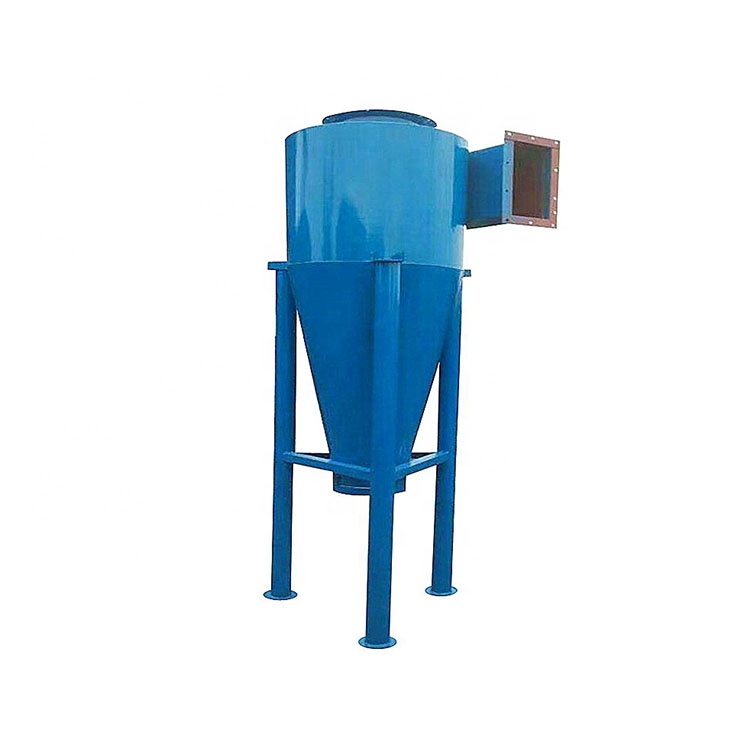
A cyclone dust collector separates particles from air or another compatible gas by using centrifugal force. Its geometry directs incoming dust-laden gas into a rotating flow, causing particles with sufficient inertia to move toward the outer wall. These particles then lose momentum and travel toward a collection hopper, while the cleaned gas exits through the outlet.
Step 1: Dust-Laden Gas Enters the Inlet
A fan or other suitable air-moving arrangement carries contaminated gas from the production process through ductwork to the cyclone inlet. In many conventional designs, the inlet introduces the gas tangentially, creating a rotating flow inside the cylindrical body.
Step 2: Rotational Motion Separates Particles
As the gas rotates, denser particles tend to migrate outward toward the cyclone wall. Their ability to separate depends on several interacting factors, including particle size, density, shape, airflow velocity, and the internal geometry of the equipment. Larger and denser particles are generally easier to collect than very fine particles.
Step 3: Separated Dust Moves Downward
Particles that reach the wall lose momentum through interaction with the wall and surrounding flow. Gravity and the internal gas pattern help move separated material down the conical section into the collection hopper. A properly designed discharge arrangement prevents accumulated dust from interfering with normal operation.
Step 4: Gas Leaves Through the Outlet
The gas follows an internal flow path toward the outlet, typically through a central vortex. Because separation is not perfect, some particles remain in the gas stream. When emission limits require more effective fine-particle capture, a cyclone may be followed by a cartridge filter, bag filter, or another suitable treatment stage.
3. Main Components and Their Functions
Although construction varies by model and application, most conventional cyclone dust collectors use several key components to establish a stable flow pattern and discharge collected material.
| Component | Main Function | What Buyers Should Check |
|---|---|---|
| Inlet duct | Introduces dust-laden gas into the cyclone. | Inlet dimensions, flow direction, and compatibility with the duct system. |
| Cylindrical body | Establishes the main rotating gas flow. | Material, diameter, wall thickness, and wear resistance. |
| Conical section | Guides separated particles toward the discharge point. | Geometry, internal condition, and suitability for the dust being handled. |
| Gas outlet | Allows the separated gas stream to leave the unit. | Outlet dimensions, duct connection, and pressure-loss requirements. |
| Dust hopper | Collects separated particles. | Capacity, access for cleaning, and dust discharge arrangements. |
| Discharge device | Removes accumulated material from the system. | Sealing performance, blockage resistance, and maintenance access. |
| Fan and ductwork | Provide and distribute the required airflow. | Actual operating airflow, system resistance, leakage, and fan suitability. |
Correct coordination between these components is essential. A well-manufactured cyclone may still perform poorly if the ductwork leaks, the fan cannot deliver the required operating airflow, or the dust discharge system allows air to enter through an unintended opening.
4. Key Benefits for Industrial Facilities
4.1 A Straightforward Separation Mechanism
Conventional cyclone dust collectors rely on airflow and equipment geometry rather than a primary fabric filter. This makes them attractive for applications involving large quantities of coarse dust, particularly when simple construction and accessible maintenance are important purchasing considerations.
4.2 Potentially Lower Routine Filter Maintenance
Because a basic cyclone does not depend on filter bags or cartridges for its primary separation stage, it avoids the filter replacement tasks associated with those components. The equipment still requires inspection, cleaning, and monitoring, and wear can occur when abrasive particles travel through the unit.
4.3 Useful Pretreatment for Fine Filtration
One of the most valuable roles of a cyclone is reducing the coarse-particle load entering a downstream filtration system. By removing a portion of the incoming dust first, the cyclone can help reduce filter loading and may extend service intervals when the system is properly designed and operated.
4.4 Adaptability Across Different Production Processes
Cyclone equipment can be engineered for different gas flow rates, particle characteristics, and industrial layouts. Depending on the application, facilities may use a single cyclone, multiple units, or a cyclone combined with another dust removal technology.
4.5 Potential for Recovering Valuable Material
Where collected dust is clean, safe to handle, and suitable for reuse, a cyclone may support material recovery. Examples can include certain process residues, coarse wood particles, and other reusable solids. Recovered material should only be reused after its quality, contamination risks, and process requirements have been evaluated.
5. Industrial Applications of Cyclone Dust Collectors
The suitability of a cyclone depends on the material being processed, the required degree of separation, and the operating conditions. Common applications include the following.
Woodworking and Furniture Manufacturing
Sawing, planing, routing, and coarse sanding can generate substantial amounts of wood chips and sawdust. Cyclone separation can help remove larger particles from the extracted air. Where fine wood dust must also be controlled, a properly designed secondary filtration stage is often necessary. Combustible wood dust also requires a suitable fire and explosion risk assessment.
Mining and Mineral Processing
Crushing, screening, and transferring certain mineral materials can produce coarse airborne particles. Cyclones may serve as part of a dust handling system, provided the equipment materials, wear protection, and airflow capacity are suitable for the application.
Cement and Building Materials
Material transfer, mixing, and selected processing operations can create mineral dust. Cyclones may be used for preliminary separation or in systems where the particle characteristics and required collection performance are appropriate. Fine cement dust generally calls for careful evaluation of downstream filtration and emission requirements.
Grain and Agricultural Processing
Grain handling, conveying, and processing can produce chaff and particulate material. A cyclone can separate suitable coarse particles, but combustible agricultural dust requires careful attention to ignition prevention, explosion protection, and applicable safety standards.
Metalworking and General Manufacturing
Some dry machining and material handling processes generate particles that can be separated using centrifugal action. However, metal fumes, very fine grinding dust, hot sparks, oily aerosols, and combustible metal powders may require specialized collection equipment and additional safety measures.
6. How to Select the Right Cyclone Dust Collector
Choosing equipment based only on its external dimensions or purchase price can lead to inadequate collection, excessive pressure loss, or costly modifications after installation. A structured selection process helps buyers evaluate the complete operating requirement before placing an order.
Step 1: Establish the Required Airflow
Determine the volume of gas that must pass through the collector under actual operating conditions. If several machines share a centralized collection system, calculate the required airflow based on their operating patterns and the intended combination of collection points. Include the resistance created by ductwork, fittings, hoods, filters, and other equipment.
Step 2: Understand the Dust Characteristics
Record the particle size distribution, density, shape, concentration, moisture content, and abrasive properties of the material. These characteristics influence separation efficiency, blockage risk, wear rates, and the suitability of different construction materials.
Step 3: Define the Required Separation Performance
Decide whether the objective is to remove coarse particles, protect a downstream filter, recover reusable material, or meet a specified exhaust concentration. Request performance information relevant to the actual operating conditions. A single efficiency figure should not be assumed to apply to every particle size or dust type.
Step 4: Evaluate Pressure Loss and Energy Use
Airflow resistance affects fan selection and ongoing electricity consumption. Compare the expected pressure drop across the cyclone with the total resistance of the collection system. A unit that provides useful separation but demands an unsuitable fan operating point may create avoidable operating costs.
Step 5: Confirm Space and Installation Requirements
Check available floor space, overall height, access for inspection, hopper clearance, support structures, duct connections, and the route for removing collected dust. Plan the installation around the existing production layout rather than treating the collector as an isolated piece of equipment.
Step 6: Review Maintenance and Safety Needs
Ask about wear-resistant areas, discharge arrangements, inspection access, replacement parts, and the recommended service schedule. For combustible or hazardous dust, the design must also address the relevant process hazards and local regulatory requirements.
| Selection Factor | Question to Ask | Why It Matters |
|---|---|---|
| Airflow | What operating air volume is required? | Determines the capacity and operating conditions of the system. |
| Particle size | Is the dust mainly coarse, fine, or mixed? | Influences expected separation performance and the need for additional filtration. |
| Material properties | Is the dust abrasive, sticky, moist, or combustible? | Affects construction, reliability, cleaning, and safety requirements. |
| Pressure loss | Can the fan deliver the required flow? | Helps avoid inadequate suction and unnecessary energy consumption. |
| Discharge capacity | How much dust will accumulate per shift? | Prevents hopper overfilling and interruptions to production. |
| Emission target | What outlet dust concentration is permitted? | Determines whether secondary filtration or further treatment is required. |
7. Factors Affecting Cyclone Collection Performance
Even a correctly selected cyclone can lose performance if operating conditions change. Understanding the following factors helps engineers identify the cause of poor collection before replacing equipment unnecessarily.
Airflow Velocity
The gas must enter and circulate at a suitable velocity for the cyclone geometry. Insufficient airflow may weaken separation, while excessive airflow can increase pressure loss, energy consumption, and particle re-entrainment or wear. The best operating point should be established from the equipment design and system requirements rather than from an arbitrary velocity target.
Particle Size and Density
Larger, denser particles are generally easier to separate than very fine, lightweight particles. Dust with a broad size distribution may therefore require a cyclone for coarse separation followed by a fine filter for smaller particles.
Internal Geometry and Leakage
The inlet, cylindrical body, cone, and outlet influence the internal vortex. Damage, inappropriate modifications, or leakage at connections can disturb the flow pattern. Inspection should include the areas exposed to the highest wear and the seals around the dust discharge equipment.
Dust Discharge Conditions
A full hopper or obstructed discharge can prevent the collector from removing separated solids effectively. In some arrangements, air entering through an inadequately sealed discharge point can also disrupt the intended flow. The discharge system should match the quantity and characteristics of the collected material.
Moisture and Sticky Material
Wet or sticky dust can adhere to internal surfaces and gradually narrow the flow path. If moisture is expected, confirm that the equipment is designed for those conditions and establish a cleaning strategy before installation.
8. Maintenance and Troubleshooting
Routine inspection helps maintain airflow, reduce unexpected downtime, and identify developing problems before they become expensive repairs. The exact maintenance interval depends on the dust properties, operating hours, equipment design, and manufacturer's recommendations.
Recommended Maintenance Checklist
- Inspect the inlet and outlet connections for loose joints, damage, and air leakage.
- Check the hopper and discharge device for blockages, overfilling, or irregular material flow.
- Inspect accessible internal surfaces for abrasion, corrosion, deposits, or deformation.
- Monitor fan operation, unusual vibration, noise, and changes in airflow.
- Check pressure readings against the system's established normal operating range.
- Inspect supports, access doors, seals, and fasteners according to the maintenance plan.
- Record inspection findings and compare operating trends over time.
Common Problems and Practical Responses
| Observed Problem | Possible Cause | Recommended Action |
|---|---|---|
| Dust remains in the outlet gas | Fine particles, unsuitable airflow, leakage, or incorrect application. | Check operating conditions and assess whether secondary filtration is required. |
| Weak suction at collection points | Duct leakage, blockage, fan problems, or excessive system resistance. | Inspect the duct network and fan operating point; measure airflow where possible. |
| Dust accumulates in the cone | Discharge obstruction, sticky material, or unsuitable hopper configuration. | Isolate the equipment safely and inspect the discharge mechanism and internal deposits. |
| Unusual vibration or noise | Fan imbalance, loose supports, wear, or mechanical interference. | Follow the equipment shutdown procedure and have the affected components inspected. |
| Frequent wear on internal surfaces | Abrasive particles, high local velocities, or unsuitable materials. | Review wear patterns and discuss suitable material or geometry improvements with the supplier. |
| Operating costs increase | Changing airflow, additional resistance, leakage, or poor maintenance. | Compare airflow and pressure readings with the original baseline and investigate changes. |
Before opening or cleaning a collector, stop and isolate the equipment in accordance with the site's lockout procedures. Allow moving parts to stop, control stored energy, and use appropriate personal protective equipment for the dust involved. Hazardous dust must be handled according to the applicable exposure-control and waste-management requirements.
9. Safety and Environmental Considerations
Dust collection performance should be assessed alongside worker protection, process safety, and environmental obligations. A cyclone that separates coarse material effectively does not automatically make the outlet gas safe to breathe or suitable for unrestricted discharge.
Control Dust at Its Source
Where practical, install suitable extraction hoods close to the point of dust generation. Effective source capture can prevent material from spreading throughout the facility and reduce the burden on the collection system.
Assess Combustible Dust Hazards
Wood dust, certain agricultural materials, and some metal powders can create fire or explosion hazards under suitable conditions. Depending on the material and process, a dust collection installation may require ignition-source control, bonding and grounding, explosion venting or suppression, isolation devices, and other engineered protections. A conventional cyclone should never be assumed to provide explosion protection by itself.
Verify Outlet Air Quality
Where air is returned indoors or discharged outdoors, evaluate the actual outlet performance against the applicable workplace and environmental requirements. Fine particulate capture may require a downstream filtration stage and appropriate monitoring.
Manage Collected Material Responsibly
Collected dust can contain hazardous substances or contaminants. Determine the correct storage, handling, transportation, and disposal procedures before planning for reuse or disposal.
10. Cyclone Dust Collection Solutions from Botou Xintian
Selecting an industrial dust collector is easier when the supplier understands the production process, the material being collected, and the practical limitations of the installation site. Botou Xintian Environmental Protection Equipment Co., Ltd. specializes in dust removal equipment and related accessories, with capabilities covering equipment design, manufacturing, installation, and commissioning.
The company's cyclone dust collector range is intended for industrial dust separation applications where centrifugal action can help remove particles from a gas stream. Depending on the process, cyclone equipment may be considered as a primary separator or as a pretreatment stage ahead of finer filtration.
What to Prepare Before Requesting a Quotation
- The industry and specific production process.
- The type of dust and any known particle-size information.
- Required airflow or available fan specifications.
- Gas temperature, moisture conditions, and other relevant operating details.
- The target collection performance or outlet emission requirement.
- Installation dimensions, duct connections, and available maintenance space.
- Any special requirements for abrasive, corrosive, hazardous, or combustible dust.
Providing this information helps the supplier evaluate equipment suitability and identify whether a standalone cyclone or a combined dust collection system is more appropriate. Ask for the proposed operating range, pressure-loss information, material specifications, maintenance requirements, and any applicable performance documentation before finalizing the purchase.
For product information, visit the Botou Xintian Cyclone Dust Collector page to explore the available equipment and discuss your application requirements with the manufacturer.
11. Frequently Asked Questions
1. What is a cyclone dust collector used for?
A cyclone dust collector separates suitable solid particles from a moving gas stream through centrifugal action. It is commonly used for coarse dust removal, bulk particle collection, and pretreatment before a secondary filter.
2. How does a cyclone dust collector remove dust?
Dust-laden gas enters the cyclone and forms a rotating flow. Particles move toward the outer wall, travel toward the collection hopper, and are discharged. The gas exits through the outlet, carrying any particles that have not been separated.
3. Can a cyclone dust collector capture fine dust?
It can capture some fine particles, but separation efficiency generally decreases as particle size becomes smaller. If the process requires high fine-particle removal or strict outlet limits, a suitable cartridge filter, bag filter, or another secondary treatment stage may be necessary.
4. Is a cyclone dust collector suitable for woodworking?
Yes, cyclones are commonly used to separate coarse sawdust and wood chips. Fine wood dust may require additional filtration. Because wood dust can be combustible, the complete installation must also be assessed for fire and explosion risks.
5. What affects cyclone dust collection efficiency?
Important factors include particle size and density, airflow velocity, cyclone geometry, inlet conditions, pressure loss, leakage, and dust discharge performance. The characteristics of the actual process should be considered when estimating collection performance.
6. Does a cyclone dust collector require filter replacement?
A conventional cyclone does not use a primary filter bag or cartridge, so those filter replacement tasks do not apply to the cyclone itself. However, connected secondary filters may require periodic cleaning or replacement, and the cyclone still needs inspection and maintenance.
7. How can I tell whether my cyclone is operating properly?
Monitor airflow, pressure conditions, dust discharge, outlet dust levels where applicable, and fan behavior. Compare the readings with the established operating baseline. A sudden change in performance should prompt an inspection of the ductwork, hopper, fan, and cyclone interior.
8. How do I choose the right cyclone dust collector capacity?
Start with the required airflow, the dust generation rate, particle characteristics, pressure-loss limits, installation conditions, and outlet requirements. Have the equipment selected against these operating conditions rather than choosing by nominal size alone.
9. Can multiple cyclone dust collectors be used in one system?
Yes. Multiple units may be used in parallel or in series depending on the required airflow and separation objectives. The configuration should be engineered to manage flow distribution, pressure loss, discharge arrangements, and the desired overall performance.
10. What information should I send to Botou Xintian for a quotation?
Share your application, dust type, estimated airflow, operating temperature, moisture conditions, required collection performance, available installation space, and any special safety requirements. These details help the supplier assess a suitable configuration and provide more relevant technical information.
Conclusion: Build a More Reliable Dust Collection System
A cyclone dust collector can be a valuable part of an industrial dust management strategy when the dust characteristics and operating conditions suit centrifugal separation. Its relatively straightforward design, ability to handle suitable coarse particles, and potential role as a pretreatment stage make it useful across a range of manufacturing and material-processing applications.
Successful implementation depends on more than purchasing the equipment. Correct airflow selection, compatible ductwork, effective dust discharge, regular inspection, and appropriate secondary filtration all contribute to dependable operation. Safety and environmental requirements must also be considered, particularly when handling fine, hazardous, or combustible dust.
Looking for a Suitable Cyclone Dust Collector?
Improve your dust collection planning with a solution matched to your material, airflow, production process, and installation requirements. Explore cyclone dust collector products from Botou Xintian and identify the information needed for your application.
Whether you are upgrading an existing system or planning a new production line, contact us to discuss your dust collection requirements, request product details, and learn more about suitable equipment configurations for your facility.
Contact Botou Xintian to start your inquiry.