

How Can a High Speed Steel Coil Slitting Machine Improve Metal Processing Efficiency?
2026-10-16
In today's competitive metal processing industry, manufacturers need equipment that delivers high productivity, precise cutting, and consistent strip quality. A High Speed Steel Coil Slitting Machine is designed to meet these demands by transforming wide steel coils into multiple narrower strips with controlled widths and clean edges. By combining high-speed operation with advanced slitting technology, this equipment helps steel service centers, metal fabricators, and coil processing plants improve production efficiency while reducing material waste. KINGREAL STEEL SLITTING provides coil slitting solutions designed to support different steel materials, production requirements, and industrial applications.
What Is a High Speed Steel Coil Slitting Machine?
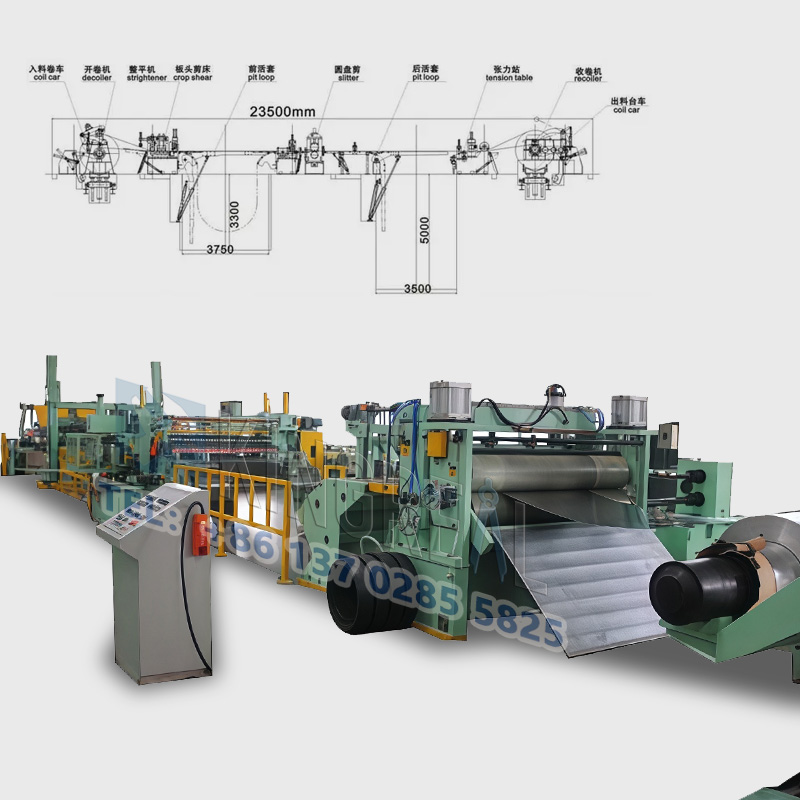
A High Speed Steel Coil Slitting Machine is an industrial processing system that cuts wide steel coils longitudinally into narrower strips. The machine typically consists of an uncoiler, feeding and guiding equipment, a slitting head, a tension control system, a recoiler, and auxiliary components.
During operation, the steel coil is unwound, leveled or guided as required, and fed through rotating circular knives. These knives divide the wide coil into strips according to preset dimensions. The strips are then collected and rewound into smaller coils for subsequent manufacturing processes.
Unlike conventional slitting equipment operating at lower speeds, a high-speed system is designed to increase throughput while maintaining stable strip alignment, cutting accuracy, and winding quality.
Main Components and Their Functions
| Component | Primary Function |
|---|---|
| Uncoiler | Holds and unwinds the master steel coil |
| Feeding and guiding system | Maintains stable material feeding and alignment |
| Slitting head | Cuts the steel coil into narrower strips |
| Tension control system | Helps maintain strip stability during processing |
| Recoiler | Rewinds slit strips into finished coils |
| Electrical control system | Coordinates machine operation and production parameters |
The performance of these components directly affects cutting precision, operational stability, and the final quality of the slit steel coils.
Why Is High-Speed Slitting Important for Steel Manufacturers?
Production speed is an important factor in metal processing, but speed alone does not guarantee high productivity. Manufacturers also need consistent cutting quality, reliable tension control, and efficient material handling.
A well-configured High Speed Steel Coil Slitting Machine can deliver several practical benefits.
1. Increase Production Output
High-speed slitting enables manufacturers to process more steel coil material within a given period, provided that material specifications and operating conditions permit the selected line speed.
Higher throughput can help steel service centers respond to larger orders, shorten delivery cycles, and improve equipment utilization.
2. Improve Slitting Accuracy
Precision cutting is essential when steel strips must meet specific width tolerances. Properly selected circular knives, accurate knife positioning, and stable material guidance help produce strips that meet downstream processing requirements.
For applications requiring narrow strips or demanding dimensional tolerances, manufacturers should evaluate the machine's achievable accuracy under their actual production conditions.
3. Reduce Material Waste
Incorrect knife spacing, unstable strip tracking, and poor setup can lead to edge defects, dimensional inconsistencies, and unnecessary scrap.
A properly configured slitting line helps optimize strip widths and maintain stable processing conditions. This can improve material utilization and reduce avoidable production losses.
4. Support Consistent Coil Quality
Stable tension and synchronized unwinding, slitting, and recoiling are essential for producing well-formed finished coils.
Good winding quality makes slit steel strips easier to store, transport, and feed into downstream equipment. It also helps reduce problems such as loose winding, strip telescoping, and edge damage.
Which Factors Should Buyers Consider When Selecting a Machine?
Choosing a High Speed Steel Coil Slitting Machine requires more than comparing advertised line speeds. Buyers should assess the relationship between material characteristics, finished product specifications, and the machine's overall configuration.
1. Steel Material and Thickness
Different steel grades and thicknesses require suitable cutting tools, machine rigidity, and processing parameters. Carbon steel, stainless steel, and other steel products may have different strength, hardness, and surface protection requirements.
Before selecting equipment, buyers should confirm the applicable material types, thickness range, coil width, and maximum coil weight.
2. Slitting Speed and Production Capacity
A higher rated line speed can improve productivity, but actual output also depends on coil loading, threading, knife setup, material properties, and finished coil handling.
Buyers should distinguish between maximum mechanical speed and practical production speed when evaluating equipment.
3. Cutting Width and Tolerance
The required strip width and number of cuts determine the slitting head configuration and tooling arrangement.
Manufacturers should provide representative product dimensions and tolerance requirements so the supplier can recommend an appropriate knife system and machine layout.
4. Automation and Operational Safety
Modern control systems can help operators manage line speed, tension, and coordinated equipment movement. Appropriate guarding, emergency stops, and safe procedures for handling heavy coils are also essential.
Automation should be evaluated according to production volume, operator experience, and the desired level of process control.
5. Customization and After-Sales Support
Every steel processing facility has different requirements. Machine configuration, tooling, coil handling, automation, and finished coil specifications may need to be adapted to the production environment.
Working with an experienced equipment supplier can help buyers assess technical feasibility, installation requirements, operator training, and long-term maintenance needs.
How Does a High Speed Steel Coil Slitting Machine Work?
The slitting process generally follows several coordinated stages.
-
Coil loading: The master steel coil is positioned on the uncoiler and secured for processing.
-
Material feeding: The steel strip is guided into the line and aligned for the required cutting pattern.
-
Knife setup: Circular knives and separators are arranged according to the target strip widths.
-
High-speed slitting: The material passes through the slitting head, where rotating knives divide it into narrower strips.
-
Tension management: The control system helps maintain stable strip movement throughout processing.
-
Recoiling: The finished strips are wound into individual coils for storage, shipment, or further manufacturing.
Correct setup and routine inspection are essential for achieving reliable results. Knife wear, incorrect clearances, unsuitable tension settings, and misalignment can all affect finished strip quality.
Where Is High Speed Steel Coil Slitting Equipment Used?
High-speed slitting technology serves a wide range of industries that require steel strips with specific dimensions and consistent quality.
Typical applications include:
-
Automotive manufacturing: Processing steel strips for selected vehicle components and metal parts.
-
Construction: Preparing strip materials for profiles, structural components, and building products.
-
Appliance production: Supplying accurately sized steel strips for cabinets, panels, and appliance components.
-
Metal fabrication: Preparing materials for stamping, forming, and other downstream operations.
-
Steel service centers: Dividing master coils into customer-specific widths for distribution and further processing.
The appropriate machine configuration depends on the material being processed, the required strip dimensions, production volume, and quality standards.
Why Choose KINGREAL STEEL SLITTING?
Selecting the right machinery partner is an important step toward building an efficient and dependable coil processing operation. KINGREAL STEEL SLITTING provides steel coil slitting equipment solutions for manufacturers seeking to improve cutting efficiency, material handling, and finished strip quality.
When evaluating a KINGREAL STEEL SLITTING solution, buyers can discuss their production requirements, including steel grade, thickness, coil width, target strip dimensions, line speed, and automation preferences. These details help determine a suitable machine configuration rather than relying on a generic specification.
A carefully planned slitting line can support higher production efficiency, more consistent processing, and better alignment with changing customer requirements. Technical consultation before purchasing also helps manufacturers identify equipment limitations, installation needs, and long-term operating considerations.
Conclusion
A High Speed Steel Coil Slitting Machine plays an important role in modern steel processing by combining efficient material handling, precise longitudinal cutting, and controlled recoiling. When the machine is properly matched to the material and production requirements, it can help manufacturers increase throughput, improve strip consistency, and reduce avoidable material waste.
For steel service centers and metal processing businesses planning to upgrade their production capabilities, choosing equipment based on actual operating requirements is essential.
Looking for a reliable steel coil slitting solution? Contact us at KINGREAL STEEL SLITTING to discuss your material specifications, production targets, and customization requirements. Our team can help you explore a suitable High Speed Steel Coil Slitting Machine for your business.