
How Can a Rotor Loading and Unloading Machine Improve Production Efficiency?
2025-12-17
Rotor Loading and Unloading Machines are advanced automated systems designed to streamline the handling of rotors in manufacturing lines, particularly in electric motor, generator, and turbine production industries. These machines significantly reduce manual labor, improve operational safety, and increase throughput by automating the loading and unloading processes. The integration of such equipment into production lines is crucial for companies aiming to maintain high precision, minimize downtime, and enhance overall efficiency.
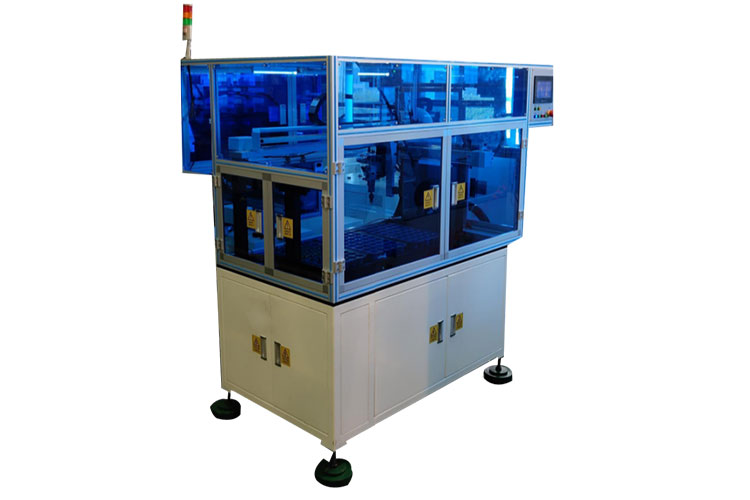
A typical Rotor Loading and Unloading Machine operates with precise robotics, programmable controls, and sensors to handle rotors of various sizes and weights. It ensures accurate positioning for subsequent manufacturing processes such as balancing, machining, or assembly. By reducing human involvement, the system minimizes the risk of rotor damage and workplace injuries, ensuring consistent quality in mass production.
Product Specifications:
| Parameter | Details |
|---|---|
| Loading Capacity | Up to 500 kg per cycle |
| Rotor Diameter Range | 200 mm – 1200 mm |
| Rotor Length Range | 300 mm – 2000 mm |
| Power Supply | 380V, 50/60Hz |
| Control System | PLC-based, with touch-screen interface |
| Operational Speed | 2 – 10 cycles per minute |
| Safety Features | Emergency stop, light curtain, overload protection |
| Automation Level | Full automation with optional manual override |
The machine’s core functionality ensures precise rotor placement without human intervention, contributing to optimized production lines. Advanced models incorporate servo-driven conveyors and robotic arms capable of adjusting to rotor dimensions automatically, which is especially valuable for facilities handling multiple rotor types.
How Does a Rotor Loading and Unloading Machine Reduce Operational Risks?
Safety is a paramount concern in industrial operations. Traditional rotor handling involves significant manual labor, heavy lifting, and repetitive motions, all of which increase the risk of workplace injuries. Rotor Loading and Unloading Machines replace manual intervention with automated systems that precisely handle heavy rotors, reducing the likelihood of accidents.
The machine’s design often includes safety sensors, emergency stop mechanisms, and overload protection. For example, light curtains detect the presence of personnel within hazardous zones and immediately halt operations. Overload sensors prevent the robotic arms from operating beyond safe weight limits. Additionally, the PLC control system can monitor each cycle and alert operators to any abnormal conditions, ensuring real-time operational safety.
Common Questions about Operational Safety:
Q1: How can the machine handle different rotor sizes safely?
A1: The system employs adjustable grippers and sensors that detect the rotor’s dimensions. The PLC control automatically adapts the movement path and gripping force, ensuring safe handling without damaging the rotor.
Q2: How does it prevent workplace accidents during operation?
A2: Safety measures such as light curtains, emergency stops, and overload detection work together to prevent injury. The automation reduces manual lifting, and the system pauses immediately if any unsafe conditions are detected.
With these features, manufacturers can maintain high productivity while significantly mitigating risk, contributing to a safer and more efficient production environment.
How Can Manufacturers Optimize Production Using Rotor Loading and Unloading Machines?
Efficiency and cost-effectiveness are major drivers for adopting Rotor Loading and Unloading Machines. Automation reduces cycle times, ensures repeatable accuracy, and allows manufacturers to scale operations without increasing labor costs. By integrating these machines with upstream and downstream processes, manufacturers achieve seamless rotor transfer between stages such as inspection, machining, and assembly.
The machines are compatible with industrial networks and can provide real-time data on throughput, operational status, and error logging. This data enables production managers to perform predictive maintenance, reduce downtime, and improve overall line efficiency. Furthermore, with programmable control systems, production lines can be quickly adapted to handle different rotor models, minimizing setup times and enhancing flexibility.
Common Questions about Production Optimization:
Q1: How can cycle times be reduced using these machines?
A1: Automated rotor handling eliminates manual delays and optimizes arm movement paths. The PLC control calculates the most efficient trajectory for loading and unloading, reducing idle time between operations.
Q2: How does the machine integrate with existing production lines?
A2: The machine is designed to interface with conveyors, balancing machines, and assembly stations. Communication protocols like Modbus or Ethernet/IP allow real-time synchronization, ensuring continuous flow and minimizing bottlenecks.
By leveraging these capabilities, production facilities can achieve higher throughput, lower labor costs, and more consistent product quality.
How Is the Rotor Loading and Unloading Machine Shaping the Future of Industrial Automation?
As manufacturing continues to evolve, automation is increasingly critical for maintaining competitive advantage. Rotor Loading and Unloading Machines represent a key component in Industry 4.0 initiatives, where robotics, IoT, and intelligent control systems converge to create fully integrated production lines.
Future trends indicate that these machines will feature enhanced AI-based vision systems, predictive maintenance analytics, and adaptive robotics capable of handling even more complex rotor geometries. Such advancements will enable manufacturers to achieve near-zero downtime and further reduce human intervention in high-risk tasks.
SHUAIRUI® has established itself as a leader in delivering high-performance Rotor Loading and Unloading Machines. Their solutions combine robust mechanical design, intelligent control systems, and flexible configurations tailored to diverse industrial needs. Companies seeking to enhance production efficiency and operational safety can rely on SHUAIRUI®’s expertise and quality. For inquiries or to explore customized solutions, contact SHUAIRUI® directly to discuss integration, specifications, and support for your manufacturing line.