

How Can an Industrial AC DC Air Cooler Fan Improve Industrial Cooling Efficiency?
2026-10-29
In industrial environments, effective air circulation is essential for maintaining comfortable working conditions, protecting equipment, and supporting stable production. High temperatures can affect machinery performance, increase operator discomfort, and create challenges in workshops, warehouses, factories, and commercial facilities. An Industrial AC DC Air Cooler Fan offers a practical solution by combining efficient airflow with flexible power options. Designed for applications that require reliable ventilation and cooling assistance, this type of fan can help businesses improve air movement while adapting to different operating environments. Ningbo Keyi Electric Appliance Co., Ltd. focuses on electric appliance solutions that address practical cooling and ventilation needs, helping customers explore suitable products for their operational requirements.
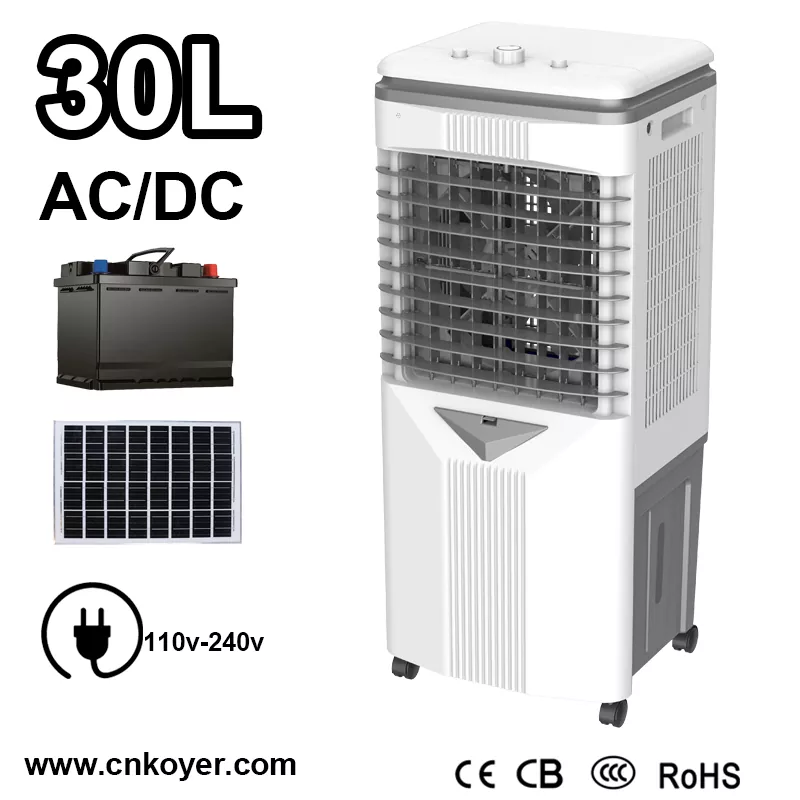
What Is an Industrial AC DC Air Cooler Fan?
An Industrial AC DC Air Cooler Fan is a cooling and ventilation device designed to circulate air in industrial or commercial spaces. AC-powered models typically operate using alternating current, while DC-powered models use direct current. Depending on the product design, certain units may support different power configurations to meet specific installation and operating requirements.
Unlike ordinary household fans, industrial cooling fans are generally selected according to airflow demand, operating duration, environmental conditions, and installation space. When integrated into an air cooler, the fan helps move air through the cooling system and distribute it into the surrounding environment.
The main components and features may include:
-
Motor system: Converts electrical energy into mechanical rotation to drive the fan blades.
-
Fan blades: Generate airflow to improve air circulation.
-
Power supply: Supports AC or DC operation according to the model's specifications.
-
Housing and protective structure: Help protect internal components and support stable operation.
-
Control system: May provide speed adjustment or other operating functions, depending on the design.
Understanding these features helps buyers select an Industrial AC DC Air Cooler Fan that matches their cooling objectives and working conditions.
Why Is an Industrial AC DC Air Cooler Fan Important?
Industrial spaces often contain heat-generating equipment, production lines, and densely arranged machinery. Without sufficient ventilation, heat can accumulate and make working conditions less comfortable. A suitable air cooler fan can help address these challenges by improving airflow and supporting heat management.
Improving Air Circulation
Poor air circulation can create hot spots in large workshops and enclosed production areas. An industrial fan helps move stagnant air, allowing ventilation systems or cooling equipment to distribute air more effectively.
Better air movement can improve the overall cooling experience, particularly in areas where natural ventilation is limited.
Supporting Workplace Comfort
High temperatures may contribute to fatigue and discomfort among workers. By increasing air movement, an Industrial AC DC Air Cooler Fan can help make workspaces feel cooler, depending on ambient temperature, humidity, and airflow conditions.
For facilities with long operating hours, maintaining comfortable working conditions is an important consideration when planning ventilation and cooling systems.
Helping Manage Operating Costs
Energy consumption is an important factor when choosing industrial electrical equipment. The actual efficiency of an air cooler fan depends on its motor design, airflow output, power rating, and operating conditions.
AC and DC configurations offer different advantages, so businesses should compare rated power consumption and operating performance rather than assuming that one power type is always more efficient.
Supporting Equipment and Production Areas
Appropriate airflow can help reduce localized heat accumulation and support ventilation around certain types of equipment. However, an air cooler fan should not replace dedicated equipment cooling systems unless the application has been evaluated and approved for that purpose.
How Does an Industrial AC DC Air Cooler Fan Work?
The working principle is based on converting electrical energy into rotational movement to generate airflow. When the motor starts, it drives the fan blades, creating a pressure difference that moves air through or around the cooling assembly.
In an air cooler system, the fan may draw air through a cooling medium before directing it into the target area. Depending on the design, the cooling medium may use water evaporation or another cooling method.
The general operating process includes:
-
Power input: The unit receives the appropriate AC or DC power supply.
-
Motor activation: The motor rotates the fan blades.
-
Air intake: Air enters through the designated inlet or cooling assembly.
-
Air movement: The fan pushes or draws air through the system.
-
Air distribution: The resulting airflow reaches the surrounding workspace.
The actual cooling effect depends on the complete system design. A fan improves air movement, but it does not necessarily lower the room's air temperature on its own. Evaporative cooling performance, for example, depends heavily on humidity and ventilation.
AC vs. DC Industrial Air Cooler Fans: What Should Buyers Consider?
Choosing between AC and DC models requires an understanding of the installation environment, available power sources, and operating priorities.
|
Comparison Factor |
AC Air Cooler Fan |
DC Air Cooler Fan |
|---|---|---|
|
Power source |
Alternating-current supply |
Direct-current supply |
|
Typical application |
Fixed industrial installations |
Equipment designed for DC power systems |
|
Installation considerations |
Requires a compatible AC electrical connection |
Requires a suitable DC supply or conversion system |
|
Energy performance |
Depends on motor type and operating load |
Depends on motor type, controller, and operating load |
|
Speed control |
Depends on the motor and control method |
May offer flexible electronic speed control |
|
Selection priority |
Compatibility with facility power and operating needs |
Compatibility with the DC system and required performance |
Some products may support both AC and DC power options, but this should be confirmed through the manufacturer's specifications. Buyers should also verify voltage, current, rated power, frequency where applicable, protection features, and installation requirements before ordering.
Where Can an Industrial AC DC Air Cooler Fan Be Used?
The versatility of industrial cooling fans makes them suitable for a range of environments when the selected model meets the required performance and safety standards.
Manufacturing Workshops
Production equipment can generate significant heat during continuous operation. Air cooler fans can improve airflow around suitable work areas and help reduce the sensation of stagnant, hot air.
Warehouses and Distribution Centers
Large warehouses may experience uneven air circulation, especially in areas with high ceilings or limited ventilation. Properly positioned fans can help distribute air across workstations, packing areas, and other occupied spaces.
Commercial and Service Facilities
Repair workshops, equipment rooms, and selected commercial spaces may benefit from additional air movement. Product selection should account for dust exposure, moisture, noise limits, and operating duration.
Agricultural and Utility Areas
Certain agricultural facilities and utility spaces require continuous ventilation. An appropriate fan can contribute to air circulation, provided its construction and electrical protection are suitable for the environment.
For dusty, humid, corrosive, or potentially explosive locations, buyers should confirm that the product has the necessary environmental protection and certifications.
How to Choose the Right Industrial AC DC Air Cooler Fan
Selecting the right fan involves more than comparing product prices. A well-matched model should meet the airflow requirements of the application while providing reliable operation and manageable maintenance costs.
Consider the following factors before purchasing:
-
Airflow capacity: Evaluate the required air volume and the size of the target area.
-
Motor performance: Check rated power, operating speed, efficiency, and expected service life.
-
Power compatibility: Confirm the available supply voltage and whether AC or DC operation is required.
-
Cooling system design: Determine whether the fan operates independently or as part of an evaporative air cooler.
-
Environmental suitability: Consider temperature, humidity, dust, corrosion, and electrical safety requirements.
-
Noise level: Select a model that suits the working environment and applicable noise requirements.
-
Maintenance requirements: Review cleaning access, component replacement, and routine inspection needs.
-
Supplier capability: Evaluate product consistency, technical support, customization options, and delivery arrangements.
A clear understanding of these requirements can help businesses reduce purchasing risks and avoid choosing equipment that is unsuitable for their actual working conditions.
What Maintenance Helps Extend Fan Service Life?
Routine maintenance is important for maintaining airflow performance and minimizing unexpected interruptions.
|
Maintenance Task |
Recommended Action |
Expected Benefit |
|---|---|---|
|
Blade inspection |
Check for dust buildup, damage, or imbalance |
Helps maintain stable airflow |
|
Motor inspection |
Monitor unusual noise, vibration, or overheating |
Helps identify potential faults |
|
Electrical checks |
Inspect connections and protective components |
Supports safe operation |
|
Air inlet cleaning |
Remove accumulated dust and obstructions |
Helps prevent restricted airflow |
|
Cooling medium inspection |
Check water circulation or cooling pads where applicable |
Supports cooling system performance |
|
Fastener inspection |
Check mounting points and loose components |
Helps maintain mechanical stability |
Maintenance intervals should follow the manufacturer's instructions and reflect the actual operating environment. Always disconnect the power supply before cleaning or servicing the equipment, and use qualified personnel for electrical repairs.
Why Consider Ningbo Keyi Electric Appliance Co., Ltd.?
Selecting an industrial cooling product requires a supplier that understands the relationship between power configuration, airflow performance, installation conditions, and long-term operation.
Ningbo Keyi Electric Appliance Co., Ltd. can be considered when evaluating electric appliance solutions for industrial and commercial cooling requirements. Buyers should communicate their intended application, preferred power supply, airflow expectations, installation dimensions, and operating environment to help identify an appropriate product configuration.
Before placing an order, request detailed technical specifications, product drawings where necessary, applicable certifications, and information about quality control and after-sales support. These details provide a clearer basis for comparing suppliers and determining whether a particular Industrial AC DC Air Cooler Fan meets project requirements.
Conclusion
An Industrial AC DC Air Cooler Fan plays an important role in industrial ventilation and cooling by improving airflow, supporting workplace comfort, and helping manage heat in suitable applications. The right choice depends on power compatibility, airflow capacity, motor performance, environmental conditions, and maintenance requirements.
For businesses seeking practical cooling solutions, evaluating these factors can help achieve a better balance between operating performance, energy consumption, and long-term reliability.
Looking for a suitable industrial cooling solution? Contact Ningbo Keyi Electric Appliance Co., Ltd. to discuss your application requirements, explore available Industrial AC DC Air Cooler Fan options, and obtain product information to support your purchasing decision.