

How can Pipe Bending Machine improve industrial manufacturing efficiency?
2026-07-02
Article Summary
A Pipe Bending Machine is a critical piece of industrial equipment used to shape pipes into precise angles and curves with high repeatability. This article explains how it enhances manufacturing efficiency, reduces operational costs, and improves product quality across industries. It also explores working principles, machine types, selection criteria, maintenance strategies, and real-world applications. The goal is to help manufacturers make informed decisions when investing in pipe bending technology, including solutions offered by XYOON. Pipe Bending Machine
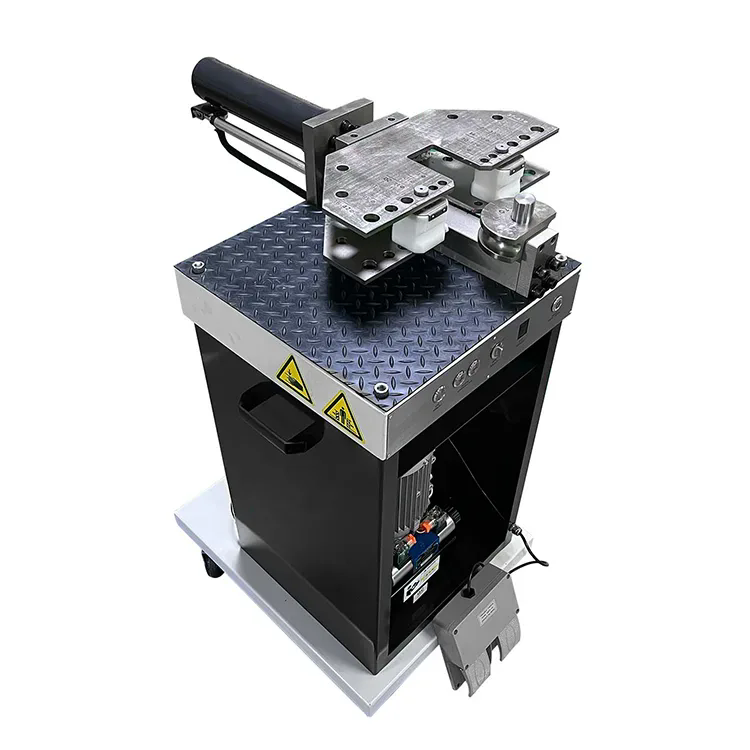
Table of Contents
- Introduction
- What is a Pipe Bending Machine?
- How It Works
- Types of Pipe Bending Machines
- Key Benefits for Manufacturing Efficiency
- Industrial Applications
- How to Choose the Right Machine
- Maintenance and Operational Best Practices
- Why Choose XYOON Solutions
- FAQ
- Conclusion
Introduction
In modern manufacturing environments, precision, speed, and repeatability define competitiveness. The Pipe Bending Machine has become an essential solution for industries that rely on accurate pipe forming, from automotive systems to construction frameworks and energy infrastructure. Traditional manual bending methods often lead to inconsistencies, material waste, and increased labor costs. In contrast, automated pipe bending technology significantly improves productivity while ensuring consistent quality.
Companies like XYOON provide advanced engineering solutions designed to meet these challenges, enabling manufacturers to optimize workflows and reduce production bottlenecks.
What is a Pipe Bending Machine?
A Pipe Bending Machine is industrial equipment designed to deform pipes or tubes into specific angles and radii without compromising structural integrity. It is widely used for materials such as stainless steel, carbon steel, aluminum, and copper.
- Creates precise bends without collapsing the pipe structure
- Supports both simple and complex geometries
- Improves production consistency across batches
Unlike manual methods, these machines rely on mechanical force, hydraulic pressure, or CNC programming to achieve controlled deformation.
How It Works
The operation of a Pipe Bending Machine depends on its configuration, but the general process follows a structured sequence:
- Pipe loading into the clamping system
- Securing the pipe to prevent slippage
- Application of bending force using a die or hydraulic arm
- Controlled shaping based on programmed or manual parameters
- Release and inspection of the finished bend
Advanced CNC-controlled systems allow operators to input precise angles, radii, and bending sequences, reducing human error and increasing production speed.
Types of Pipe Bending Machines
Different manufacturing requirements demand different machine types. The table below summarizes the main categories:
| Type | Operation Method | Best Use Case | Efficiency Level |
|---|---|---|---|
| Manual Pipe Bender | Human-powered lever system | Small workshops, low-volume tasks | Low |
| Hydraulic Pipe Bender | Hydraulic pressure system | Medium-scale production | Medium |
| CNC Pipe Bending Machine | Computer-controlled automation | High-precision industrial manufacturing | Very High |
| Electric Pipe Bender | Servo motor-driven system | Energy-efficient precision tasks | High |
Key Benefits for Manufacturing Efficiency
Integrating a Pipe Bending Machine into production lines delivers measurable improvements in efficiency and output quality. The main advantages include:
- Higher Production Speed: Automated cycles reduce manual labor time significantly.
- Improved Accuracy: CNC systems ensure consistent bending angles and radii.
- Reduced Material Waste: Precise control minimizes deformation errors.
- Labor Cost Reduction: Fewer operators are required for production tasks.
- Scalability: Suitable for both small-batch and mass production environments.
These advantages directly contribute to improved operational profitability and production stability.
Industrial Applications
Pipe bending technology is widely used across multiple industries due to its versatility:
- Automotive exhaust systems and chassis components
- Construction and structural frameworks
- Oil and gas pipeline systems
- Furniture manufacturing
- HVAC and refrigeration systems
Each application requires specific bending precision, which modern machines can achieve with programmable accuracy.
How to Choose the Right Machine
Selecting the appropriate Pipe Bending Machine depends on production requirements and material specifications. Key factors include:
- Material Type: Steel, aluminum, or copper require different force capacities.
- Pipe Diameter Range: Machines must match production dimensions.
- Production Volume: High-volume production benefits from CNC automation.
- Bending Complexity: Multi-angle or tight-radius bends require advanced systems.
- Budget Constraints: Balance between cost and long-term efficiency gains.
Manufacturers like XYOON provide customizable solutions tailored to different industrial needs.
Maintenance and Operational Best Practices
Proper maintenance ensures long-term performance and reduces downtime. Recommended practices include:
- Regular lubrication of mechanical components
- Routine calibration of bending angles
- Inspection of hydraulic systems for leaks
- Cleaning of dies and clamps after production cycles
- Software updates for CNC-controlled machines
A preventive maintenance schedule can significantly extend machine lifespan and maintain production accuracy.
Why Choose XYOON Solutions
XYOON provides advanced Pipe Bending Machine solutions designed for industrial-scale performance and precision engineering. Their systems are built with a focus on durability, automation, and user-friendly operation.
- High-precision CNC control systems
- Robust industrial-grade construction
- Customizable machine configurations
- Efficient energy consumption design
- Global support and technical assistance
By integrating XYOON equipment into production lines, manufacturers can achieve higher output consistency and reduce operational inefficiencies.
FAQ
Q1: What materials can a Pipe Bending Machine handle?
Most machines can handle stainless steel, carbon steel, aluminum, and copper, depending on configuration.
Q2: Is CNC pipe bending better than manual bending?
Yes. CNC systems offer higher precision, repeatability, and efficiency compared to manual methods.
Q3: How often should maintenance be performed?
Basic maintenance should be done weekly, with full inspections recommended monthly or based on usage intensity.
Q4: Can one machine handle multiple pipe sizes?
Yes, many modern machines support interchangeable dies and programmable settings for different pipe diameters.
Q5: What industries benefit most from pipe bending technology?
Automotive, construction, HVAC, oil and gas, and furniture manufacturing industries benefit significantly.
Conclusion
The Pipe Bending Machine plays a vital role in modern industrial manufacturing by improving precision, reducing costs, and increasing productivity. With automation and CNC advancements, manufacturers can achieve highly complex bending tasks with minimal error and maximum efficiency. Choosing the right equipment, such as solutions provided by XYOON, ensures long-term operational stability and competitive advantage in demanding markets.
If you are looking to upgrade your production capabilities and achieve higher efficiency in pipe forming processes, explore advanced solutions from XYOON and contact us today to get professional support tailored to your manufacturing needs.