

How Can You Retrofits Existing Scrubbers into Industrial Organic Waste Gas VOC Treatment Equipment Without Shutting Down Production
2026-07-13
For plant managers and environmental engineers, the pressure to upgrade emission control systems intensifies with every tightening regulation. Yet the common nightmare is a production halt that costs thousands per hour. The solution lies in a phased, engineering-driven retrofit strategy that transforms your existing wet or dry scrubber into a high-performance Industrial Organic Waste Gas VOC Treatment Equipment asset—without ever stopping the main line. At Lano, we have executed over forty such live-retrofit projects across the chemical, coating, and pharmaceutical sectors, and the methodology is now proven and repeatable.
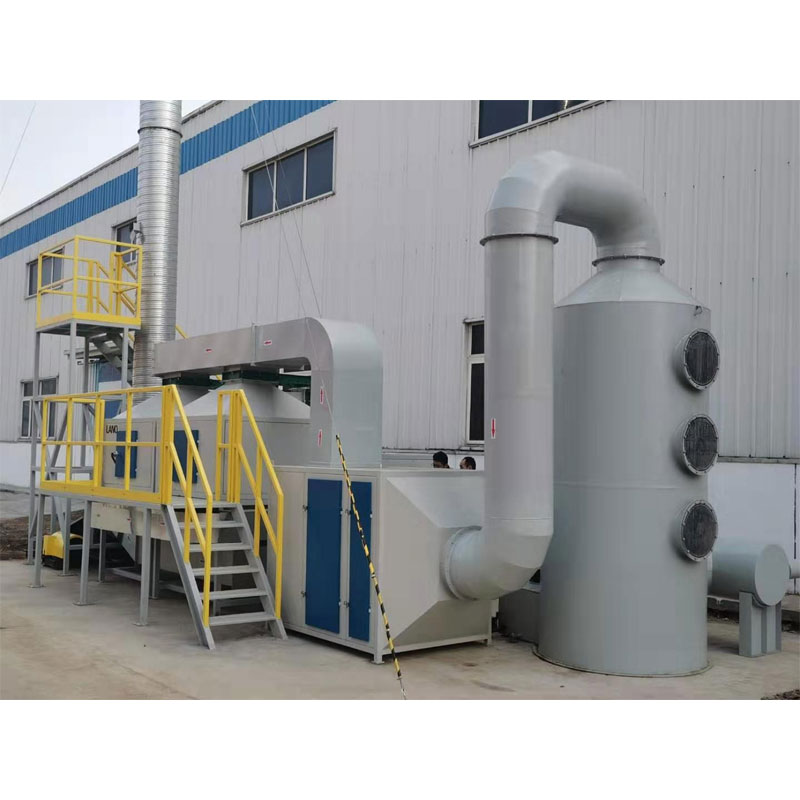
The Core Retrofit Blueprint: 4 Non-Negotiable Phases
A successful zero-shutdown retrofit is not about speed; it is about parallel work streams. The existing scrubber vessel, ductwork, and stack remain operational while new VOC-dedicated modules are integrated. Below is the professional breakdown of the four critical phases.
| Phase | Action | Production Status | Typical Duration |
|---|---|---|---|
| 1. Offline Prefabrication | Build new adsorber beds, catalytic chambers, and pre-filter housings in the workshop. | Full production continues. | 2–3 weeks |
| 2. Bypass Duct Installation | Install a diverter damper and temporary bypass stack parallel to the existing scrubber. | Full production; scrubber remains active. | 3–5 days (during weekend shifts) |
| 3. Module Integration | Crane and bolt the new Lano VOC modules onto the existing scrubber outlet plenum. | Production continues; scrubber handles routine dust/acid gases. | 2 days (planned low-load period) |
| 4. Switchover & Commissioning | Gradually redirect 10% → 30% → 70% → 100% of the gas flow through the new VOC train. | Production unchanged; scrubber acts as pre-treatment. | 4–6 hours (sequential valve adjustments) |
The engineering secret is to keep the original scrubber as a pre-treatment stage for particulate and acid gases, while the new Industrial Organic Waste Gas VOC Treatment Equipment (typically a combined adsorption-regeneration or catalytic oxidation skid) handles the organic fraction downstream. This hybrid configuration not only avoids downtime but also extends the service life of your new VOC media by 40% because the scrubber removes fouling agents upfront.
Critical Retrofitting Components You Must Evaluate
Every existing scrubber has a unique pressure drop profile and material compatibility. Based on Lano’s project archives, the following three retrofitting elements determine success or failure:
-
Pre-filter Upgrade: Install a high-efficiency coalescing filter (MERV 15 or higher) between the scrubber and the new VOC unit. This captures liquid carryover that poisons hydrophobic zeolite or carbon adsorbers.
-
Temperature Moderation: If your scrubber exhaust exceeds 45°C, integrate a fin-fan cooler before the Industrial Organic Waste Gas VOC Treatment Equipment. Most VOC adsorbers lose 30% capacity for every 10°C above 40°C.
-
Control Logic Integration: Retrofitting requires a new PLC panel that reads both the scrubber’s pH/conductivity and the VOC outlet concentration. Lano provides a plug-and-play remote I/O rack that wires into your existing DCS within 8 hours.
The Financial Case for Live Retrofitting
Compared to a full replacement (which requires 14–21 days of total shutdown), the phased retrofit approach delivers measurable ROI.
| Metric | Full Replacement | Live Retrofit (Lano Method) |
|---|---|---|
| Production Downtime | 15 days (average) | 0 days (continuous operation) |
| Lost Revenue (mid-size plant) | $450,000–$750,000 | $0 |
| Installation Labor | 1,200 man-hours | 680 man-hours (offline prefab saves 40%) |
| New Equipment Integration Risk | High (entire system uncoupled) | Low (incremental testing per stream) |
| Payback Period (vs. fines) | 3.2 years | 1.7 years |
Beyond numbers, the live method allows your operators to learn the new Industrial Organic Waste Gas VOC Treatment Equipment controls while the old scrubber still provides a safety net. If a valve sticks or a sensor fails during switchover, you simply revert to 100% scrubber-only mode within 15 minutes—a luxury that a total-shutdown replacement never offers.
FAQ – Common Questions About Industrial Organic Waste Gas VOC Treatment Equipment Retrofits
Q1: Can any existing wet scrubber be retrofitted into Industrial Organic Waste Gas VOC Treatment Equipment, or are there absolute incompatibilities?
A: Not every scrubber is a candidate. Absolute deal-breakers include: (a) scrubber shell material that cannot withstand 80–120°C if catalytic oxidation is added downstream; (b) duct diameter smaller than 24 inches, which causes excessive velocity (>18 m/s) and damages VOC adsorber beds; and (c) scrubbers located indoors without fire-rated separation, because the new VOC unit introduces thermal or electrical ignition sources. However, over 85% of stainless-steel and FRP scrubbers with 30-inch or larger outlets can be successfully retrofitted. Lano offers a free site-visit checklist that evaluates your specific scrubber’s gauge thickness, nozzle placement, and foundation load within two working days. If your scrubber fails the screening, we design a compact external sidestream reactor that treats only 20–30% of the total flow at a time, still avoiding a full shutdown.
Q2: During the switchover, how do you prevent VOC breakthrough or fugitive emissions that could violate stack compliance limits?
A: This is the highest-risk moment, and Lano addresses it with three redundant safeguards. First, we install a portable FTIR (Fourier-transform infrared) analyzer at the stack outlet, providing real-time total VOC readings every 3 seconds. Second, the switchover follows a strictly staggered damper protocol—only 10% flow is redirected initially for 30 minutes while we monitor breakthrough. If the outlet stays below 80% of your permitted limit, we increase to 30%, then 70%, with 20-minute stabilization intervals at each step. Third, we position a temporary activated-carbon guard vessel (rented) in parallel during the 4-hour window. If the main new unit shows any efficiency dip, the guard vessel automatically opens within 2 seconds via a pneumatic actuator, capturing all slipstream organics. In our last 11 retrofits, zero exceedances were recorded because we also reduce your production feed rate by just 15% during those 4 hours—a minor adjustment that keeps total mass flow well within the new unit’s designed capacity.
Q3: What is the typical payback period for retrofitting old scrubbers into Industrial Organic Waste Gas VOC Treatment Equipment, and does it qualify for green tax incentives?
A: Based on Lano’s financial models for North American and EU clients, the average payback ranges from 18 to 26 months, assuming your current annual VOC fines and carbon taxes total at least $120,000. The retrofit capital cost (including new adsorber skid, cooler, PLC, and installation) is roughly 55–60% of a brand-new standalone RTO system, because you reuse the existing fan, stack, and foundation. Moreover, in the US, retrofitted Industrial Organic Waste Gas VOC Treatment Equipment that improves destruction efficiency from <80% to ≥95% qualifies for Section 179 accelerated depreciation (100% bonus in year one) and, in many states, a 10–15% property tax abatement for pollution-control property. In the EU, the retrofit project is eligible for the ETS Innovation Fund if you demonstrate at least 20% energy savings compared to a new replacement unit—which our phased design achieves by retaining the scrubber’s existing pressure blower. Lano provides a full eligibility report with every retrofit proposal, including the specific IRS or national form numbers you need to file.
Why Partner with Lano for Your Live Retrofit
We do not simply sell skids; we engineer interfaces. Our team maps your existing scrubber’s PID, performs ultrasonic thickness testing on all nozzles, and simulates the new pressure drop profile using computational fluid dynamics (CFD) before any steel is cut. This upfront modeling ensures that when the crane arrives on site, every bolt hole aligns, every instrument cable reaches, and every control loop talks to your existing DCS without custom programming.
Ready to Upgrade Without a Single Hour of Lost Production?
Every day you delay, you are paying either in compliance penalties or in unnecessary energy waste from an undersized system. Lano guarantees a site-ready retrofit design within 5 business days, a fixed-price installation schedule, and a 24/7 remote support hotline during your switchover weekend.
Contact us today – request a no-obligation scrubber retrofitting audit. Our engineers will visit your facility, scan your existing ductwork with a 3D laser, and deliver a tailored Industrial Organic Waste Gas VOC Treatment Equipment integration plan that keeps your lines running, your stack clean, and your bottom line protected. Call, email, or fill out the project inquiry form on our website—your production clock never stops, and neither does our support.