

How Do Automatic Visual Inspection Machines Improve Manufacturing Quality Control?
2026-04-13
Abstract
Automatic Visual Inspection Machines are transforming modern manufacturing by replacing subjective manual inspection with high-speed, AI-driven visual analysis. These systems use advanced imaging technologies, machine learning algorithms, and precision optics to detect defects, inconsistencies, and deviations in real time. This article explores how these systems work, why they are essential for industrial quality control, and how they help manufacturers reduce costs, improve consistency, and enhance production efficiency. It also provides a structured breakdown of components, benefits, applications, and implementation considerations for industrial buyers and engineers.
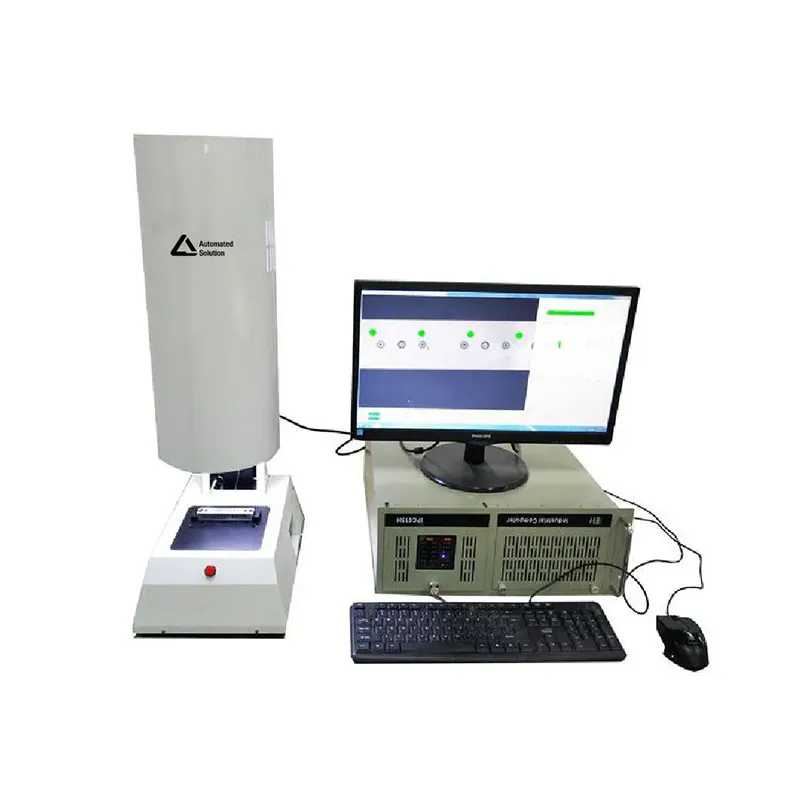
Table of Contents
- Article Outline
- Introduction
- Working Principle of Automatic Visual Inspection Machines
- Core Components and Technologies
- Key Advantages in Industrial Production
- Industry Applications
- Manual vs Automatic Inspection Comparison
- Implementation Considerations
- Challenges and Optimization Strategies
- Frequently Asked Questions
Article Outline
- Definition and role of Automatic Visual Inspection Machines
- How machine vision systems detect defects
- Key hardware and software components
- Benefits in production environments
- Industry-specific use cases
- Comparison with traditional inspection methods
- Integration and deployment considerations
- Common challenges and solutions
Introduction
In today’s competitive industrial landscape, product quality is not just a requirement—it is a critical factor that determines brand reputation and customer satisfaction. Traditional manual inspection methods are increasingly unable to meet the speed, accuracy, and consistency required by modern production lines. Human inspectors are prone to fatigue, inconsistency, and subjective judgment, especially in high-volume manufacturing environments.
Automatic Visual Inspection Machines offer a reliable alternative by leveraging advanced imaging systems and intelligent algorithms to evaluate products with precision and speed. These systems are widely adopted across electronics, automotive, pharmaceutical, packaging, and metal processing industries.
Working Principle of Automatic Visual Inspection Machines
At the core of Automatic Visual Inspection Machines is machine vision technology. The process typically involves four key stages:
- Image Acquisition: High-resolution cameras capture images of products on the production line.
- Image Processing: Software filters and enhances images to highlight relevant features.
- Feature Analysis: Algorithms detect defects such as scratches, misalignment, missing components, or color deviations.
- Decision Making: The system classifies products as pass or fail and triggers rejection mechanisms if necessary.
Unlike human inspection, this process is standardized, repeatable, and capable of operating continuously without fatigue.
Core Components and Technologies
Automatic Visual Inspection Machines are built from several integrated components:
| Component | Function |
|---|---|
| Industrial Cameras | Capture high-resolution images under controlled lighting conditions |
| Lighting Systems | Enhance defect visibility and reduce shadows or reflections |
| Processing Unit | Executes image analysis and decision-making algorithms |
| AI Software | Detects patterns, anomalies, and defect classifications |
| Mechanical Integration | Conveyor systems and reject mechanisms ensure real-time sorting |
Modern systems increasingly integrate deep learning models, allowing them to improve accuracy over time by learning from defect datasets.
Key Advantages in Industrial Production
- High Accuracy: Detects micro-level defects invisible to human inspectors.
- Speed: Processes thousands of units per minute without downtime.
- Consistency: Eliminates human subjectivity and fatigue-related errors.
- Cost Reduction: Reduces labor costs and product waste.
- Traceability: Generates digital inspection records for compliance and auditing.
For manufacturers operating in high-volume environments, these advantages directly translate into improved profitability and reduced operational risk.
Industry Applications
Automatic Visual Inspection Machines are widely used across multiple industries:
- Electronics: PCB inspection, solder joint verification, component alignment
- Automotive: Surface defect detection, part dimension validation
- Pharmaceutical: Packaging inspection, labeling accuracy
- Food & Beverage: Contamination detection, packaging integrity
- Metal Manufacturing: Surface scratches, cracks, coating defects
In each of these sectors, inspection precision directly impacts safety, compliance, and brand trust.
Manual vs Automatic Inspection Comparison
| Factor | Manual Inspection | Automatic Visual Inspection Machines |
|---|---|---|
| Accuracy | Variable, depends on human skill | High and consistent |
| Speed | Limited by human capacity | Extremely fast (real-time processing) |
| Cost Efficiency | High long-term labor cost | Lower operational cost after setup |
| Scalability | Difficult to scale | Easily scalable with production lines |
Implementation Considerations
Deploying Automatic Visual Inspection Machines requires careful planning to ensure optimal performance. Manufacturers should consider:
- Production line speed and synchronization
- Lighting conditions and environmental stability
- Defect types and classification requirements
- Integration with existing MES/ERP systems
- Training datasets for AI-based inspection models
Proper calibration and system tuning are essential to achieve maximum detection accuracy.
Challenges and Optimization Strategies
Despite their advantages, these systems can face challenges such as complex defect variability, reflective surfaces, and inconsistent product positioning. To overcome these issues, manufacturers often adopt:
- Multi-angle camera configurations
- Advanced lighting diffusion systems
- Deep learning-based adaptive algorithms
- Regular system recalibration and dataset updates
With proper optimization, inspection accuracy can reach industry-leading levels even in challenging environments.
Industrial Solutions Provider
NINGBO LANCE INDUSTRIAL CO.,LIMITED provides advanced inspection and automation solutions designed to meet the evolving demands of global manufacturing industries. The company focuses on delivering robust and scalable Automatic Visual Inspection Machines that integrate seamlessly into modern production lines, ensuring high precision and operational stability.
For more technical product details and system configurations, you can refer to:
https://www.lanceindustrial.com/automatic-visual-inspection-machine
Frequently Asked Questions
Q1: What defects can Automatic Visual Inspection Machines detect?
They can detect scratches, cracks, missing components, misalignment, color inconsistencies, and dimensional deviations.
Q2: Are these machines suitable for small manufacturers?
Yes, scalable configurations allow both small and large manufacturers to implement them based on production needs.
Q3: How accurate are these systems compared to human inspection?
They are significantly more accurate and consistent, especially for repetitive high-speed inspection tasks.
Q4: Can the system adapt to new product designs?
Yes, modern AI-based systems can be retrained with new datasets to adapt to evolving product specifications.
Q5: What industries benefit most from these machines?
Electronics, automotive, pharmaceuticals, food packaging, and precision manufacturing industries benefit the most.
Conclusion and Contact
Automatic Visual Inspection Machines are no longer optional in high-precision manufacturing environments—they are essential for ensuring product reliability, operational efficiency, and long-term competitiveness. By integrating advanced imaging systems with intelligent analysis, manufacturers can significantly reduce defects and improve production consistency.
To explore customized solutions or discuss your production requirements, please reach out to NINGBO LANCE INDUSTRIAL CO.,LIMITED.
For professional consultation and system recommendations, contact us today and discover how advanced visual inspection technology can elevate your production line performance.