

How Do Carriage Bolts Work and What Are Their Applications?
2025-12-18
Article Summary: Carriage bolts are widely used fasteners known for their smooth, domed heads and square necks. This article explores how carriage bolts function, their technical specifications, selection criteria, and common usage scenarios. Detailed guidance, FAQs, and expert insights are provided for engineers, construction professionals, and DIY enthusiasts seeking precise information.
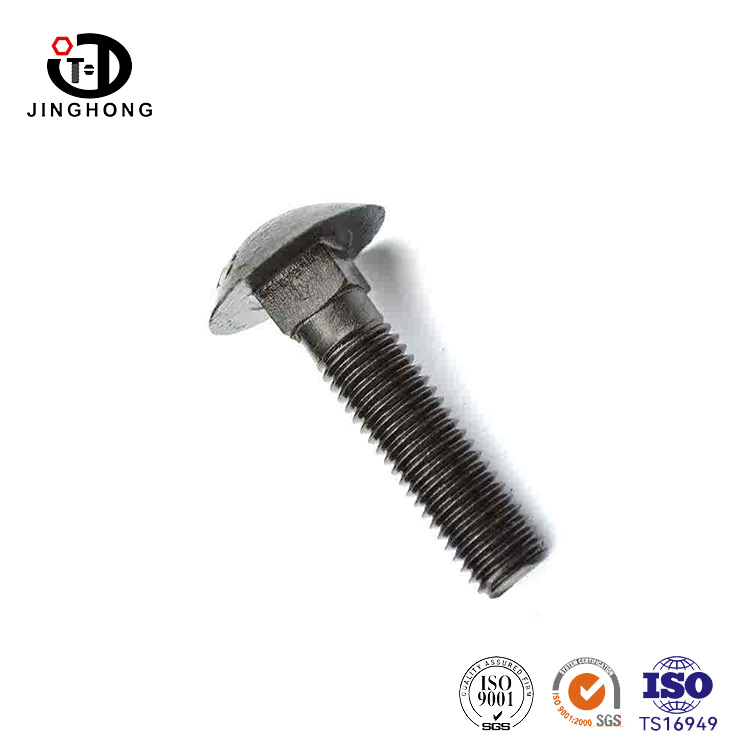
Table of Contents
- Introduction to Carriage Bolts
- Technical Specifications and Key Parameters
- Applications and Selection Criteria
- Common Questions About Carriage Bolts
- Conclusion and Brand Information
Introduction to Carriage Bolts
Carriage bolts, also known as coach bolts, are specialized fasteners designed with a rounded head and a square neck directly beneath the head. This square neck fits into a pre-drilled square hole or embeds into wood to prevent rotation during tightening. They are widely used in woodworking, metal joining, and construction projects where a smooth, tamper-resistant head is preferred.
The core principle of carriage bolts is to provide a secure fastening solution that prevents turning without the need for additional tools to hold the bolt in place. Their design is ideal for applications where aesthetics, strength, and ease of assembly are essential. Understanding the precise specifications, load capacity, and material properties of carriage bolts is critical for selecting the right fastener for any project.
Technical Specifications and Key Parameters
Carriage bolts come in multiple diameters, lengths, and materials depending on their intended use. The most common materials include stainless steel, carbon steel, and zinc-plated alloys, which provide corrosion resistance and mechanical strength. Below is a standard specification table for typical carriage bolts:
| Parameter | Description |
|---|---|
| Head Type | Domed (rounded), smooth finish, tamper-resistant |
| Neck Type | Square under the head to prevent rotation |
| Diameter Range | M6 to M24 (6mm–24mm) |
| Length Range | 20mm to 200mm |
| Material | Stainless steel, carbon steel, zinc-plated steel |
| Tensile Strength | 350–1200 MPa depending on material grade |
| Thread Type | Full thread or partial thread |
| Surface Finish | Plain, zinc-plated, hot-dip galvanized |
For precise applications, selecting the correct combination of diameter, length, and material grade is critical to achieving optimal mechanical performance. Carriage bolts are designed for high shear and tensile loads, making them ideal for structural connections.
Applications and Selection Criteria
Carriage bolts are utilized across multiple industries, including construction, furniture assembly, bridge building, and automotive applications. The choice of a specific carriage bolt depends on:
- Material compatibility: Ensuring corrosion resistance for outdoor or marine applications.
- Load-bearing capacity: Matching tensile and shear strength to the expected forces.
- Installation environment: Wood, metal, or composite materials.
- Aesthetic considerations: Rounded head ensures a smooth finish without protrusions.
Common use cases include:
- Wood-to-wood connections in decks, fences, and furniture.
- Metal framework fastening where anti-rotation is required.
- Heavy machinery assembly requiring high-strength fasteners.
- DIY projects where ease of installation is important.
How to Choose the Right Carriage Bolt?
Selection should start with understanding the load requirements and environment. For outdoor applications, stainless steel or galvanized bolts are preferred. The diameter and thread length must accommodate the combined thickness of materials, and the square neck must fit snugly to prevent rotation.
How to Install Carriage Bolts Properly?
First, drill the appropriate hole size for the bolt diameter. Insert the bolt so the square neck embeds into the material, preventing rotation. Tighten the nut gradually while ensuring the head remains flush with the surface for a secure and aesthetically clean installation.
Common Questions About Carriage Bolts
Q1: Can carriage bolts be used in metal-to-metal connections?
A1: Yes, carriage bolts can be used in metal-to-metal connections, but it is essential to ensure the square neck can engage properly to prevent rotation. Drilling a square or slightly oversized hole can enhance engagement. Additionally, using washers and lock nuts improves load distribution and security.
Q2: What is the difference between a carriage bolt and a standard hex bolt?
A2: The primary difference lies in the head and neck design. Carriage bolts have a rounded, smooth head with a square neck to prevent turning during installation. Hex bolts have a hexagonal head and require a wrench to hold during tightening. Carriage bolts are ideal for applications requiring a flush surface and anti-rotation features.
Conclusion and Brand Information
Carriage bolts are versatile, high-strength fasteners suitable for a wide range of industrial, construction, and DIY applications. Understanding their design, specifications, and proper installation ensures maximum performance and safety. Selecting the correct material, size, and thread type is crucial for long-lasting and reliable connections.
For high-quality carriage bolts, Jinghong Fasteners provides a comprehensive range of products that meet international standards. Their solutions are trusted across multiple sectors, ensuring durability, precision, and reliability.
To learn more about our carriage bolts or request a customized solution, contact us today for professional support and guidance.