
Maintaining stable conveyor belt operation is essential for industries that rely on continuous material handling. During transportation, uneven material distribution, belt tension variations, installation deviations, and changing operating conditions can cause the conveyor belt to drift away from its intended path. Such misalignment may lead to material spillage, excessive belt edge wear, and unnecessary maintenance costs. Carrying Training Idlers provide an effective solution by helping guide the carrying belt section back toward its correct running position. Designed to support belt alignment while maintaining smooth material transportation, these components contribute to improved conveyor reliability and operational efficiency. Baoding Ruileier Conveyor Equipment Manufacturing Co., Ltd. focuses on conveyor equipment solutions that support dependable material handling in demanding industrial environments.
What Are Carrying Training Idlers?
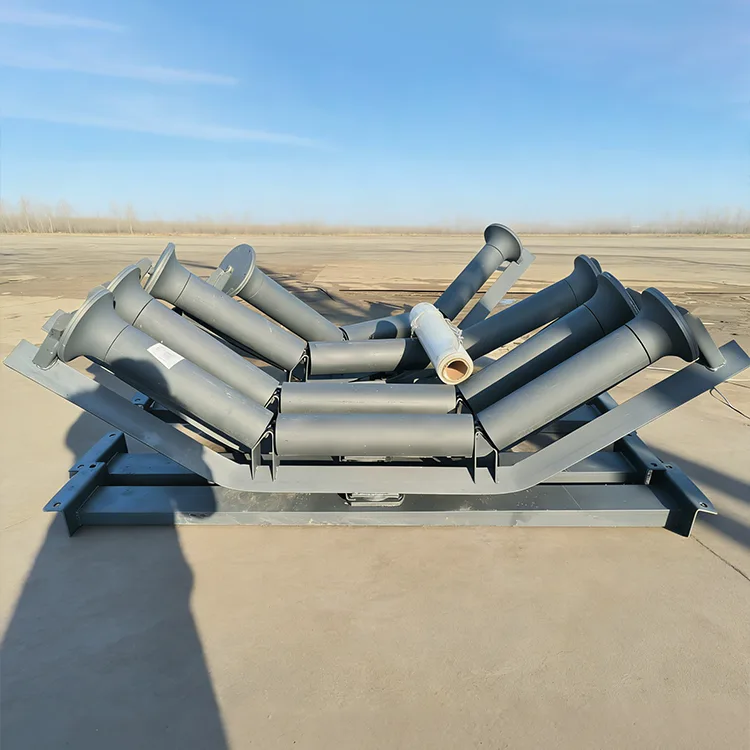
Carrying Training Idlers are specialized conveyor components installed along the carrying side of a belt conveyor. Unlike standard carrying idlers, which primarily support the belt and transported materials, training idlers are designed to help correct belt deviation during operation.
When a conveyor belt moves away from its normal centerline, the training idler can respond to the belt's lateral movement and guide it toward the correct running direction. Depending on the design, this adjustment may involve a swiveling frame or other self-aligning mechanisms.
By combining belt support and alignment assistance, these idlers help maintain consistent conveyor movement without requiring frequent manual adjustments.
Why Are Carrying Training Idlers Important for Conveyor Systems?
Belt misalignment is more than a minor operational inconvenience. If left uncorrected, it can affect equipment performance, workplace cleanliness, and the service life of conveyor components. Installing suitable Carrying Training Idlers helps address these challenges in several ways.
1. Maintaining Stable Belt Alignment
The primary function of carrying training idlers is to reduce belt deviation. By guiding the belt toward its intended path, they help maintain stable transportation and reduce the risk of continuous sideways movement.
2. Reducing Belt Wear and Equipment Damage
When a conveyor belt runs off-center, its edges may repeatedly rub against supporting structures. This friction accelerates belt damage and can affect other conveyor components. Properly selected training idlers help minimize unnecessary contact and extend equipment service life.
3. Improving Material Transportation Efficiency
A correctly aligned conveyor belt provides more consistent material transportation. Carrying training idlers help reduce material spillage caused by belt deviation, supporting cleaner production areas and fewer interruptions.
4. Lowering Maintenance Requirements
Frequent belt alignment adjustments can increase maintenance workloads and operating expenses. An effective self-aligning solution helps reduce the need for repeated manual intervention, allowing maintenance teams to focus on other important equipment inspections.
How Do Carrying Training Idlers Improve Operating Performance?
The working principle of Carrying Training Idlers is based on responding to lateral belt movement. When the belt begins to shift to one side, the training mechanism helps generate a corrective guiding action. This encourages the belt to return toward its normal operating position.
The actual alignment effect depends on several factors, including idler structure, installation position, belt speed, conveyor loading conditions, and the overall condition of the conveyor system.
For optimal performance, training idlers should be installed at suitable positions along the carrying section. They should also be used together with proper belt tensioning, accurate pulley alignment, and balanced material loading.
Carrying Training Idlers vs. Standard Carrying Idlers
Although both types of idlers support conveyor belt operation, their primary functions are different. Understanding these differences helps equipment buyers select the appropriate components for their applications.
| Comparison | Carrying Training Idlers | Standard Carrying Idlers |
|---|---|---|
| Primary Function | Belt support and alignment correction | Supporting the carrying belt and materials |
| Alignment Capability | Designed to help correct belt deviation | Generally provides no active self-aligning function |
| Typical Application | Conveyor sections prone to belt misalignment | Regular material transportation sections |
| Operational Benefit | Improved belt tracking and reduced edge wear | Stable belt support and load distribution |
Where Are Carrying Training Idlers Commonly Used?
Carrying Training Idlers are suitable for various industrial conveyor applications where belt alignment is important for continuous material transportation.
- Mining Industry: Helping maintain belt tracking when transporting minerals, ores, and other bulk materials.
- Coal Handling Systems: Supporting stable conveyor operation in coal transportation and processing facilities.
- Cement Plants: Assisting material handling systems that transport limestone, clinker, and other production materials.
- Ports and Terminals: Supporting reliable conveyor performance in bulk cargo loading and unloading operations.
- Manufacturing Facilities: Helping maintain consistent material movement in industrial production lines.
How to Choose the Right Carrying Training Idlers?
Selecting suitable Carrying Training Idlers requires consideration of the conveyor's actual operating conditions rather than focusing on product dimensions alone. Buyers and equipment engineers should evaluate the following factors:
- Conveyor Belt Width: Ensure the idler dimensions are compatible with the belt width and conveyor structure.
- Material Load: Consider the weight, volume, and distribution of transported materials.
- Operating Environment: Evaluate exposure to dust, moisture, temperature changes, and abrasive materials.
- Structural Design: Check the frame construction, rotation mechanism, roller quality, and overall durability.
- Installation Compatibility: Confirm that the selected idlers match the existing conveyor arrangement and installation requirements.
In addition, regular inspection of roller rotation, bearing conditions, frame connections, and belt tracking performance is important for maintaining long-term operating reliability.
Why Choose Baoding Ruileier Conveyor Equipment Manufacturing Co., Ltd.?
Choosing reliable conveyor components is essential for building an efficient and durable material handling system. Baoding Ruileier Conveyor Equipment Manufacturing Co., Ltd. is committed to providing conveyor equipment solutions for industrial material transportation applications.
When selecting Carrying Training Idlers, customers should prioritize structural reliability, application compatibility, manufacturing quality, and long-term operating performance. Working with an experienced conveyor equipment manufacturer can help buyers identify suitable configurations according to their specific conveyor requirements.
Whether upgrading an existing conveyor line or planning a new material handling project, selecting appropriate belt support and alignment components can make a meaningful difference in overall system performance.
Conclusion
Carrying Training Idlers play an important role in maintaining conveyor belt alignment, reducing unnecessary wear, minimizing material spillage, and improving operational stability. Compared with standard carrying idlers, their additional alignment function makes them particularly valuable in conveyor sections where belt deviation is a recurring concern.
For industrial operators seeking dependable conveyor performance, choosing the right idler design and ensuring correct installation are essential steps toward improving equipment efficiency and reducing maintenance costs. Baoding Ruileier Conveyor Equipment Manufacturing Co., Ltd. is ready to support your conveyor equipment requirements with professional product solutions.
Looking for Reliable Carrying Training Idlers?
Are you planning to upgrade your conveyor system or looking for suitable belt alignment components for an industrial project? Contact Baoding Ruileier Conveyor Equipment Manufacturing Co., Ltd. to discuss your application requirements, explore suitable Carrying Training Idlers, and find the right conveyor equipment solutions for your material handling operations. Contact us today to learn more and request product information!