

How Do Metal Frame Railway Stations Support Sustainable Deconstruction and Material Reuse
2026-05-09
Modern infrastructure faces a pivotal challenge: balancing durability with end-of-life environmental responsibility. Metal Frame Railway Stations offer a compelling solution. Unlike concrete or masonry structures that often end as landfill debris, steel-framed stations are engineered for circularity. At EIHE STEEL STRUCTURE, we design and fabricate prefabricated steel systems that prioritize not only operational strength but also future disassembly. This approach transforms railway hubs into material banks, where every beam and column holds residual value.
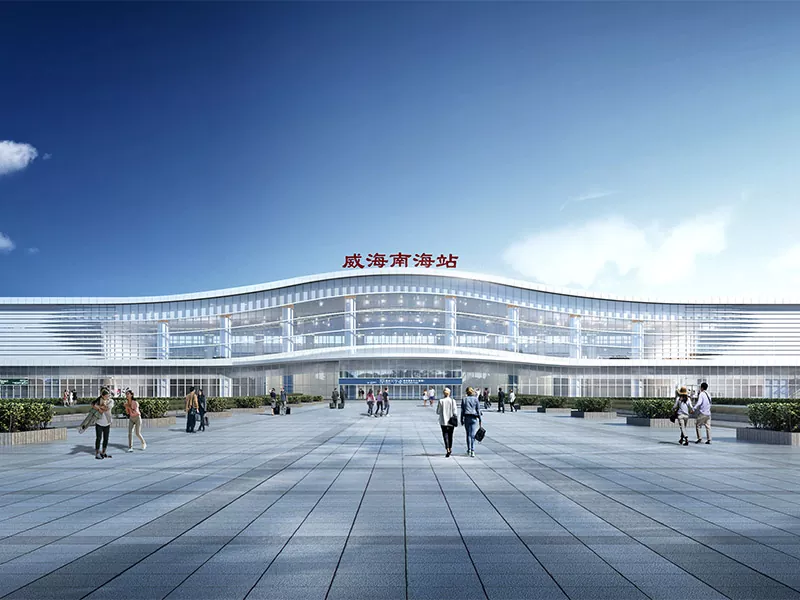
Core Mechanisms of Sustainable Deconstruction
Metal Frame Railway Stations enable sustainable deconstruction through four primary engineering strategies:
| Strategy | Application in Railway Stations | Environmental Benefit |
|---|---|---|
| Bolted connections instead of welded or cast-in-place | All primary and secondary structural joints | Allows selective dismantling of specific bays or platform canopies |
| Standardized section sizes | Columns, rafters, and bracing members | Enables direct reuse in other projects without re-rolling |
| Material passports | Digital tagging of each steel component | Tracks grade, coating history, and load capacity for future engineers |
| Demountable composite floors | Integrated decking with reversible fasteners | Recovers both steel deck and concrete aggregate separately |
Engineering Benefits for Reuse
When a Metal Frame Railway Station reaches its service life or requires expansion, the process shifts from demolition to deconstruction. Bolted frames are unfastened by crane, and sections are lowered without torch cutting. Over 98% of the steel frame can be recovered. At EIHE STEEL STRUCTURE, our hot-rolled and cold-formed sections maintain their mechanical properties even after decades of service. Reused steel requires only 12% of the energy needed to produce new steel from ore, cutting embodied carbon by up to 90% per ton.
Metal Frame Railway Stations FAQ
Q1: Can steel components from an old railway station be safely reused in a new high-speed rail station without compromising structural integrity?
A1: Yes, and this is a core advantage of Metal Frame Railway Stations. Every steel member from EIHE STEEL STRUCTURE is traceable via mill certificates and non-destructive testing. Before reuse, engineers re-evaluate the steel’s yield strength, fatigue resistance, and coating condition. For high-speed rail applications, dynamic loads are higher, but reused steel from main columns or trusses—originally designed for heavy live loads—often exceeds new requirements. Sections are simply re-certified and, if needed, reinforced with additional bolted plates. Many European and Japanese rail authorities now allow 70–80% reused steel content in new station buildings.
Q2: What is the most cost-effective method to deconstruct a metal frame railway station while preserving material value?
A2: The most cost-effective method is reverse sequence deconstruction paired with selective disassembly. Instead of demolition, a Metal Frame Railway Station is taken apart bay by bay, beginning with non-structural cladding and roof panels. Bolted connections are loosened with torque wrenches, and members are lifted using mobile cranes. EIHE STEEL STRUCTURE recommends creating a pre-deconstruction 3D BIM model that flags reusable sections longer than 4 meters. High-value wide-flange beams and hollow sections are marked for direct resale. Lower-value bracing is melted and re-rolled. This method recovers 85–95% of material value while reducing waste disposal costs by 70% compared to conventional wrecking ball demolition.
Q3: Are there any building code restrictions on reusing structural steel from a decommissioned railway station for a public transit project?
A3: International building codes (IBC, Eurocode 3, and GB 50017) permit reused steel provided it meets proof-loading or chemical verification standards. Restrictions apply only when the steel’s origin is unknown or when fatigue-sensitive connections have undocumented cycles. Metal Frame Railway Stations manufactured by EIHE STEEL STRUCTURE come with a digital life log, eliminating the “unknown origin” barrier. For public transit projects, most authorities require a 110% proof load test on a sample population of reused members. As long as the steel grade matches current specifications and bolt holes show no ovalization, approval is routine. In fact, several green transit certifications (LEED v4.1, BREEAM Outstanding) award extra credits specifically for reused structural steel from railway assets.
Conclusion
The transition from demolition to deconstruction redefines railway infrastructure as a long-term material investment. Metal Frame Railway Stations designed with bolted, modular, and traceable steel components directly enable this circular economy. EIHE STEEL STRUCTURE engineers each station for its second life, from initial fabrication to recovery protocols.
Contact us today for a free consultation on your next railway station project or for a deconstruction feasibility study of existing steel-framed transit hubs. Our team provides full material passports, disassembly manuals, and reclaimed steel certification.