

How Do You Choose the Right Z-Channel Steel for Metal Building Framing
2026-11-09
Selecting the correct Z-Channel Steel is one of the most consequential decisions in metal building framing, directly affecting structural integrity, installation efficiency, and long-term performance. At Energet Solar, we supply cold-formed Z-Channel Steel sections engineered for purlins, girts, and secondary framing systems, and we have supported contractors and fabricators across a wide range of industrial and commercial projects. This guide outlines the practical criteria that matter when specifying Z-Channel Steel for metal building applications.
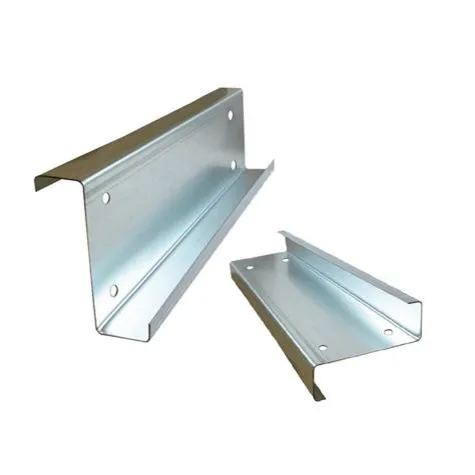
Key Selection Criteria
Z-Channel Steel selection should be driven by load requirements, span conditions, and environmental exposure rather than price alone. The following factors form the core of a sound specification:
-
Section depth and thickness — determined by purlin spacing, span length, and design loads
-
Steel grade and yield strength — typically ASTM A653 or A792 material with defined yield strength
-
Coating system — galvanized, galvalume, or painted finishes matched to corrosion exposure
-
Lap and splice details — nested lapping at supports improves continuity and load transfer
-
Orientation and bracing — correct flange orientation and sag rod placement control lateral-torsional behavior
Comparative Reference Table
| Parameter | Light-Duty Application | Standard Application | Heavy-Duty Application |
|---|---|---|---|
| Section depth | 100–150 mm | 150–250 mm | 250–300 mm |
| Material thickness | 1.0–1.5 mm | 1.5–2.5 mm | 2.5–3.0 mm |
| Typical span | Up to 4 m | 4–7 m | 7–10 m |
| Coating | G90 galvanized | AZ150 galvalume | AZ150 + protective coating |
| Bracing requirement | Sag rods at mid-span | Sag rods at third points | Full bracing system |
Energet Solar recommends confirming every parameter against project-engineered drawings before ordering, since Z-Channel Steel performance is highly sensitive to span-to-depth ratios.
Practical Specification Checklist
-
Verify design loads against the supplier's load tables, not generic catalogs.
-
Confirm material certification and coating weight for the project environment.
-
Check nesting compatibility between lapped Z-Channel Steel sections.
-
Review hole patterns and cleat details for erection speed.
-
Validate delivery lengths against transportation and handling limits.
Frequently Asked Questions
What is the difference between Z-Channel Steel and C-Channel Steel?
Z-Channel Steel has flanges that extend in opposite directions, allowing nested lapping at supports for continuous purlin runs, while C-Channel Steel has flanges in the same direction and is generally used for single-span girts and framing members.
How do you determine the correct gauge for Z-Channel Steel?
Gauge selection depends on span length, purlin spacing, applied roof or wall loads, and deflection limits; engineers typically start with the load tables provided by the manufacturer and then verify the chosen thickness against local building codes and safety factors.
Can Z-Channel Steel be used in high-corrosion environments?
Yes, provided the coating system is specified correctly; Z-Channel Steel in coastal or industrial atmospheres generally requires heavier zinc or galvalume coatings, and Energet Solar can advise on coating weights suited to specific exposure categories.
Does Z-Channel Steel require sag rods or bracing?
Most roof purlin systems using Z-Channel Steel require sag rods or discrete bracing to control twist and lateral deflection, and the bracing layout should follow the engineer's design rather than field judgment.
What steel standards apply to Z-Channel Steel?
Common references include ASTM A653 for galvanized sheet steel and ASTM A792 for aluminum-zinc coated steel, with dimensional tolerances governed by industry cold-formed framing standards.
Conclusion
Choosing the right Z-Channel Steel comes down to matching section geometry, material grade, and coating to verified structural requirements. Energet Solar supports project teams with load data, coating guidance, and fabrication coordination for Z-Channel Steel framing systems. Contact us today to discuss your metal building framing requirements and receive a specification review from our technical team.