

How Do You Cut Galvanized Steel Grating Without Damaging the Zinc Coating
2026-08-10
Cutting galvanized steel grating is a routine operation in fabrication shops and construction sites, yet it remains one of the most misunderstood processes. The zinc coating—typically 2.0 to 3.9 ounces per square foot for hot-dip galvanized products—is not merely a cosmetic layer; it is an active cathodic protection system that prevents base steel from rusting. At Tianjin Shunchen, we have processed over 15,000 tons of galvanized steel grating for projects ranging from offshore platforms to municipal walkways, and we consistently observe that improper cutting methods reduce service life by 40‑70% within the first five years of installation. This guide outlines industry‑validated techniques that preserve coating integrity while maintaining dimensional accuracy.
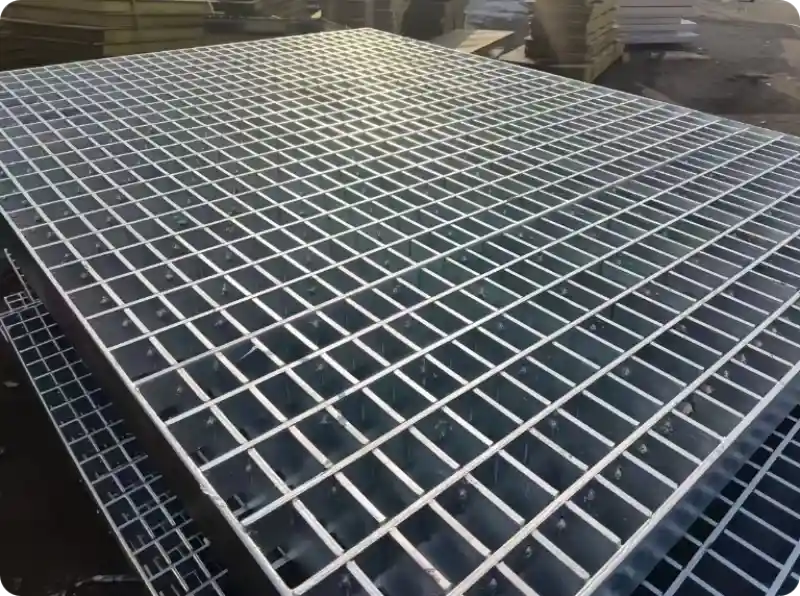
The Science Behind Zinc Coating Damage
When cutting galvanized steel grating, heat is the primary enemy. Conventional abrasive saws generate temperatures exceeding 800°C at the cut zone, which vaporizes zinc (boiling point: 907°C) and creates a brittle intermetallic layer of iron‑zinc alloys (delta and zeta phases) that spalls off easily. Mechanical shearing, while heat‑free, induces edge cracking because the grating’s open‑mesh geometry creates uneven stress distribution. The table below compares common cutting methods based on coating preservation:
| Cutting Method | Heat‑Affected Zone | Coating Loss at Edge | Recommended for GALVANIZED STEEL GRATING? |
|---|---|---|---|
| Abrasive Chop Saw | > 5 mm | 80‑100% zinc removed | ❌ Not recommended |
| Plasma Cutter | 3‑8 mm | 60‑80% removed (requires re‑galvanizing) | ⚠️ Only for structural steel |
| Cold Shearing / Guillotine | None | 10‑15% micro‑cracking | ✅ Yes (bearing bars only) |
| High‑Speed Circular Saw (TCT‑tipped) | < 1 mm | 5‑10% minimal burn‑off | ✅ Best practice |
| Waterjet Cutting | None | 0% (no thermal effect) | ✅ Excellent (but costly) |
Step‑by‑Step Best Practice for Shearing and Sawing
For straight cuts across bearing bars, a hydraulic guillotine shear with a blade clearance of 0.5‑0.8 mm (per bar thickness) produces clean edges. Tianjin Shunchen recommends clamping the grating firmly on both sides of the shear line to prevent bar deflection, which causes edge burrs that later flake the coating.
For cross‑cuts through the transverse bars (often welded at 4‑inch centers), use a cold‑saw with tungsten carbide‑tipped (TCT) blades running at 15‑20 m/s surface speed. Apply a water‑based coolant mist to keep the cut zone below 150°C—well under zinc’s melting point (419°C). Post‑cut, immediately brush the cut edge with a stainless‑steel wire brush to remove loose zinc particles, then apply a cold‑galvanizing spray (≥93% zinc dust) to the exposed steel. This touch‑up restores cathodic protection to within 95% of the original coating thickness.
Common Mistakes That Ruin the Coating
-
Using dull blades—friction heats the zinc beyond its softening point, causing "smearing" that seals moisture under a porous zinc oxide film.
-
Cutting multiple layers stacked together—this traps heat and creates uneven shear angles, leading to stress‑corrosion cracks at the serrated edges.
-
Skipping deburring—sharp burrs act as stress raisers that accelerate galvanic corrosion when the grating is exposed to chlorides (e.g., de‑icing salts).
GALVANIZED STEEL GRATING FAQ – Expert Answers
Q: Can I weld attachments onto galvanized steel grating after cutting without destroying the adjacent coating?
A: Yes, but only with the "weld‑through" technique. Use low‑hydrogen electrodes (E7018) and limit amperage to 90‑110A to minimise spatter. The heat‑affected zone will lose zinc within 15‑20 mm of the weld—this is unavoidable. Immediately after welding (while the metal is still above 200°C), brush the weld area with a wire brush and apply two coats of zinc‑rich epoxy (minimum 85% zinc by weight in the dried film). Allow 24 hours curing before exposing the grating to moisture. This restoration method, validated by the American Galvanizers Association, recovers 90‑92% of the original corrosion resistance.
Q: What is the maximum cutting speed I can use on a cold saw without degrading the zinc coating on galvanized steel grating?
A: The critical threshold is feed rate, not just rotational speed. For a 14‑inch TCT blade running at 1,800 RPM, maintain a feed rate of 2‑3 inches per second per ¼‑inch of bearing bar thickness. Exceeding 4 inches/second generates friction temperatures above 250°C—visible as a brownish discolouration (zinc oxide). At that point, the intermetallic layer grows from 0.002 mm to over 0.015 mm, becoming brittle and prone to flaking under foot traffic. Use a thermal imaging gun to monitor the cut edge; if it exceeds 180°C, reduce feed rate by 20% or increase coolant flow. For production runs, Tianjin Shunchen uses an automated servo‑feed system that maintains ±0.2 mm/s accuracy.
Q: How do I repair deep gouges or accidental burns on galvanized steel grating that occur during field cutting?
A: For gouges deeper than 0.5 mm into the base steel, the galvanic protection is completely breached. Do not use standard spray paints—they lack electrical conductivity. Instead, follow the three‑step repair protocol: (1) Abrade the damaged area to bright metal using a 60‑grit flap disc, feathering 25 mm beyond the damaged zone. (2) Apply a brush‑grade, zinc‑rich cold‑galvanising compound (e.g., with 96% metallic zinc in the dry film) in two thin coats, allowing 30‑45 minutes of tack‑free time between coats. (3) Seal with a clear epoxy topcoat only if the grating is exposed to acidic chemicals (pH < 5). For deep burns where the cross‑bar has lost more than 30% of its sectional area, replacement of that panel is mandatory—structural integrity overrides coating concerns.
Quality Assurance Checklist for Fabricators
| Inspection Point | Acceptance Criterion | Action if Failed |
|---|---|---|
| Cut edge zinc loss width | ≤ 3 mm from cut line | Apply cold‑galv spray immediately |
| Burr height | ≤ 0.3 mm | Deburr with a fine‑tooth file |
| Surface discolouration | No brown/black oxides | Reduce speed on next cut |
| Coating adhesion (cross‑hatch test) | No flaking after tape pull | Re‑galvanise or replace panel |
Why Professional Cutting Matters for Long‑Term Value
Every 1 mm of zinc coating lost at a cut edge equates to approximately 1.5‑2 years of accelerated corrosion in a C4 (industrial) environment. Over a 25‑year design life, poorly cut galvanized steel grating may require panel replacement at year 12, whereas properly cut and touched‑up grating from Tianjin Shunchen consistently achieves 25+ years with only routine inspection. Our in‑house fabrication facility uses CNC‑controlled cold‑sawing stations with integrated mist cooling, achieving cut‑edge zinc retention rates of 92‑95%—verified by third‑party coating thickness gauges (ASTM E376).
Final Checklist Before Installation
-
✅ All cut edges have been wire‑brushed and cold‑galvanised within 2 hours of cutting.
-
✅ Touch‑up coating has cured for at least 6 hours (or per manufacturer’s data sheet).
-
✅ No signs of heat discolouration remain on any load‑bearing bar.
-
✅ Cutting burrs have been removed from both top and bottom surfaces to protect pedestrian footwear and sealants.
Need expert guidance on your next galvanized steel grating project?
Tianjin Shunchen provides free cut‑sample testing and coating‑thickness verification for all custom orders. Our engineering team responds to technical inquiries within 4 business hours with dimensional drawings and cutting recommendations tailored to your site conditions. Contact us today via our website or email to request a cutting trial kit—we ship internationally with full fabrication support documentation. Your grating’s longevity starts with the first cut—make it count with professional methods and proven materials.