
How Does a 3D Five-Axis Laser Cutting Machine Improve Precision and Production Efficiency?
2026-10-27
In modern manufacturing, complex components require more than conventional cutting methods can offer. As industries demand greater precision, flexible processing, and shorter production cycles, the 3D Five-Axis Laser Cutting Machine has become an important solution for processing three-dimensional metal parts. By combining multi-axis movement with advanced laser cutting technology, this equipment enables manufacturers to cut complex contours, inclined surfaces, and spatial structures with improved accuracy and consistency. For businesses seeking to optimize production and reduce processing costs, choosing the right machine can make a significant difference. Jinan Ever View Machinery Technology Co., Ltd. provides machinery solutions designed to support evolving industrial manufacturing requirements.
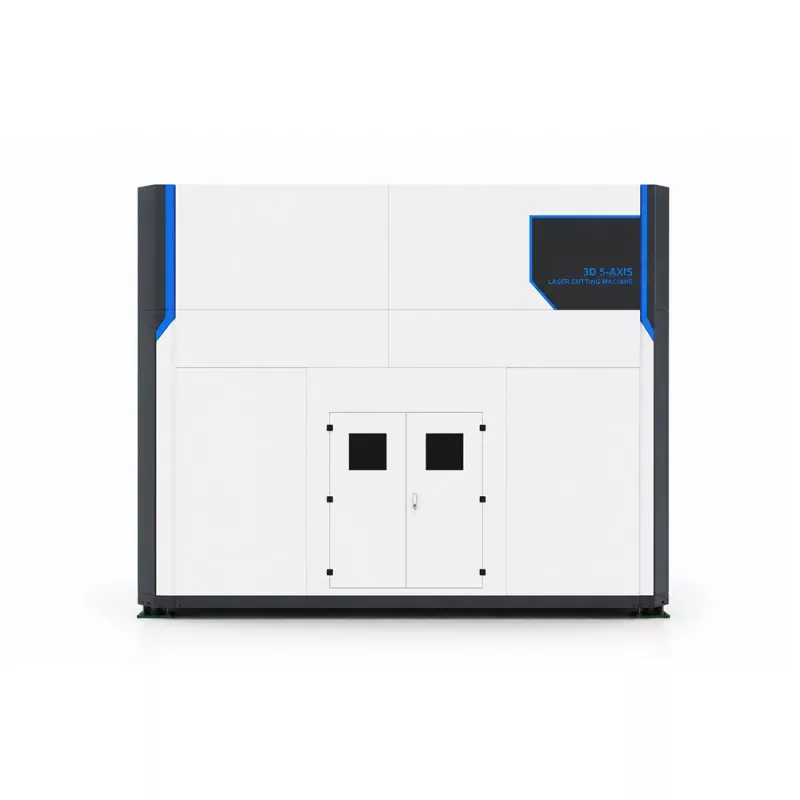
What Makes a 3D Five-Axis Laser Cutting Machine Different?
Unlike conventional two-dimensional laser cutting equipment, a 3D Five-Axis Laser Cutting Machine can coordinate movement across multiple axes, allowing the laser head and workpiece to follow complex cutting paths in three-dimensional space. Depending on the machine configuration, five-axis motion typically involves three linear axes and two rotational axes.
This flexibility allows manufacturers to process parts with different angles, curved surfaces, and intricate geometries without relying on multiple specialized fixtures or separate machining operations.
Key capabilities include:
-
Multi-angle cutting: Processes inclined edges, angled openings, and complex contours.
-
Three-dimensional profiling: Supports cutting requirements for formed metal components and spatial structures.
-
High processing precision: Helps maintain dimensional consistency when following complex cutting paths.
-
Flexible production: Accommodates different part shapes and changing manufacturing requirements.
-
Reduced secondary processing: Can minimize additional trimming or finishing when suitable cutting parameters are applied.
These capabilities make five-axis laser cutting particularly valuable when conventional flat-sheet cutting cannot efficiently meet the requirements of a component.
Why Is Five-Axis Laser Cutting Important for Modern Manufacturing?
1. Improving Cutting Accuracy and Product Quality
Precision is essential when manufacturing components that must fit together accurately or meet demanding dimensional specifications. The coordinated movement of a five-axis system enables the laser beam to approach the workpiece from different directions and maintain an appropriate cutting orientation along complex paths.
With suitable programming, material settings, and machine calibration, manufacturers can achieve cleaner edges and more consistent cutting results. This is especially useful for components featuring curved surfaces, angled holes, and intricate three-dimensional profiles.
Improved consistency can also reduce material waste and the need for repeated adjustments, supporting more reliable downstream assembly.
2. Increasing Production Efficiency
Traditional processing of complex components may require several operations, including repositioning, fixture changes, and additional edge trimming. A 3D Five-Axis Laser Cutting Machine can integrate multiple cutting directions into a coordinated process, reducing unnecessary handling and setup time.
Potential efficiency benefits include:
-
Fewer repositioning operations.
-
Shorter processing cycles for suitable complex parts.
-
Reduced dependence on dedicated cutting fixtures.
-
More streamlined transitions between different cutting paths.
-
Better repeatability in batch production.
Actual productivity depends on material thickness, component geometry, laser power, programming quality, and the production workflow. Nevertheless, integrating multiple cutting operations into one system can help manufacturers simplify demanding production tasks.
3. Supporting Flexible and Customized Production
Manufacturing businesses increasingly need to respond to changing customer specifications and smaller production batches. Five-axis laser cutting allows cutting paths to be adjusted through appropriate CAD/CAM programming, making it easier to accommodate different part geometries without redesigning a dedicated mechanical cutting tool for every product.
This flexibility is particularly beneficial for manufacturers handling customized components, product development, and frequent design changes.
Which Industries Benefit from 3D Five-Axis Laser Cutting?
The technology is suitable for various industries that process complex metal components. Its practical value depends on the workpiece geometry, material, dimensional tolerances, and machine configuration.
| Industry | Typical Applications | Main Benefits |
|---|---|---|
| Automotive manufacturing | Formed body parts, structural components, and exhaust-related parts | Flexible contours and reduced secondary trimming |
| Aerospace manufacturing | Complex metal profiles and precision structural components | Multi-angle processing and controlled cutting paths |
| Machinery manufacturing | Housings, brackets, and specialized metal components | Greater geometric flexibility |
| Metal fabrication | Three-dimensional profiles and customized structures | Reduced repositioning and improved workflow |
| Industrial equipment | Complex enclosures and formed components | More adaptable production processes |
For manufacturers producing parts with curved surfaces, changing angles, or intricate contours, five-axis laser cutting can offer advantages over conventional two-dimensional cutting methods.
How Does It Compare with Traditional Laser Cutting?
Selecting suitable equipment requires understanding the differences between conventional flat-sheet processing and five-axis cutting.
| Comparison Factor | 2D Laser Cutting Machine | 3D Five-Axis Laser Cutting Machine |
|---|---|---|
| Main processing focus | Flat sheets and planar contours | Complex three-dimensional geometries |
| Cutting directions | Primarily perpendicular to the sheet | Multiple orientations and cutting angles |
| Part compatibility | Flat or relatively simple profiles | Formed parts and complex spatial structures |
| Setup requirements | May need extra handling for angled features | Can combine multiple cutting orientations |
| Programming demands | Generally simpler for flat profiles | More advanced multi-axis programming |
| Typical advantage | Efficient processing of flat materials | Greater flexibility for complex components |
A 2D laser cutting machine remains a practical choice for manufacturers primarily processing flat sheets. A five-axis system is more appropriate when three-dimensional geometry, multi-angle cutting, and reduced handling are important production priorities.
What Should Buyers Consider Before Purchasing?
Choosing the right equipment requires evaluating both technical specifications and long-term production objectives.
Important factors include:
-
Material compatibility: Confirm that the machine supports the metals, thicknesses, and workpiece types used in your production.
-
Working range: Check the available processing dimensions and axis travel to ensure the machine accommodates your components.
-
Laser configuration: Evaluate laser power, cutting performance, and compatibility with the intended materials.
-
Motion control: Review axis coordination, positioning performance, and the machine's ability to follow complex cutting paths.
-
Software compatibility: Confirm support for suitable CAD/CAM workflows, toolpath generation, and production programming.
-
Safety and maintenance: Consider protective enclosures, operating procedures, routine maintenance, and technical support.
-
Total operating cost: Assess energy consumption, consumables, maintenance requirements, training, and expected production capacity.
Requesting sample cutting tests using representative workpieces is a practical way to evaluate edge quality, processing time, dimensional accuracy, and overall suitability before making a purchasing decision.
Why Consider Jinan Ever View Machinery Technology Co., Ltd.?
Selecting industrial laser equipment is not simply about choosing a machine with advanced motion capabilities. Buyers also need to understand how the equipment will integrate into their manufacturing processes and support their production goals.
Jinan Ever View Machinery Technology Co., Ltd. is a company to consider when evaluating machinery solutions for industrial processing requirements. Buyers should discuss their actual workpiece dimensions, material specifications, cutting angles, production volume, and automation expectations to determine the most appropriate equipment configuration.
A detailed technical discussion can help establish realistic performance targets, identify compatibility requirements, and clarify the support needed for installation, operation, and ongoing maintenance.
Conclusion
A 3D Five-Axis Laser Cutting Machine provides manufacturers with greater flexibility for processing complex three-dimensional components. By enabling multi-angle cutting, improving workflow integration, and reducing certain repositioning and secondary processing operations, it can contribute to better production consistency and operational efficiency.
For businesses working with formed metal parts, intricate contours, and demanding cutting requirements, investing in suitable five-axis technology can support more adaptable manufacturing processes. The key is to match the machine's technical capabilities with actual production needs rather than focusing on specifications alone.
Looking for a suitable laser cutting solution for your manufacturing projects? Contact us to discuss your workpiece requirements, explore suitable equipment configurations, and identify a practical approach to improving cutting precision and production efficiency with Jinan Ever View Machinery Technology Co., Ltd.