

How Does a Box Forming Machine Improve Packaging Efficiency?
2026-06-17
Abstract
In modern manufacturing and logistics environments, packaging efficiency directly impacts production cost, delivery speed, and product safety. A Box Forming Machine has become a critical piece of automation equipment for businesses aiming to streamline carton erection and reduce manual labor dependency. This article explores how this machine works, its key advantages, selection considerations, and real-world applications. It also provides a structured overview of how companies like Jinjiu Packing Machinery are advancing packaging automation technology to support diverse industrial needs.
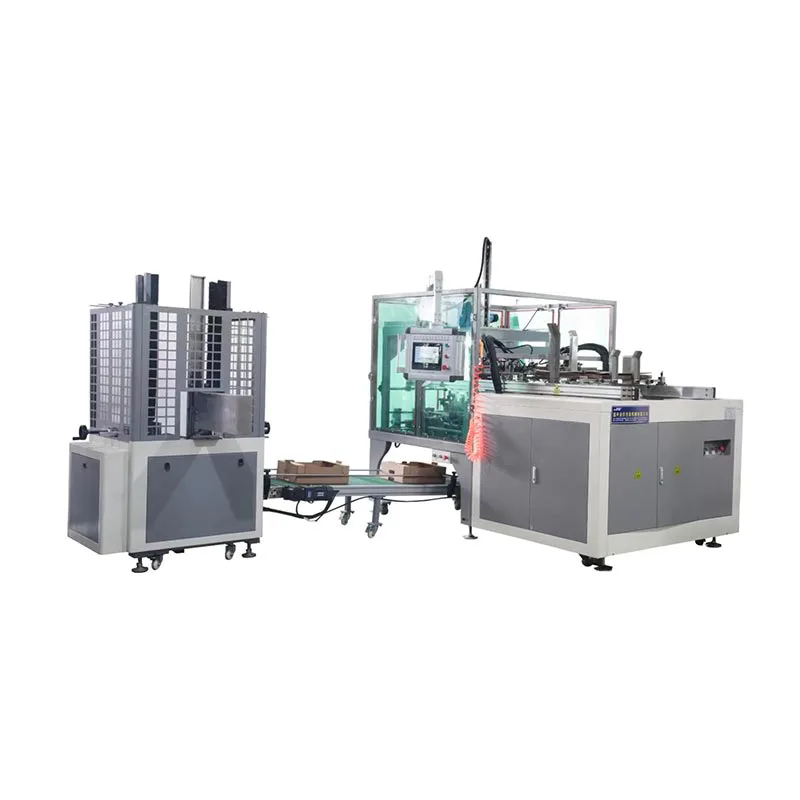
Table of Contents
- 1. Overview of Box Forming Machine
- 2. Working Principle Explained
- 3. Key Benefits in Industrial Packaging
- 4. Common Industry Applications
- 5. Manual vs Automated Box Forming
- 6. How to Choose the Right Machine
- 7. Maintenance and Operational Stability
- 8. Future Trends in Box Forming Technology
- 9. Frequently Asked Questions
1. Overview of Box Forming Machine
A Box Forming Machine is an automated packaging system designed to convert flat cardboard blanks into fully formed cartons. It performs a series of mechanical actions such as folding, shaping, bottom sealing, and sometimes tape or glue application. This process replaces repetitive manual carton assembly, ensuring uniformity and speed in packaging operations.
Manufacturers like Jinjiu Packing Machinery focus on engineering these machines to meet the increasing demand for high-speed production lines, especially in e-commerce, food distribution, pharmaceuticals, and industrial goods packaging.
2. Working Principle Explained
The working principle of a Box Forming Machine is based on synchronized mechanical and pneumatic systems. The machine typically operates in the following stages:
- Sheet Feeding: Flat cardboard sheets are loaded into the magazine.
- Suction and Positioning: Vacuum suction arms pick up the sheet and align it precisely.
- Folding Mechanism: Mechanical arms fold the sides and bottom flaps into position.
- Sealing Process: Adhesive tape or hot melt glue secures the bottom of the box.
- Output Delivery: The formed box is ejected onto a conveyor line for filling.
This coordinated process ensures high-speed production while maintaining consistent box geometry and structural integrity.
3. Key Benefits in Industrial Packaging
Implementing a Box Forming Machine delivers measurable operational improvements across packaging workflows. Below are the major benefits:
| Benefit | Description |
|---|---|
| Increased Efficiency | Reduces packaging time by automating carton erection and sealing. |
| Labor Cost Reduction | Minimizes dependency on manual workers for repetitive tasks. |
| Consistent Quality | Ensures every box maintains identical shape and sealing strength. |
| Higher Output | Capable of producing dozens of boxes per minute depending on model. |
| Reduced Material Waste | Precise folding reduces carton damage and adhesive overuse. |
4. Common Industry Applications
Box forming systems are widely used across industries where packaging efficiency is essential. Key applications include:
- E-commerce fulfillment centers: High-volume parcel packaging for fast shipping.
- Food and beverage industry: Hygienic packaging of boxed goods and beverages.
- Pharmaceutical industry: Accurate and clean packaging of medical products.
- Electronics manufacturing: Protective packaging for fragile components.
- Logistics and warehousing: Standardized carton preparation for distribution.
Each industry benefits from reduced manual intervention and improved packaging consistency.
5. Manual vs Automated Box Forming
Understanding the differences between manual and automated systems highlights the value of automation investment.
| Aspect | Manual Box Forming | Automated Box Forming Machine |
|---|---|---|
| Speed | Low, dependent on worker skill | High, consistent cycle speed |
| Accuracy | Variable | Highly consistent |
| Labor Requirement | High | Low |
| Cost Efficiency | Higher long-term labor cost | Lower operational cost over time |
| Scalability | Limited | Highly scalable |
6. How to Choose the Right Machine
Selecting a suitable Box Forming Machine depends on production requirements, packaging materials, and workflow integration. Key factors include:
- Production Speed: Match machine capacity with output demand.
- Box Size Range: Ensure compatibility with multiple carton dimensions.
- Sealing Method: Tape sealing or hot melt glue depending on application.
- Automation Level: Semi-automatic vs fully automatic systems.
- Space Requirements: Floor layout compatibility with production line.
- After-Sales Support: Availability of maintenance and spare parts.
Companies like Jinjiu Packing Machinery offer customizable solutions designed to integrate seamlessly into existing production systems, ensuring optimal performance and long-term reliability.
7. Maintenance and Operational Stability
Regular maintenance is essential to ensure consistent machine performance and extend equipment lifespan. Recommended practices include:
- Routine lubrication of moving mechanical parts
- Inspection of suction components and air pressure systems
- Cleaning adhesive nozzles or tape dispensers
- Calibration of sensors and alignment systems
- Scheduled replacement of wear-and-tear components
A well-maintained machine reduces downtime and ensures continuous production flow, which is critical in high-demand industries.
8. Future Trends in Box Forming Technology
The evolution of packaging automation is driving significant innovation in Box Forming Machines. Emerging trends include:
- Smart Automation: Integration of sensors and AI-based control systems for real-time adjustments.
- Energy Efficiency: Reduced power consumption through optimized mechanical design.
- IoT Connectivity: Remote monitoring and predictive maintenance capabilities.
- Flexible Packaging Support: Machines capable of handling varied carton styles and sizes.
These advancements aim to further reduce operational costs while improving productivity and sustainability.
9. Frequently Asked Questions
Q1: What is the main function of a Box Forming Machine?
It automatically forms flat cardboard sheets into structured cartons ready for filling and sealing.
Q2: Can it handle different box sizes?
Yes, most modern machines are adjustable and support multiple carton dimensions.
Q3: Is it suitable for small businesses?
Yes, there are semi-automatic models designed for small to medium production volumes.
Q4: How fast can it operate?
Depending on the model, it can produce dozens of boxes per minute with stable performance.
Q5: Why choose automation over manual forming?
Automation improves consistency, reduces labor costs, and significantly increases output efficiency.
Conclusion
A Box Forming Machine is no longer a luxury but a necessity for modern packaging operations aiming to improve productivity and reduce operational inefficiencies. From e-commerce fulfillment to industrial logistics, its role is central to scalable and reliable packaging systems. With engineering expertise from Jinjiu Packing Machinery, businesses can adopt tailored solutions that align with production goals and long-term growth strategies.
If you are looking to upgrade your packaging line or explore customized automation solutions, Jinjiu Packing Machinery is ready to support your needs.
Contact us today to discuss your requirements and discover how our Box Forming Machine solutions can transform your packaging efficiency and production capabilities.