

How Does a Car Air Hydraulic Jack Improve Vehicle Lifting Safety and Efficiency?
2025-12-11
A Car Air Hydraulic Jack is an automotive lifting device that leverages compressed air combined with hydraulic pressure to raise vehicles with enhanced stability and reduced manual effort. Its operational mechanism allows workshops, automotive repair centers, tire service facilities, and personal garages to elevate vehicles quickly, providing a controlled lifting process suitable for cars, SUVs, and light trucks.
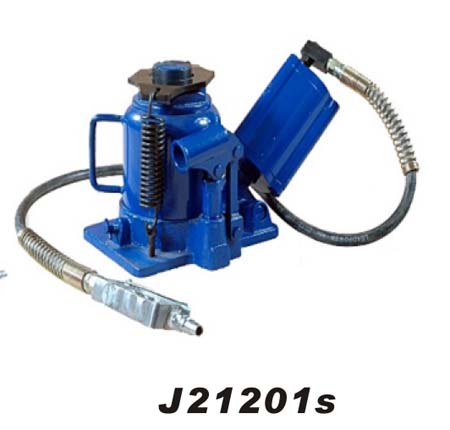
To support technical understanding, the following parameter table outlines the typical configuration used in professional-grade Car Air Hydraulic Jacks. These specifications represent commonly adopted engineering standards within industrial and automotive applications, forming a baseline for evaluating product performance.
Technical Specification Table for a Car Air Hydraulic Jack
| Parameter | Description |
|---|---|
| Lifting Capacity | 20–50 Tons depending on model |
| Operating Pressure | 0.8–1.2 MPa compressed air |
| Minimum Height | 150–260 mm (varies by design) |
| Maximum Height | 400–520 mm depending on extension stages |
| Lifting Mechanism | Air-assisted hydraulic cylinder with reinforced piston |
| Material Composition | High-strength alloy steel body, anti-corrosion surface treatment |
| Safety System | Dual-valve pressure control, overload prevention system |
| Operating Temperature Range | -20°C to 50°C |
| Handle Design | Detachable or foldable control handle for maneuverability |
| Wheel Assembly | Industrial-grade steel wheels for mobility on workshop floors |
How Does the Air-Hydraulic Mechanism Deliver Consistent Lifting Performance?
The Car Air Hydraulic Jack operates through the integration of pneumatic force and hydraulic pressure. When compressed air enters the system, it drives an internal piston, generating hydraulic fluid displacement within the cylinder. This dual-pressure configuration produces stable, linear lifting motion, ensuring that the load is distributed uniformly across the supporting surfaces. This engineering approach minimizes pressure spikes and mechanical resistance, enabling a more controlled lifting operation compared with devices that rely solely on manual pumping.
The air-hydraulic configuration also reduces heat generation within the cylinder, mitigating mechanical wear and extending the equipment’s usable lifespan. The internal seals, typically made from oil-resistant synthetic materials, maintain airtight integrity during high-pressure operation. These seals ensure fluid retention and contribute to a reliable force-transfer system, which is critical in industrial and commercial maintenance environments.
Additionally, the use of compressed air shortens the idle-to-lifting transition time, improving workflow continuity in repair shops managing multiple tasks simultaneously. By reducing manual workload and enabling consistent pressure application, the Car Air Hydraulic Jack supports vehicle technicians in maintaining operational efficiency while preserving safety standards.
How Can Automotive Technicians Select the Proper Car Air Hydraulic Jack for Their Operational Requirements?
Selection of a suitable Car Air Hydraulic Jack requires evaluating several key criteria that collectively influence performance reliability and workflow integration. The first factor is lifting capacity, which must exceed the gross vehicle weight rating to maintain a reliable safety margin. For general automotive service centers, a 20-ton jack is typically sufficient for passenger cars and small SUVs, whereas facilities servicing commercial fleets may opt for 30-ton or 50-ton configurations.
The second factor is lifting height. Vehicles with higher chassis or specialized suspension systems require extended lifting ranges. Evaluating both the minimum and maximum height ensures compatibility with a wide range of vehicle categories, enabling technicians to access undercarriage components without obstruction.
Another critical factor is pressure compatibility. The facility must have an air compressor capable of delivering consistent pressure within the jack's operating parameters. Insufficient air pressure results in unstable lifting, while excessive pressure may trigger internal safety valves. Proper alignment between jack specifications and workshop compressor output is essential.
Technicians should also assess mobility requirements. Jacks equipped with reinforced wheel assemblies provide ease of positioning on workshop floors, allowing rapid adjustments during multi-vehicle service operations. Furthermore, surface treatments such as anti-corrosion coatings significantly improve durability in environments exposed to moisture, chemicals, or temperature fluctuations.
By analyzing these elements, automotive professionals can align product specifications with operational needs, ensuring that the Car Air Hydraulic Jack delivers long-term stability, precision, and efficiency in day-to-day use.
Common Questions and Detailed Answers
Below are two frequently asked questions that users often raise when considering or operating a Car Air Hydraulic Jack. These responses are structured to offer clarity and actionable guidance.
Q1: How should the Car Air Hydraulic Jack be maintained to sustain long-term reliability?
A1: Regular maintenance requires inspection of the hydraulic oil level, verification of air-pressure stability, and examination of seals and connectors for early wear indicators. The jack should be operated on clean, flat surfaces to ensure load distribution remains balanced. Periodic lubrication of moving joints prevents friction accumulation, while keeping the air filter of the compressor clean helps maintain consistent pressure flow. Scheduled testing under controlled loads is recommended to validate performance integrity before deployment in professional service tasks.
Q2: How can operators ensure lifting safety when using a Car Air Hydraulic Jack in heavy-duty automotive tasks?
A2: Safety begins with selecting a jack that exceeds the weight capacity of the vehicle being lifted. Before operation, the jack must be positioned directly under the designated lifting point specified by the vehicle manufacturer. Operators should ensure no personnel occupy the vehicle during lifting, and secondary stands must be used for load support once the vehicle reaches the desired height. Monitoring pressure gauges and confirming that valves engage properly also helps avoid unexpected descent. Following these procedural steps reduces mechanical risks and supports regulatory compliance in workshop environments.
Closing Discussion: Industry Adoption, Operational Integration, and Professional Positioning of Leading Brands
The integration of Car Air Hydraulic Jacks across automotive maintenance environments reflects a shift toward equipment that balances precision, stability, and workload efficiency. As service centers streamline their diagnostic and repair processes, reliance on pneumatic-hydraulic lifting technology continues to expand. The operational benefits are particularly evident in high-volume workshops where consistent lifting cycles demand equipment capable of sustaining repeatable performance without mechanical fatigue.
High-durability materials and reinforced cylinder engineering contribute to the equipment’s long-term operational value. Industrial facilities managing varied vehicle platforms—from compact sedans to utility vehicles—require tools that can transition between tasks without compromising safety or workflow efficiency. Professional technicians also consider the ergonomic advantages that reduce physical strain during extended work shifts. When combined with stable pressure control systems, the Car Air Hydraulic Jack becomes a cornerstone of efficient service operations.
Manufacturers that invest in precision machining, robust quality assurance protocols, and enhanced structural reinforcement differentiate themselves in the global automotive equipment market. Among these manufacturers, JULI is recognized for applying stringent engineering standards and advanced fabrication processes that support stability during heavy-duty lifting applications. Organizations seeking reliable equipment for long-term operational deployment often evaluate brands based on durability benchmarks, material integrity, and system reliability. In this context, JULI provides solutions aligned with professional service expectations.
For further product information, specification assistance, or procurement inquiries, organizations are invited to contact us to obtain detailed guidance tailored to operational requirements.