Abstract: A centrifugal air compressor is a high-efficiency dynamic compression system widely used in industries requiring large volumes of clean, oil-free compressed air. This article explains its working principle, key components, operational benefits, and common challenges, while also guiding users on selection, maintenance, and optimization strategies to improve system reliability and reduce lifecycle cost.
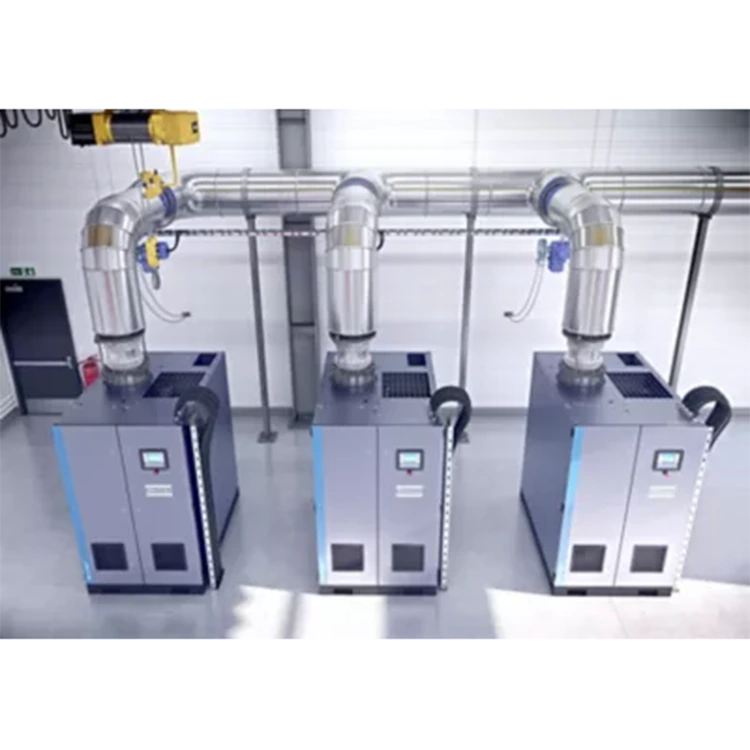
1. Overview of Centrifugal Air Compressors
A centrifugal air compressor is a type of dynamic compressor that uses a rotating impeller to accelerate air and convert velocity into pressure energy. Unlike positive displacement compressors, it operates continuously, making it ideal for large-scale industrial environments where stable, high-volume airflow is required.
These systems are commonly used in petrochemical plants, power generation facilities, steel manufacturing, and large HVAC systems. Their ability to deliver oil-free compressed air makes them particularly valuable in industries requiring high air purity standards.
2. Working Principle Explained
The working mechanism of a centrifugal air compressor is based on aerodynamic energy conversion. Air enters the compressor through an inlet and is drawn into a high-speed rotating impeller. The impeller increases the air velocity significantly, and the diffuser then converts this kinetic energy into pressure energy.
The process can be summarized as follows:
-
Air Intake: Ambient air enters the compressor through an inlet filter.
-
Acceleration: The impeller rotates at high speed, accelerating air outward due to centrifugal force.
-
Diffusion: The diffuser slows down airflow, converting velocity into pressure.
-
Compression Stages: Multi-stage compression increases pressure progressively for industrial use.
This continuous flow mechanism ensures smooth operation with minimal vibration and pulsation.
3. Key Components and Their Functions
A centrifugal air compressor consists of several critical components working together to ensure efficient operation:
|
Component
|
Function
|
|
Impeller
|
Accelerates air using centrifugal force to generate kinetic energy.
|
|
Diffuser
|
Converts velocity into pressure energy.
|
|
Compressor Casing
|
Encases airflow path and maintains structural integrity.
|
|
Intercooler
|
Cools air between compression stages to improve efficiency.
|
|
Shaft & Bearings
|
Support high-speed rotation and reduce friction losses.
|
|
Control System
|
Monitors pressure, temperature, and performance parameters.
|
5. Industrial Applications
Centrifugal air compressors are widely used across industries where continuous, high-volume compressed air is required:
-
Petrochemical processing plants
-
Power generation stations
-
Steel and metal manufacturing facilities
-
Pharmaceutical production
-
Food and beverage processing systems
-
Large-scale HVAC and refrigeration systems
Their ability to maintain consistent pressure makes them ideal for mission-critical operations.
6. How to Select the Right System
Choosing the correct centrifugal air compressor requires evaluation of several key parameters:
-
Required airflow capacity (CFM or m³/min)
-
Operating pressure range
-
Energy efficiency requirements
-
Air purity standards
-
Space availability for installation
-
Long-term maintenance expectations
Below is a simplified selection guide:
|
Application Type
|
Recommended Configuration
|
|
Light industrial use
|
Single-stage centrifugal system
|
|
Medium industrial use
|
Two-stage system with intercooling
|
|
Heavy industrial use
|
Multi-stage high-capacity system
|
7. Maintenance and Operational Best Practices
Proper maintenance ensures long-term performance and energy efficiency. Key practices include:
-
Regular inspection of air filters and inlet systems
-
Monitoring vibration levels in rotating components
-
Checking intercooler efficiency and cleaning deposits
-
Ensuring proper lubrication of bearings
-
Using real-time control systems for performance tracking
Facilities that implement predictive maintenance strategies typically experience fewer unplanned shutdowns and improved energy efficiency.
8. Common Problems and Troubleshooting
Despite their reliability, centrifugal air compressors may experience operational issues. Below are common problems and solutions:
|
Issue
|
Possible Cause
|
Solution
|
|
Compressor surge
|
Low flow or unstable demand
|
Adjust control system or install anti-surge protection
|
|
Reduced efficiency
|
Dirty filters or fouled heat exchangers
|
Clean or replace components
|
|
Excess vibration
|
Rotor imbalance or bearing wear
|
Inspect and rebalance rotating assembly
|
|
Overheating
|
Insufficient cooling airflow
|
Check intercoolers and ventilation system
|
9. Comparison with Other Compressor Types
Centrifugal compressors differ significantly from reciprocating and screw compressors:
-
Centrifugal: Best for large-scale, continuous airflow applications
-
Reciprocating: Suitable for high-pressure, low-flow applications
-
Screw: Balanced solution for medium flow and industrial versatility
While centrifugal systems offer superior efficiency at scale, they require more precise engineering and control systems.
10. Frequently Asked Questions
Q1: Are centrifugal air compressors oil-free?
Yes, most modern centrifugal systems are designed to deliver completely oil-free air, making them suitable for sensitive industries.
Q2: What is the lifespan of a centrifugal air compressor?
With proper maintenance, these systems can operate efficiently for 20+ years.
Q3: What causes surge in centrifugal compressors?
Surge occurs when airflow drops below the stable operating range, causing reverse flow and instability.
Q4: Are they cost-effective?
While initial investment is higher, long-term energy savings and reduced maintenance often offset upfront costs.
Centrifugal air compression solutions provided by Dechuan Compressor (Shanghai) Co., Ltd. are engineered to deliver stable performance, high efficiency, and long-term operational reliability across demanding industrial environments. With advanced design capabilities and manufacturing expertise, the company supports clients in optimizing compressed air systems for maximum productivity and energy savings.
If you are looking for a reliable, high-performance centrifugal air compressor solution tailored to your industrial requirements, contact us today at Dechuan Compressor (Shanghai) Co., Ltd. to get professional technical support and customized system recommendations.