

How Does a Corrugated Fastener Making Machine Improve Fastener Production?
2026-08-25
Article Summary
A reliable corrugated fastener production line must do more than simply form metal wire into a finished product. Manufacturers need stable forming accuracy, consistent dimensions, efficient material feeding, dependable cutting, low waste, straightforward maintenance, and enough flexibility to support different production requirements. A modern Corrugated Fastener Making Machine integrates multiple operations into a continuous manufacturing process, helping factories reduce manual handling while improving production consistency. This article explains how the machine works, which production problems it addresses, what features deserve attention when selecting equipment, and how manufacturers can maintain stable performance over the long term. It also examines the practical advantages of working with YWC when building or upgrading a corrugated fastener production operation.
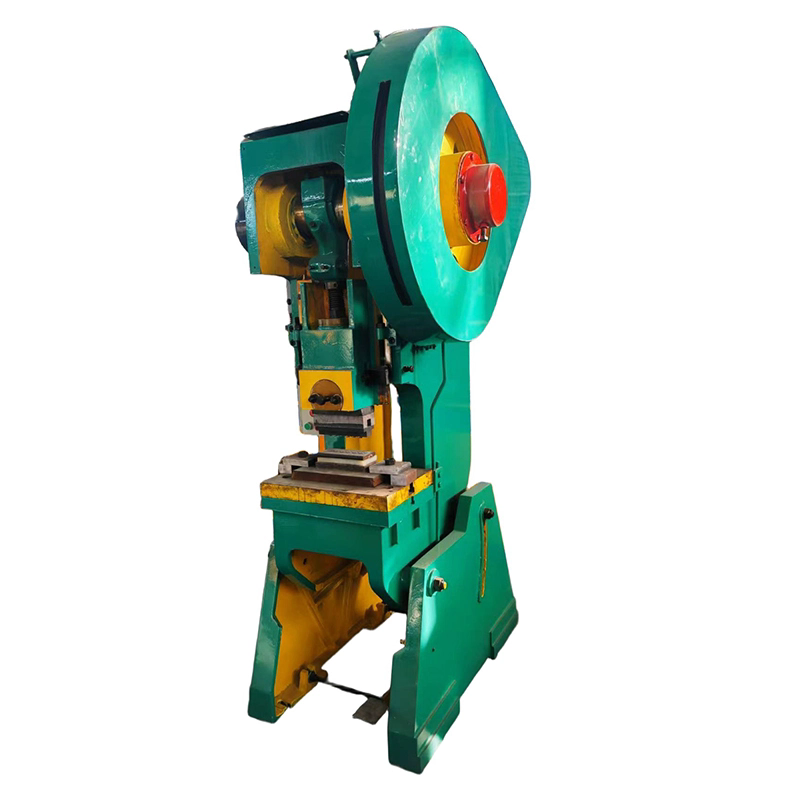
Table of Contents
- What Is a Corrugated Fastener Making Machine?
- How Does the Production Process Work?
- Which Production Problems Can the Machine Solve?
- What Are the Main Production Advantages?
- Which Materials Can Be Used?
- How Should Manufacturers Select the Right Machine?
- How Can Product Quality Be Kept Consistent?
- How Can Machine Performance Be Maintained?
- Where Are Corrugated Fasteners Used?
- Why Consider YWC for Corrugated Fastener Production?
- Frequently Asked Questions
- Conclusion
What Is a Corrugated Fastener Making Machine?
A Corrugated Fastener Making Machine is specialized industrial equipment used to manufacture corrugated fasteners, also commonly described as wavy or crimped fasteners. Unlike conventional straight nails, these fasteners have a formed corrugated profile designed to provide strong mechanical engagement when driven into wood, panels, frames, and other suitable materials.
The manufacturing challenge comes from the geometry of the finished fastener. The wire must be fed consistently, shaped into the required corrugated profile, formed or stamped accurately, cut to a controlled length, and discharged without damaging the finished pieces. Performing these operations manually or with unrelated equipment can introduce variation between production batches.
A properly configured machine brings these stages together into a coordinated production workflow. Depending on the machine configuration and product specification, the process can include wire straightening, feeding, corrugation forming, stamping, fixed-length cutting, and automatic discharge.
This integrated approach is particularly valuable for manufacturers that need repeatable output rather than occasional small-batch production. Instead of relying heavily on manual intervention between individual operations, the machine can maintain a continuous production sequence.
How Does the Production Process Work?
Understanding the production process is important when evaluating equipment because every stage can influence the dimensional accuracy and reliability of the final fastener.
-
Wire Preparation
The selected metal wire is prepared for processing. Straightening helps remove unwanted bends and establishes a more consistent material path before forming begins. -
Automatic Feeding
The feeding mechanism moves the wire into the forming area at a controlled rate. Stable feeding is essential because irregular material movement can affect corrugation spacing and finished dimensions. -
Corrugation Forming
Specialized forming components shape the wire into its characteristic wavy profile. The forming system must maintain consistent geometry throughout the production cycle. -
Stamping and Forming
Further forming operations establish the final fastener configuration. Precision in this stage helps reduce deformation and dimensional variation. -
Fixed-Length Cutting
The formed material is cut according to the required fastener length. Consistent cutting contributes to uniform finished products and simplifies downstream packaging. -
Automatic Discharge
Finished fasteners are discharged from the production area, allowing the production cycle to continue with limited manual handling.
The major benefit of this workflow is coordination. When feeding, forming, cutting, and discharge operate as a connected system, manufacturers can reduce unnecessary handling and create a more predictable production rhythm.
Which Production Problems Can the Machine Solve?
Manufacturers often encounter several recurring problems when producing specialized fasteners through manual or poorly integrated processes. These issues can directly affect production costs, product quality, and delivery schedules.
| Common Problem | Potential Consequence | Machine-Based Solution |
|---|---|---|
| Manual forming | Slow production and inconsistent output | Automated forming operations |
| Uneven corrugation | Variable fastening performance | Dedicated forming and rolling components |
| Inconsistent feeding | Dimensional variation and interruptions | Controlled automatic feeding |
| Irregular cutting | Different fastener lengths | Fixed-length cutting mechanism |
| Frequent manual handling | Higher labor requirements | Integrated production workflow |
| High rejection rates | Material waste and additional processing costs | Stable forming parameters and routine inspection |
For factories producing large quantities, these improvements can have a cumulative effect. A small reduction in defective pieces or unnecessary manual handling can become significant when multiplied across thousands or millions of fasteners.
What Are the Main Production Advantages?
1. Consistent Corrugation Geometry
The defining characteristic of a corrugated fastener is its formed profile. If the corrugation depth, curvature, or spacing varies excessively, the finished fastener may not perform consistently in its intended application.
Dedicated forming components help establish repeatable geometry. Once the appropriate production parameters are confirmed, the machine can reproduce the same basic profile throughout a production run.
2. Higher Production Efficiency
Manual handling between individual processes consumes time without directly increasing the value of the finished fastener. An integrated machine reduces these intermediate steps by connecting feeding, forming, cutting, and discharge.
This is particularly useful for factories handling recurring orders where stable output is more important than occasional manual flexibility.
3. Reduced Dependence on Manual Operations
Labor remains important for machine setup, inspection, maintenance, and production management. However, automation can reduce the number of repetitive operations that workers must perform continuously.
This can help manufacturers redirect labor toward quality control, equipment monitoring, packaging, maintenance, and other higher-value activities.
4. Better Batch-to-Batch Consistency
Customers purchasing industrial fasteners generally expect products from different batches to remain compatible with their production processes. Consistency in dimensions and forming characteristics therefore matters just as much as output volume.
A controlled machine process gives manufacturers a stronger foundation for maintaining repeatability than highly manual production methods.
5. Greater Application Flexibility
Corrugated fasteners are used across several woodworking and construction-related applications. A suitable machine can support different product specifications through appropriate forming components, tooling, and parameter adjustments.
Manufacturers should nevertheless confirm the exact wire diameter, fastener dimensions, material requirements, and tooling range with the equipment supplier before placing an order.
Which Materials Can Be Used?
Material selection directly influences forming behavior, finished fastener performance, tooling wear, and production stability. Common material options for corrugated fasteners include different grades of steel wire, depending on the intended application and product specification.
- Low-carbon steel wire: Suitable for applications where good formability and practical mechanical performance are required.
- Higher-carbon steel wire: May be selected when increased strength characteristics are required, subject to the forming capability of the machine.
- Galvanized wire: Useful where additional corrosion resistance is desirable for the intended operating environment.
Material should never be selected only according to machine capability. The final decision should consider the required fastener strength, corrosion conditions, customer specifications, forming behavior, surface requirements, and applicable industry practices.
How Should Manufacturers Select the Right Machine?
Buying a machine based only on advertised speed can create problems later. A better approach is to evaluate the complete production requirement.
- Define the target fastener specification. Determine the required length, wire diameter, corrugation profile, and other dimensional characteristics.
- Calculate actual production demand. Consider current orders as well as realistic future capacity requirements.
- Confirm compatible raw materials. Ask the supplier which wire grades, diameters, and surface treatments are appropriate.
- Evaluate forming accuracy. Stable output is more valuable than maximum nominal speed if excessive defects reduce usable production.
- Check tooling requirements. Understand which dies, forming components, cutters, and wear parts are included and which are optional.
- Consider changeover requirements. If several fastener specifications will be produced, determine how easily production parameters and tooling can be adjusted.
- Review maintenance requirements. A machine that is difficult to maintain can increase downtime over its operating life.
- Evaluate supplier support. Technical communication, spare-part availability, commissioning assistance, and troubleshooting support can influence long-term operating results.
The right machine is therefore not necessarily the machine with the highest theoretical output. It is the machine that matches the manufacturer's actual product specifications, operating conditions, quality expectations, and production volume.
How Can Product Quality Be Kept Consistent?
Even advanced equipment cannot compensate for uncontrolled production conditions. Manufacturers should establish a practical quality-control routine around the machine.
- Inspect raw wire before production begins.
- Verify the forming tooling and cutting components before each major production run.
- Check corrugation geometry during initial setup.
- Measure finished fastener length at appropriate intervals.
- Watch for burrs, deformation, surface damage, or irregular profiles.
- Monitor unusual vibration, noise, or feeding resistance.
- Record important production parameters for repeat orders.
- Separate defective products rather than allowing them to mix with qualified output.
Initial samples are especially important after changing fastener specifications. Mass production should begin only after the trial pieces have been checked against the required dimensions and functional expectations.
How Can Machine Performance Be Maintained?
Preventive maintenance is one of the simplest ways to protect production stability. Corrugated fastener equipment contains moving components that experience repeated mechanical loads, so neglecting routine inspection can gradually affect accuracy and reliability.
| Maintenance Area | Recommended Attention | Why It Matters |
|---|---|---|
| Forming dies | Inspect wear and damage | Protects corrugation consistency |
| Rolling components | Check alignment and lubrication | Supports stable forming |
| Feed mechanism | Remove debris and inspect moving parts | Reduces feeding interruptions |
| Cutting system | Inspect cutting edges and adjustment | Maintains finished length |
| Transmission system | Check fasteners, bearings, and lubrication | Reduces mechanical wear |
| Electrical controls | Inspect connections and operating condition | Supports reliable automation |
Before startup, operators should remove residual wire and debris from the working area and verify that critical components are secure. During extended shutdown periods, exposed metal parts should be protected from corrosion, while the machine should be kept in a dry and well-ventilated environment.
Where Are Corrugated Fasteners Used?
Corrugated fasteners are especially useful where a strong mechanical connection is required in wood-based assemblies. Their formed profile creates multiple contact points and helps the fastener grip the surrounding material.
- Furniture manufacturing: Used for joining suitable wooden components and reinforcing assemblies.
- Wooden frames: Useful for connecting and strengthening frame components.
- Panel assembly: Applied in selected wood-panel and construction-material applications.
- Woodworking production: Suitable for manufacturers requiring repeatable fastening components.
- Structural reinforcement: Can be used in appropriate wood-based reinforcement applications where the fastener specification matches the engineering requirement.
The exact application should always determine the fastener specification. Factors such as wood density, joint design, expected load, environmental exposure, fastener dimensions, and installation method should be considered before selecting the final product.
Why Consider YWC for Corrugated Fastener Production?
YWC focuses on fastener manufacturing equipment and provides machinery designed for industrial production requirements. Its Corrugated Fastener Making Machine range is positioned around automated processing, consistent forming, and batch manufacturing.
For manufacturers, the value of a supplier is not limited to the machine itself. A successful production project also depends on whether the equipment configuration matches the customer's product specifications and whether the supplier can communicate clearly about machine operation, tooling, maintenance, and production requirements.
YWC's equipment portfolio includes automatic corrugated fastener production solutions and high-speed forming equipment. These configurations are intended to address different production requirements, including continuous feeding, forming, cutting, and discharge.
When discussing a machine project with YWC, manufacturers should prepare as much technical information as possible. Providing target fastener drawings, wire specifications, expected production volume, material type, and application information allows the equipment configuration to be evaluated more accurately.
This approach is particularly useful for overseas buyers because equipment performance depends on the relationship between the machine, raw material, tooling, finished-product specification, and operating conditions.
Frequently Asked Questions
1. What is a Corrugated Fastener Making Machine used for?
It is used to manufacture corrugated or wavy fasteners from metal wire through coordinated feeding, forming, stamping, cutting, and discharge operations. These fasteners are commonly used in woodworking, furniture, panel assembly, and selected construction applications.
2. Can the machine produce different corrugated fastener sizes?
Many machines can accommodate different specifications through suitable tooling and parameter adjustments. However, the available size range depends on the specific machine configuration. Buyers should provide their target fastener dimensions to the manufacturer for confirmation.
3. What wire materials can be processed?
Depending on the machine configuration, suitable materials can include low-carbon steel, higher-carbon steel, and galvanized wire. Material diameter and mechanical properties should be confirmed before production.
4. Does automation reduce manual labor?
Yes. An integrated production system can automate repetitive processes such as feeding, corrugation forming, cutting, and discharge. Operators can therefore focus more on setup, inspection, maintenance, and production supervision.
5. Why is forming accuracy important?
Corrugated fasteners depend on their formed profile to achieve consistent engagement with the material being joined. Uneven corrugation can cause dimensional inconsistency and may affect fastening performance or downstream installation.
6. How often should the machine be maintained?
Basic inspections should be performed before operation, while lubrication, cleaning, tooling inspection, and component checks should follow the equipment manufacturer's maintenance recommendations and the actual production workload.
7. What should I provide when requesting a machine quotation?
Useful information includes the desired fastener dimensions, wire diameter, raw material, corrugation profile, target production volume, electrical requirements, and any available product drawings or samples. More complete information generally makes equipment selection and configuration more precise.
8. Is a high-speed machine always the best choice?
Not necessarily. Actual production efficiency depends on forming stability, material compatibility, defect rates, changeover time, maintenance requirements, and usable output. A machine should be selected according to the complete production requirement rather than speed alone.
Conclusion
A modern Corrugated Fastener Making Machine can transform corrugated fastener manufacturing from a labor-intensive sequence into a more integrated and controlled production process. Automated feeding, specialized corrugation forming, controlled cutting, and automatic discharge help manufacturers pursue higher productivity while maintaining consistent product dimensions.
The most important consideration is not simply how fast a machine can operate. Manufacturers should evaluate forming accuracy, material compatibility, tooling flexibility, production capacity, maintenance requirements, quality control, and supplier support together. These factors determine whether the equipment can deliver stable value throughout its operating life.
For companies planning to start or expand corrugated fastener production, YWC can provide machinery solutions designed around automated fastener forming and batch production requirements. By sharing your fastener specifications and production targets, you can establish a clearer basis for selecting the appropriate machine configuration.
Ready to improve your corrugated fastener production process? Share your product requirements, material specifications, and expected output with YWC to discuss a suitable production solution. Contact us today to explore the right Corrugated Fastener Making Machine for your manufacturing needs.