Maintenance Guidelines
- Regularly inspect desiccant condition
- Clean air filters to ensure airflow efficiency
- Check heating elements for stable performance
- Monitor dew point sensors for accuracy
- Schedule preventive maintenance every production cycle


2026-05-25
A dehumidifying dryer is a critical piece of equipment in modern plastic processing industries, especially when handling hygroscopic materials such as PET, PA, PC, and ABS. It removes moisture from raw plastic resin using a closed-loop drying system with desiccant technology, ensuring stable material quality and preventing defects like bubbles, silver streaks, and reduced mechanical strength. This article explains how a dehumidifying dryer works, why it is essential, and how it can significantly improve production efficiency, reduce waste, and enhance product consistency.
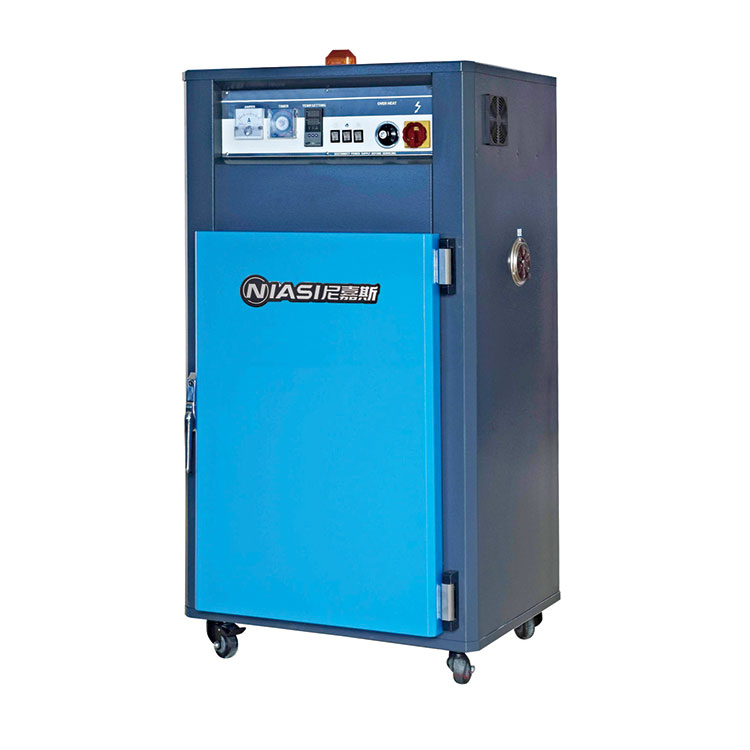
This article is structured to help engineers, procurement managers, and factory operators understand the functional value of dehumidifying dryers, including operating principles, application scenarios, selection criteria, and maintenance strategies for long-term performance stability.
In plastic manufacturing, moisture is one of the most damaging invisible contaminants. Even a small amount of water content in resin can lead to significant quality defects. Traditional hot air dryers often fail to achieve the low dew point required for engineering plastics.
A dehumidifying dryer solves this issue by using a closed-loop drying system that continuously removes moisture from the air before it contacts the material. This ensures that raw materials are processed under ultra-dry conditions, improving consistency and production yield.
A dehumidifying dryer typically consists of three main systems: a dehumidification unit, a heating unit, and a drying hopper. The system works in a continuous cycle to maintain extremely low humidity levels.
This closed-loop system ensures that moisture is continuously removed rather than simply displaced, making it highly efficient for sensitive materials.
Manufacturers using advanced systems such as those developed by Dongguan Niasi Plastic Machinery Co., Ltd. often report significant improvements in production consistency and energy efficiency.
Dehumidifying dryers are widely used in multiple industries, including:
Selecting a suitable dehumidifying dryer depends on material type, production volume, and required dew point.
| Factor | Description | Recommendation |
|---|---|---|
| Material Type | Hygroscopic plastics like PET, PA, PC | Use low dew point system (-40°C or lower) |
| Capacity | Daily production volume | Match hopper size with throughput |
| Energy Efficiency | Operating cost considerations | Select energy-saving models |
| Automation Level | Integration with production line | Prefer PLC-controlled systems |
Even advanced drying systems may encounter operational issues. Below are common problems and their solutions:
| Feature | Hot Air Dryer | Dehumidifying Dryer |
|---|---|---|
| Dew Point | Relatively high | Extremely low (-40°C or lower) |
| Moisture Removal | Surface-level | Deep molecular moisture removal |
| Material Suitability | Non-hygroscopic plastics | Engineering-grade plastics |
| Product Quality | Moderate | High stability and precision |
Q1: What is the main purpose of a dehumidifying dryer?
It removes moisture from plastic resin to ensure high-quality molding results.
Q2: Can it be used for all plastics?
It is especially important for hygroscopic materials like PET, PC, and nylon.
Q3: How often should maintenance be performed?
Routine checks should be done weekly, with full maintenance cycles depending on usage intensity.
Q4: Is it energy efficient?
Modern systems are designed with energy-saving features such as heat recovery and intelligent control systems.
A dehumidifying dryer is not just auxiliary equipment but a core component in ensuring plastic processing quality. By controlling moisture at a microscopic level, it significantly improves product consistency, reduces waste, and enhances operational efficiency.
Advanced solutions provided by Dongguan Niasi Plastic Machinery Co., Ltd. are widely adopted across global manufacturing industries due to their reliability and performance stability.
If you are looking to upgrade your production line or improve material drying efficiency, contact us today to explore tailored solutions and professional technical support.