

How Does a Flat Pipe Bender Support Precision Pipe Forming in Industrial Applications?
2026-01-05
Abstract
A Flat Pipe Bender is a specialized metal forming machine designed to bend flat or rectangular pipes with high dimensional accuracy and structural consistency. This article provides a comprehensive explanation of how a Flat Pipe Bender operates, how its technical configuration supports industrial-grade bending requirements, and how evolving manufacturing trends influence its future development.
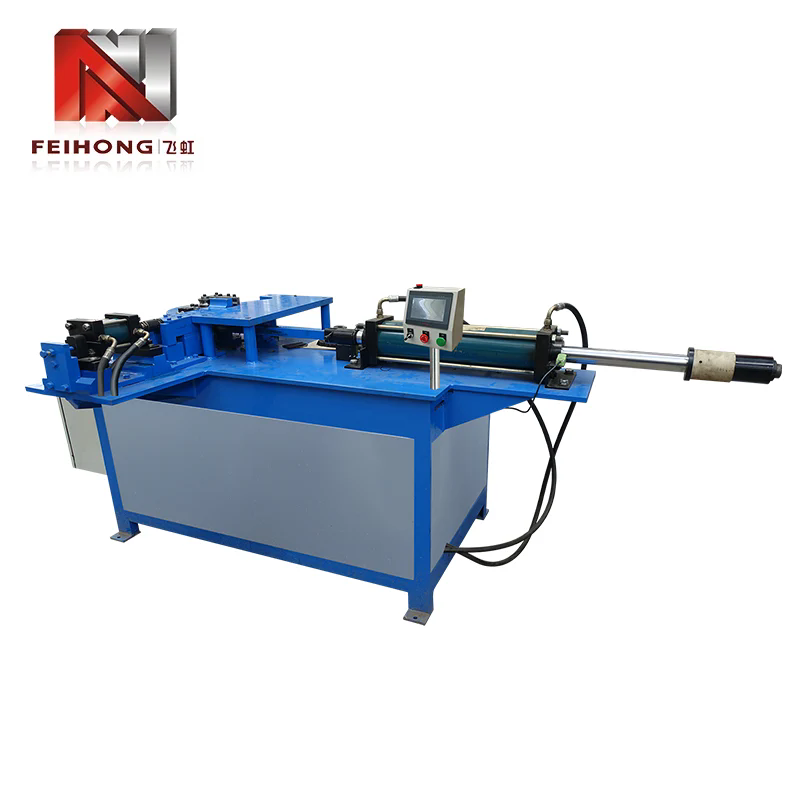
Table of Contents
- How Does a Flat Pipe Bender Work in Industrial Pipe Processing?
- How Do Technical Parameters Define the Performance of a Flat Pipe Bender?
- How Is a Flat Pipe Bender Applied Across Different Industries?
- How Will Flat Pipe Bender Technology Evolve in the Future?
- Flat Pipe Bender FAQs
Outline
- Overview and working principles of Flat Pipe Bender equipment
- Detailed analysis of machine parameters and structural configuration
- Industry-specific application scenarios and operational value
- Future development trends and manufacturing innovation
How Does a Flat Pipe Bender Work in Industrial Pipe Processing?
A Flat Pipe Bender is engineered to apply controlled mechanical force to flat or rectangular pipes, reshaping them into precise angles or curves without compromising cross-sectional integrity. Unlike round pipe bending equipment, this machine is optimized for non-cylindrical profiles, ensuring uniform stress distribution along the bending radius.
The bending process typically begins with secure pipe positioning using calibrated clamping systems. Once aligned, the bending die and pressure arm apply force incrementally, allowing the material to deform plastically while minimizing surface distortion. This process ensures dimensional repeatability, which is essential in industries that require standardized components.
From a production standpoint, Flat Pipe Benders improve operational efficiency by reducing secondary processing steps. Accurate bending eliminates the need for corrective reshaping, resulting in lower material waste and improved throughput.
How Do Technical Parameters Define the Performance of a Flat Pipe Bender?
The performance of a Flat Pipe Bender is determined by a combination of mechanical structure, control system configuration, and material compatibility. Understanding these parameters is critical for selecting equipment that meets specific production requirements.
| Parameter | Specification Range | Technical Significance |
|---|---|---|
| Maximum Pipe Width | 30–300 mm | Defines the maximum flat pipe dimension supported |
| Wall Thickness Capacity | 1.0–8.0 mm | Ensures compatibility with various metal grades |
| Bending Angle | 0–180° | Supports multi-angle forming requirements |
| Drive System | Hydraulic / Servo-electric | Controls bending accuracy and force stability |
| Control System | CNC / PLC | Provides programmable and repeatable operations |
These parameters collectively determine the machine’s adaptability to different production environments. For example, servo-driven Flat Pipe Benders provide enhanced control precision, making them suitable for high-volume manufacturing lines where consistency is critical.
How Is a Flat Pipe Bender Applied Across Different Industries?
Flat Pipe Benders are widely adopted in sectors where structural uniformity and load-bearing performance are essential. In construction and infrastructure projects, flat pipe components are used for frames, supports, and architectural elements that demand precise angular geometry.
In the automotive and transportation sectors, flat pipes are commonly integrated into chassis reinforcement systems, seating structures, and auxiliary frameworks. Accurate bending ensures that these components fit seamlessly into larger assemblies, reducing alignment issues during final installation.
Manufacturing facilities also utilize Flat Pipe Benders for customized fabrication tasks. Small-batch production runs benefit from programmable bending sequences that allow rapid changeovers between different pipe specifications without extensive retooling.
How Will Flat Pipe Bender Technology Evolve in the Future?
The future development of Flat Pipe Bender technology is closely aligned with trends in automation and digital manufacturing. Advanced control systems are increasingly integrated with data feedback mechanisms that monitor bending force, angle accuracy, and material response in real time.
Another key direction involves material diversification. As high-strength alloys and lightweight metals gain popularity, Flat Pipe Benders are being engineered to accommodate higher tensile strengths without sacrificing bending precision.
Energy efficiency is also becoming a focal point. Modern designs emphasize optimized hydraulic circuits and servo-electric drives to reduce energy consumption while maintaining output performance. These advancements position Flat Pipe Benders as long-term assets in sustainable manufacturing strategies.
Flat Pipe Bender FAQs
Q: How does a Flat Pipe Bender prevent deformation of flat pipe cross-sections?
A: The machine uses customized bending dies and controlled force application to distribute stress evenly across the pipe surface, minimizing distortion during bending.
Q: How can bending accuracy be maintained during continuous operation?
A: CNC or PLC control systems regulate bending speed, pressure, and angle, ensuring consistent results even in long production cycles.
Q: How is material compatibility determined for a Flat Pipe Bender?
A: Compatibility is assessed based on wall thickness, tensile strength, and ductility of the material, matched against the machine’s force capacity and die configuration.
References
Industry standards and technical principles referenced in this article are aligned with general metal forming guidelines published by manufacturing engineering associations and industrial equipment documentation.
As industrial demand for precision-formed flat pipe components continues to expand, reliable equipment suppliers play a critical role in supporting production efficiency. Feihong has established a strong presence in the field of pipe forming machinery by focusing on stable performance, technical adaptability, and manufacturing reliability.
For organizations seeking detailed specifications or customized solutions related to Flat Pipe Bender equipment, direct consultation is recommended. Contact us to discuss application requirements, technical configurations, and project-specific support options.