

How Does a Gas Monitoring System Handle Harsh Weather Conditions?
2026-10-12
A field instrument engineer commissions a Gas Monitoring System at a desert oil field. The daytime temperature reaches 52°C, the nighttime temperature drops to 8°C, and the sandstorm season brings fine dust that penetrates everything. The engineer specifies a system with IP66 enclosures and a wide temperature range. Three months later, the sensor readings drift by 15 percent, and the optical bench shows dust accumulation on the mirrors. The problem is not the IP rating. It is the thermal cycling and the internal condensation. This guide explains the environmental factors that affect a Gas Monitoring System and how to select a system that performs reliably in harsh weather.
1. How Does Temperature Extremes Affect Sensor Accuracy?
Temperature affects every component of a Gas Monitoring System. The sensor element, the electronics, and the optical components all have temperature coefficients. The most common sensor for hydrocarbon gas is the non-dispersive infrared (NDIR) sensor. The NDIR sensor measures the absorption of infrared light by the gas. The absorption is temperature dependent. Without compensation, the reading can drift by 0.2 percent per degree Celsius. A 40°C temperature swing causes an 8 percent error. The electronics also drift. The analog-to-digital converter has a temperature coefficient of 5 ppm per degree Celsius. The table below shows the temperature effects on different sensor types.
| Sensor type | Temperature coefficient | Error over 40°C swing | Compensation method |
| NDIR (infrared) | 0.2% per °C | 8% | Internal thermistor + firmware |
| Catalytic bead | 0.15% per °C | 6% | Reference bead + bridge compensation |
| Electrochemical | 0.3% per °C | 12% | Onboard temperature sensor |
| Semiconductor (MOS) | 0.5% per °C | 20% | Heater control + calibration curve |
In our factory, we calibrate every Gas Monitoring System at three temperatures: -20°C, 20°C, and 60°C. The calibration data is stored in the sensor's memory, and the firmware applies the correction in real time. The system also includes a heater that maintains the sensor at a constant temperature above ambient. This reduces the temperature variation and improves the accuracy. Beijing Zetron Technology Co., Ltd. has been manufacturing Gas Monitoring System units for over 12 years.
2. How Does Ingress Protection Prevent Dust and Water Damage?
The ingress protection (IP) rating defines the ability of the enclosure to resist dust and water. The first digit is the dust rating (0 to 6), and the second digit is the water rating (0 to 8). For harsh weather, the minimum rating is IP66, which means dust-tight and protected against powerful water jets. For offshore installations, IP67 is preferred because it allows temporary immersion. The table below shows the IP ratings and their suitability for different environments.
| IP rating | Dust protection | Water protection | Suitable environment |
| IP54 | Limited dust ingress | Splashing water | Sheltered industrial |
| IP65 | Dust-tight | Water jets | Outdoor general |
| IP66 | Dust-tight | Powerful water jets | Desert, coastal |
| IP67 | Dust-tight | Temporary immersion | Offshore, flood-prone |
| IP68 | Dust-tight | Continuous immersion | Subsea, special |
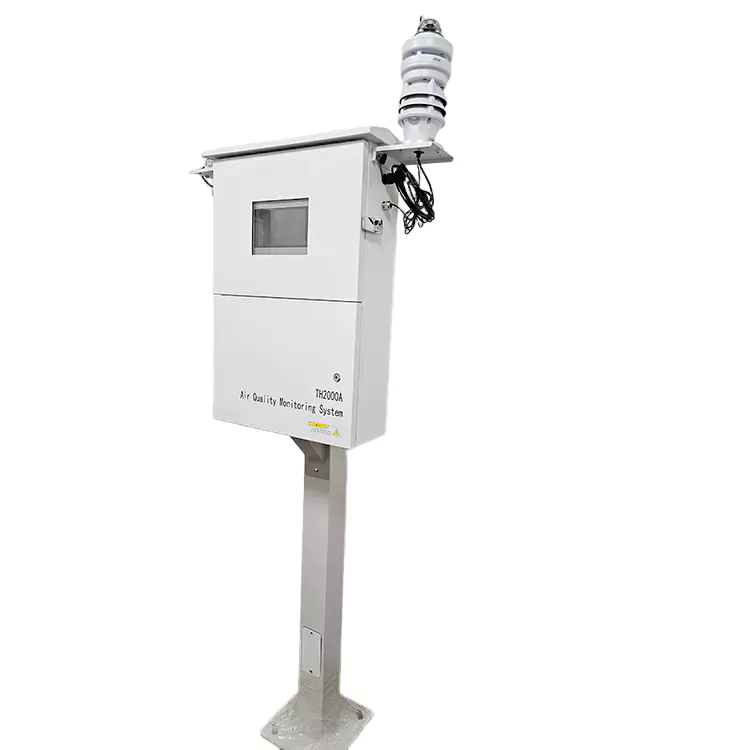
In our factory, we use die-cast aluminum enclosures with a powder coating for corrosion resistance. The enclosure has a labyrinth seal and a Gore vent that equalizes pressure without allowing water or dust to enter. The optical windows are recessed and protected by a stainless steel mesh. Zetron tests every Gas Monitoring System enclosure in a dust chamber and a water spray chamber before shipment.
3. How Does the System Handle Condensation and Humidity?
Condensation is a major problem in harsh weather. When the temperature drops at night, the moisture in the air condenses on the cold surfaces inside the enclosure. This can short-circuit the electronics and fog the optical windows. The system must have a heater and a humidity control system. The heater maintains the internal temperature above the dew point. The humidity control uses a desiccant or a thermoelectric cooler to remove moisture. The table below shows the humidity conditions and the recommended protection.
| Humidity condition | Risk | Protection method |
| Below 60% RH | Low | None required |
| 60 – 80% RH | Moderate | Desiccant cartridge |
| 80 – 95% RH | High | Heater + desiccant |
| Above 95% RH | Severe | Heater + thermoelectric cooler |
| Condensing cycles | Critical | Heater + sealed enclosure + Gore vent |
Field tip: In desert environments, the temperature can drop by 30°C in a few hours. This causes condensation even when the absolute humidity is low. We recommend a heater that maintains the enclosure temperature at least 5°C above the dew point. The heater should be controlled by a thermostat and a humidity sensor. Our factory sets the heater control to 10°C above the dew point for desert installations.
4. How Does the System Resist Lightning and Power Surges?
Harsh weather often includes lightning and power surges. A direct lightning strike can destroy the electronics. An indirect strike can induce a voltage spike in the power and signal lines. The Gas Monitoring System must have surge protection on all inputs and outputs. The surge protection devices (SPDs) should be rated for the expected surge current. The table below shows the surge protection requirements for different installation environments.
| Installation environment | Expected surge current | SPD rating | Additional protection |
| Urban industrial | 2 kA | Type 3 | None |
| Rural outdoor | 5 kA | Type 2 | Earth ground |
| Desert oil field | 10 kA | Type 2 + Type 3 | Earth ground + shielded cable |
| Offshore platform | 20 kA | Type 1 + Type 2 | Earth ground + isolated power |
| Mountain top | 40 kA | Type 1 + Type 2 + Type 3 | Lightning rod + isolated power |
In our factory, we install surge protection on the power input, the analog output, and the communication port. The SPDs are mounted on a DIN rail inside the enclosure. We also use shielded cable for the signal lines and connect the shield to earth ground at one end only. This prevents ground loops. Beijing Zetron Technology Co., Ltd. provides a surge protection kit for each Gas Monitoring System.
Frequently Asked Questions About Gas Monitoring Systems in Harsh Weather
Summary for Field Instrument Engineers
A Gas Monitoring System must be designed to handle temperature extremes, dust, water, condensation, and power surges. The key features are a wide operating temperature range with active compensation, an IP66 or IP67 enclosure, a heater and desiccant for humidity control, and surge protection on all lines. The system should be tested in the environmental conditions it will encounter. Beijing Zetron Technology Co., Ltd. has been manufacturing Gas Monitoring System units for over 12 years and provides full environmental test reports for our products.
Beijing Zetron Technology Co., Ltd. manufactures Gas Monitoring System units with IP66 enclosures, wide temperature range sensors, internal heaters, and surge protection. We provide environmental test reports and maintenance kits for all of our products.