Abstract
Gear Turbo Air Compressors are widely adopted in modern industrial systems where stable airflow, energy efficiency, and long-term operational reliability are essential.
Unlike conventional compressor systems, a gear turbo air compressor integrates advanced turbo machinery principles with precision gear transmission to deliver consistent compressed air output while minimizing energy loss.
This article explores how these systems work, why they are preferred in demanding industrial environments, and how they help businesses reduce operational costs and improve productivity.
It also introduces practical considerations for selection, maintenance, and application scenarios supported by real-world engineering insights from industry experience, including solutions provided by
Seize International Trading (Shanghai) Co., Ltd.
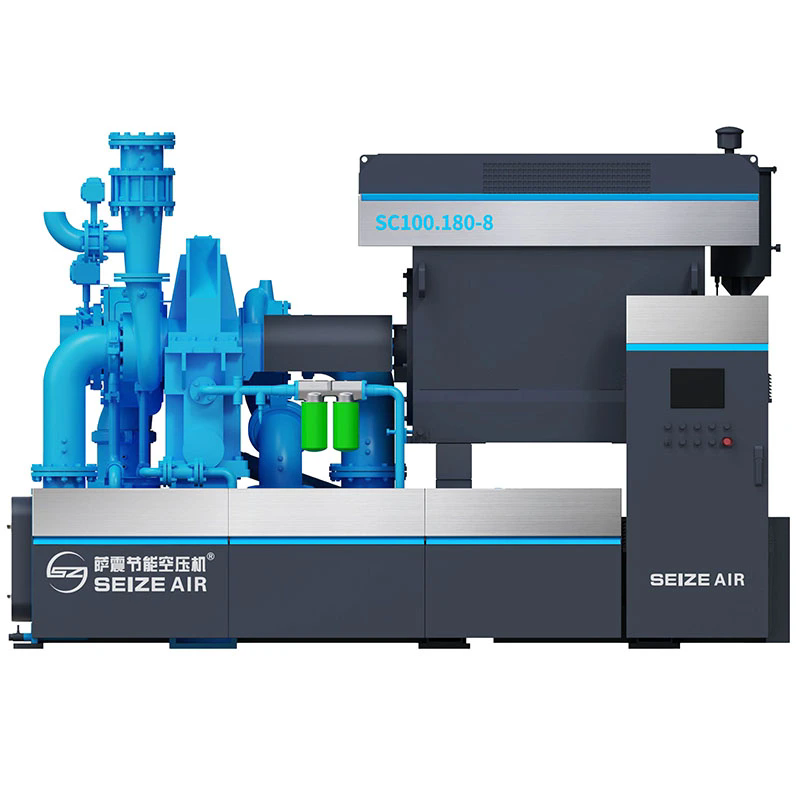
1. Overview of Gear Turbo Air Compressor Systems
A Gear Turbo Air Compressor is a high-efficiency industrial air compression system designed to deliver large volumes of compressed air using a combination of turbo machinery and precision gear-driven mechanisms.
These systems are engineered for continuous-duty environments such as manufacturing plants, petrochemical facilities, automotive production lines, and energy infrastructure projects.
The core concept is to maximize airflow while reducing mechanical losses. By integrating gears into the turbo compression process, the system achieves better control over rotational speed and torque distribution, resulting in improved stability and reduced energy waste.
2. Working Principle Explained
The operation of a gear turbo air compressor relies on aerodynamic compression combined with mechanical gearing optimization. Air enters the intake section and is accelerated through high-speed impellers.
The gear system synchronizes rotor speeds to maintain optimal compression ratios.
Key operational stages include:
-
Air Intake: Ambient air is drawn into the compressor system through a filtration unit.
-
Acceleration: Turbo impellers increase air velocity significantly.
-
Compression: Kinetic energy is converted into pressure energy.
-
Gear Regulation: Precision gears control rotor synchronization for efficiency.
-
Cooling: Heat generated during compression is dissipated to maintain system stability.
This multi-stage process ensures that the compressor maintains high output pressure with minimal energy loss, even under continuous industrial loads.
3. Key Advantages in Industrial Applications
Gear Turbo Air Compressors are engineered to solve several critical industrial pain points such as high energy consumption, unstable airflow, and excessive maintenance costs.
-
High Energy Efficiency: Reduced friction and optimized gear ratios significantly lower power consumption.
-
Stable Air Output: Ensures consistent pressure levels even under fluctuating demand.
-
Durability: Designed for long operational lifecycles with minimal wear.
-
Reduced Maintenance: Fewer mechanical failures due to precision engineering.
-
Scalability: Suitable for both medium and large-scale industrial systems.
These benefits directly contribute to lower operational costs and improved production efficiency across industries.
4. Gear Turbo vs Traditional Compressors
Understanding the difference between gear turbo systems and conventional compressors is essential for making informed investment decisions.
|
Feature
|
Gear Turbo Air Compressor
|
Traditional Compressor
|
|
Energy Efficiency
|
High due to optimized gear-turbo integration
|
Moderate to low
|
|
Air Output Stability
|
Very stable under varying loads
|
Often fluctuates
|
|
Maintenance Frequency
|
Low
|
High
|
|
Initial Cost
|
Higher
|
Lower
|
|
Long-term ROI
|
Excellent
|
Moderate
|
5. Common Industrial Applications
Gear Turbo Air Compressors are used in industries that require reliable and continuous compressed air supply. Their adaptability makes them suitable for a wide range of sectors.
-
Automotive manufacturing and assembly lines
-
Petrochemical processing plants
-
Power generation facilities
-
Food and beverage production systems
-
Pharmaceutical manufacturing environments
-
Heavy machinery and metal processing industries
In each of these applications, system reliability and energy efficiency are critical, making gear turbo technology a preferred solution.
6. How to Select the Right System
Choosing the right Gear Turbo Air Compressor requires evaluating operational requirements and system compatibility. Below are key selection criteria:
-
Air Demand Capacity: Determine peak and average air consumption.
-
Pressure Requirements: Ensure compatibility with production equipment.
-
Energy Consumption Targets: Evaluate total cost of ownership.
-
Environmental Conditions: Consider temperature, humidity, and dust levels.
-
System Integration: Check compatibility with existing industrial infrastructure.
Professional suppliers such as Seize International Trading (Shanghai) Co., Ltd. provide customized solutions based on detailed engineering assessments to ensure optimal system performance.
7. Maintenance and Operational Best Practices
Proper maintenance is essential to ensure long-term performance and efficiency of gear turbo air compressor systems.
-
Regular inspection of gear lubrication systems
-
Monitoring air filters and replacing them when necessary
-
Checking vibration levels for early fault detection
-
Maintaining cooling system efficiency
-
Conducting periodic performance diagnostics
A proactive maintenance strategy significantly extends equipment lifespan and reduces unexpected downtime.
8. Frequently Asked Questions
Q1: What makes a Gear Turbo Air Compressor different from standard models?
It combines turbo compression technology with gear synchronization, resulting in higher efficiency and more stable output.
Q2: Are these compressors suitable for small industries?
They are primarily designed for medium to large-scale operations, but scalable configurations may suit smaller facilities with high air demand.
Q3: How often should maintenance be performed?
Basic inspections should be done monthly, with full system checks scheduled quarterly or based on usage intensity.
Q4: Do they reduce energy costs significantly?
Yes, due to optimized airflow dynamics and reduced mechanical losses, energy savings can be substantial over time.
9. Conclusion and Professional Recommendation
Gear Turbo Air Compressors represent a significant advancement in industrial compressed air technology. Their ability to deliver stable, efficient, and scalable performance makes them a strong choice for industries seeking long-term operational optimization.
With engineering support and customized system solutions from Seize International Trading (Shanghai) Co., Ltd., businesses can implement high-performance air compression systems tailored to their exact production needs.
For detailed specifications, engineering consultation, or customized system proposals, contact us today to explore how advanced gear turbo air compressor solutions can enhance your industrial efficiency and reduce operational costs.