

How Does a High-Accuracy CNC Circular Saw Improve Industrial Aluminum Profile Cutting?
2026-11-02
Industrial aluminum profile cutting is a critical operation in manufacturing applications ranging from architectural curtain walls and window frames to solar mounting structures and industrial equipment. Even a small dimensional deviation can affect assembly accuracy, increase material waste, and create additional finishing work.
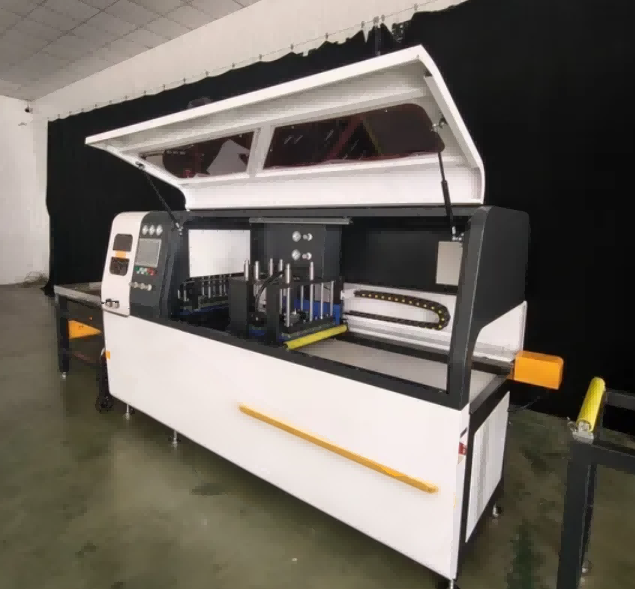
A High-Accuracy CNC Circular Saw for Industrial Aluminum Profiles addresses these challenges through automated positioning, controlled cutting movements, reliable clamping, and consistent machining processes. Understanding how these technologies work helps manufacturers improve product quality while maintaining efficient production.
1. Why Is Cutting Accuracy Important for Industrial Aluminum Profiles?
Industrial aluminum profiles are widely used because they combine relatively low weight, corrosion resistance, structural strength, and design flexibility. However, these advantages can only be fully realized when each component is manufactured to the required dimensions.
Inaccurate cutting creates problems throughout the production process. Profiles that are too long or too short may not fit correctly during assembly. Incorrect cutting angles can produce visible gaps at frame joints, while uneven end surfaces may affect subsequent drilling, milling, or connection operations.
Common Problems Caused by Inaccurate Cutting
- Assembly difficulties: Dimensional deviations make it harder to connect frames and structural components accurately.
- Material waste: Incorrect cuts can turn expensive aluminum extrusions into unusable components.
- Additional finishing: Rough edges, burrs, and uneven surfaces require extra manual processing.
- Inconsistent product quality: Differences between individual workpieces make batch production less reliable.
- Lower production efficiency: Operators spend more time measuring, correcting, and repeating cutting operations.
2. How Does a CNC Circular Saw for Industrial Aluminum Profiles Work?
A CNC circular saw uses a numerical control system to coordinate profile positioning, clamping, blade movement, and cutting operations. Compared with conventional manual equipment, it reduces dependence on repeated manual measurements and operator-controlled positioning.
The typical operating process includes the following stages:
Step 1: Profile Loading
Aluminum extrusions are placed on the machine's feeding table or automatic loading system. Depending on the production configuration, operators can load individual profiles or prepare multiple workpieces for batch processing.
Step 2: CNC Length Positioning
The operator enters the required cutting dimensions through the touchscreen control interface. A servo-driven feeding mechanism moves the profile toward the specified cutting position. Accurate positioning helps reduce measurement errors and improve production consistency.
Step 3: Automatic Clamping
Pneumatic clamps secure the aluminum profile before the blade enters the material. Vertical and horizontal clamping forces help prevent movement, vibration, and unwanted deformation during cutting.
Step 4: Controlled Sawing
The circular saw blade rotates at the selected speed while the cutting head advances through the profile. Appropriate blade selection, feed speed, and cutting lubrication help achieve a smooth cutting surface.
Step 5: Cooling and Chip Removal
Depending on the machine configuration, an atomized lubrication system supplies cutting fluid to the blade area. Aluminum chips are collected or removed through the designated chip management system, helping maintain a cleaner working environment.
Step 6: Finished Profile Inspection
After cutting, the workpiece is released for dimensional inspection or the next manufacturing operation. During batch production, periodic checks help confirm that cutting dimensions remain within the required tolerance.
3. What Technologies Improve CNC Aluminum Cutting Precision?
High-accuracy cutting is not achieved by the saw blade alone. It results from the combined performance of the machine frame, motion system, workpiece fixtures, cutting tools, and control software.
3.1 High-Rigidity Machine Structure
A stable machine frame helps resist vibration and mechanical deformation during operation. This is particularly important when cutting thick-wall profiles, large cross-sections, and heavy industrial extrusions.
A rigid structure also supports more consistent blade movement, helping maintain the required cutting geometry during repeated production cycles.
3.2 Servo-Driven Positioning System
Servo motors provide controlled movement and accurate positioning of the aluminum profile. Combined with suitable transmission components and CNC programming, they help reduce positioning deviations and improve repeatability.
For production lines handling different profile lengths, programmable positioning also makes product changeovers more convenient.
3.3 Precision Clamping System
Aluminum profiles may have hollow chambers, thin walls, irregular shapes, or different cross-sectional dimensions. An appropriate clamping arrangement is essential for keeping the workpiece stable without damaging its surface.
Double-sided or vertical-and-horizontal pneumatic clamping can provide more balanced support for different profile configurations.
3.4 High-Quality Circular Saw Blades
The saw blade directly affects cutting efficiency, surface finish, and dimensional consistency. Carbide-tipped blades designed for aluminum are commonly selected for their cutting performance and wear resistance.
Blade diameter, tooth geometry, tooth count, and cutting speed should be matched to the material thickness and profile design.
3.5 Controlled Cutting Lubrication
Aluminum can adhere to cutting teeth under unsuitable operating conditions. Appropriate lubrication helps reduce friction and heat accumulation, supports chip evacuation, and can improve surface quality.
4. Which Technical Specifications Matter When Choosing a CNC Circular Saw?
Purchasing a CNC circular saw requires more than comparing motor power or machine prices. Buyers should examine whether the machine's working range, positioning performance, and cutting configuration match their actual aluminum profiles and production requirements.
Important Technical Parameters
| Specification | What to Evaluate | Production Benefit |
|---|---|---|
| Blade Diameter | Blade size and compatibility with the required cutting section | Supports the intended material dimensions |
| Spindle Power | Motor capacity and cutting load | Helps maintain stable cutting performance |
| Spindle Speed | Adjustable rotational speed and blade requirements | Allows cutting parameters to match the material |
| Feeding Length | Maximum workpiece positioning range | Accommodates different extrusion lengths |
| Positioning Accuracy | Specified positioning tolerance under defined conditions | Supports dimensional consistency |
| Clamping System | Clamping direction, pressure, and fixture design | Improves workpiece stability |
| CNC Control | Programming, interface, and parameter storage | Simplifies operation and product changeovers |
| Cooling System | Lubrication method and chip management | Helps improve cutting conditions |
Example Configuration for Industrial Aluminum Profile Cutting
Different CNC circular saw models are available to accommodate different profile sizes and production requirements. The following parameters illustrate a configurable industrial CNC circular saw series. Actual specifications should be confirmed against the selected model and final machine configuration.
| Technical Item | Reference Configuration |
|---|---|
| Model | LBL-CNC455 / LBL-CNC500 / LBL-CNC550 |
| Control Mode | Full Servo CNC Automatic Control |
| Saw Blade Diameter | 455 mm / 500 mm / 550 mm (optional) |
| Main Spindle Power | 5.5 kW / 7.5 kW |
| Spindle Rotation Speed | Adjustable, reference 2800 rpm |
| Maximum Feeding Cutting Length | 350 mm–6500 mm |
| Maximum Cutting Cross Section | 210 mm (W) × 320 mm (H) |
| Standard Cutting Angles | 90°, ±45° |
| Positioning Accuracy | ±0.05 mm (specified configuration) |
| Repeated Cutting Tolerance | ≤ ±0.1 mm (specified configuration) |
| Clamping Mode | Double pneumatic vertical and horizontal clamps |
| Working Air Pressure | 0.5–0.8 MPa |
| CNC System | PLC control with 10-inch touchscreen |
| Cooling System | Automatic atomized cutting fluid lubrication |
These reference parameters should be treated as model-dependent rather than universal performance guarantees. Buyers should request a confirmed technical specification sheet and clarify the measurement conditions for positioning accuracy, repeated cutting tolerance, and finished-part dimensions.
5. How Does CNC Circular Sawing Reduce Aluminum Production Costs?
Equipment investment should be evaluated according to its contribution to the entire manufacturing process. A CNC circular saw can improve cost efficiency by reducing avoidable labor, limiting rejected components, and creating a more predictable workflow.
Less Dependence on Manual Measurement
Manual cutting operations require operators to measure and position every workpiece. Repeated measurements increase working time and create opportunities for human error. CNC positioning allows commonly used dimensions to be programmed and reused, improving consistency during repeat orders.
Reduced Material Waste
Incorrect cutting dimensions and excessive offcuts can increase aluminum consumption. Accurate positioning and optimized cutting sequences help manufacturers improve material utilization. Optional zero-tail cutting arrangements may further reduce residual material, depending on the profile and machine configuration.
Lower Secondary Processing Requirements
When blade selection, cutting parameters, and clamping conditions are properly matched, the saw can produce cleaner and more consistent edges. This may reduce the amount of deburring and manual correction required after cutting.
Higher Batch Production Efficiency
Automatic feeding and programmable cutting sequences reduce repeated operator intervention. Production teams can process multiple workpieces according to established programs while maintaining more consistent operating procedures.
6. What Industries Use CNC Aluminum Circular Saws?
Industrial aluminum profiles are used across a wide range of manufacturing sectors. Their different cross-sections and structural requirements make flexible, accurate cutting equipment essential.
6.1 Aluminum Window and Door Manufacturing
Window and door factories use precision cutting equipment to process frame profiles, sash components, mullions, and connecting sections. Accurate dimensions and cutting angles are important for ensuring proper frame assembly and joint alignment.
6.2 Curtain Wall and Architectural Facade Production
Curtain wall systems often involve long aluminum extrusions and multiple profile specifications. CNC cutting helps manufacturers process structural members and connecting components according to project drawings and dimensional requirements.
6.3 Solar Panel Frame Manufacturing
Solar mounting and panel frame production requires consistent aluminum component dimensions for reliable connections and standardized assembly. Automated cutting equipment helps support repeatable processing for high-volume orders.
6.4 Industrial Equipment and Automation Frames
Aluminum extrusion systems are widely used in machine guards, workstations, conveyor structures, and automation equipment. Accurate cutting makes it easier to assemble modular frames and maintain alignment between structural members.
6.5 Rail Transit and Automotive Components
Aluminum is also used in transportation-related structures and components. Cutting requirements can vary according to alloy, profile geometry, wall thickness, and engineering specifications. Selecting suitable blades and fixtures is particularly important for these applications.
7. How Should Manufacturers Select a High-Accuracy CNC Circular Saw?
Choosing suitable cutting equipment begins with understanding the actual production environment. A machine that performs well in one factory may not be the best solution for another manufacturer processing different profile dimensions or order volumes.
Define Your Aluminum Profile Dimensions
Prepare the maximum profile width, height, length, wall thickness, and cross-sectional drawings. Include hollow, solid, and special-shaped extrusions if they are part of regular production. This information helps the supplier evaluate the required cutting capacity and clamping arrangement.
Identify Cutting Angles and Tolerance Requirements
Determine whether your production mainly requires 90-degree cutting, 45-degree mitre cutting, or programmable variable-angle operations. Specify the dimensional tolerances and surface quality requirements for finished components.
Evaluate Production Volume
Small workshops may prioritize flexible setup and simple operation, while large manufacturing facilities may require automatic loading, unloading, multi-piece cutting, and integration with upstream or downstream equipment.
Check Control System and Operator Requirements
A practical CNC interface should make it easy to enter dimensions, save commonly used programs, and adjust production parameters. Buyers should also ask about operator training, technical documentation, and troubleshooting support.
Confirm Installation and After-Sales Support
Before ordering, clarify electrical requirements, air supply, installation space, machine delivery, commissioning arrangements, spare parts availability, and warranty conditions. For overseas buyers, confirm the local voltage and frequency requirements as well as the availability of remote technical assistance.
- Representative aluminum profile drawings and samples.
- Required cutting dimensions and angle specifications.
- Expected daily or monthly production volume.
- Required dimensional tolerance and surface finish.
- Factory power supply, available space, and automation requirements.
8. How Can Cutting Accuracy Be Maintained During Long-Term Operation?
Even a well-designed CNC circular saw requires regular maintenance. Blade wear, loose mechanical components, contaminated guide rails, and incorrect operating parameters can gradually affect cutting performance.
Follow a Practical Maintenance Routine
| Maintenance Item | Recommended Action | Purpose |
|---|---|---|
| Saw Blade | Inspect sharpness, tooth condition, and blade installation | Maintain cutting quality |
| Clamping Fixtures | Check pressure, alignment, and contact surfaces | Prevent workpiece movement |
| Guide Rails | Clean and lubricate according to manufacturer instructions | Maintain smooth movement |
| Servo System | Monitor positioning and abnormal movement | Maintain feeding consistency |
| Cooling System | Check fluid level, nozzles, and flow | Support suitable cutting conditions |
| Electrical System | Inspect cables, sensors, and control alarms | Support safe operation |
| Machine Frame | Check fasteners, vibration, and abnormal noise | Maintain mechanical stability |
Use Test Cuts to Verify Performance
After changing blades, adjusting fixtures, or performing major maintenance, operators should carry out test cuts using representative materials. Measure the finished length, angle, and surface condition with suitable inspection tools.
Record inspection results and compare them with the required tolerances. If deviations appear, investigate the positioning system, blade condition, clamping pressure, and material support before increasing production speed.
Train Operators in Standard Procedures
Consistent operating methods are essential for maintaining machine performance. Operators should understand safe loading, correct program selection, clamping checks, emergency procedures, and routine inspection requirements.
9. Why Consider Lebulang CNC Cutting Equipment?
For manufacturers looking to improve aluminum profile processing, choosing an experienced machinery supplier is an important part of the investment decision.
Lebulang, manufactured by Shandong Lebulang Precision Machinery Co., Ltd., has focused on door and window processing machinery since 1996. The company integrates research and development, manufacturing, sales, and after-sales service, supplying equipment for aluminum alloy processing, industrial aluminum fabrication, curtain wall production, and insulated glass manufacturing.
Its machinery range includes CNC profile cutting equipment, double-head cutting saws, CNC machining centers, aluminum drilling and milling machines, and other equipment designed for different fabrication requirements.
Equipment Solutions for Different Production Needs
- Precision CNC cutting: Programmable positioning and controlled cutting operations for consistent profile dimensions.
- Industrial-duty structures: Machine configurations designed to support demanding aluminum profile processing applications.
- Flexible equipment options: Different blade sizes, feeding ranges, and cutting configurations according to production requirements.
- Integrated machinery solutions: Equipment options for cutting, drilling, milling, and other profile processing operations.
- Customization support: Machine configurations and non-standard solutions for specific profile dimensions and manufacturing workflows.
Rather than choosing equipment based on advertised parameters alone, manufacturers should provide Lebulang with their actual profile drawings, cutting requirements, and expected production volume. This allows the technical team to evaluate the appropriate machine configuration and discuss practical processing solutions.
Learn more about the CNC Circular Saw for Industrial Aluminum Profiles and explore the available equipment configurations.
10. Frequently Asked Questions
Q1: What materials can a CNC circular saw for industrial aluminum profiles process?
It is primarily designed for aluminum alloy extrusions and industrial aluminum profiles. Depending on the blade, fixtures, and machine configuration, certain models may also process other compatible materials. Confirm material compatibility with the manufacturer before purchasing.
Q2: What cutting accuracy can a CNC aluminum circular saw achieve?
Accuracy depends on the machine model, servo system, mechanical condition, profile dimensions, and cutting conditions. Some specified configurations offer positioning accuracy around ±0.05 mm and repeated cutting tolerance up to ±0.1 mm. Buyers should confirm the applicable test conditions and finished-workpiece tolerance.
Q3: Can a CNC circular saw perform automatic cutting?
Yes. Fully automatic configurations can coordinate profile feeding, positioning, clamping, and cutting through the CNC control system. Optional loading and unloading equipment can further reduce manual handling.
Q4: Can the machine cut aluminum profiles at different angles?
Many CNC circular saw configurations support standard 90-degree and 45-degree cutting. Depending on the selected model, additional angle adjustment or CNC variable-angle modules may be available. Confirm the required angle range before ordering.
Q5: How can manufacturers reduce burrs during aluminum cutting?
Use a suitable aluminum cutting blade, maintain appropriate spindle speed and feed rate, secure the workpiece correctly, and apply suitable cutting lubrication. Regular blade inspection and replacement also help maintain edge quality.
Q6: What is the difference between manual and CNC aluminum cutting saws?
Manual saws rely more heavily on operator measurement and positioning, while CNC saws use programmed dimensions and automated positioning. CNC equipment is generally more suitable for repeat orders, consistent batch production, and manufacturing environments with more demanding dimensional requirements.
Q7: Is a CNC circular saw suitable for large industrial aluminum profiles?
It can be suitable when the machine's maximum cutting section, feeding range, spindle capacity, and clamping arrangement match the workpiece. Large or heavy profiles may require reinforced support structures and customized fixtures.
Q8: What information should I provide when requesting a quotation?
Provide profile drawings, material specifications, maximum cross-section dimensions, cutting lengths, required angles, accuracy requirements, production volume, and factory power supply information. Sample workpieces and photographs can also help the manufacturer evaluate your application.
Q9: Does Lebulang provide customized CNC aluminum cutting solutions?
Lebulang supports customized machinery configurations and non-standard equipment solutions. Buyers can discuss profile dimensions, feeding requirements, cutting angles, and automation needs with the technical team to identify a suitable configuration.
Q10: How often should a CNC circular saw be maintained?
Maintenance frequency depends on operating hours, cutting volume, material conditions, and the machine manufacturer's instructions. Daily cleaning and inspection, together with scheduled lubrication and periodic mechanical checks, help maintain stable performance.
Improve Your Aluminum Profile Cutting Efficiency with Lebulang
Looking for a reliable CNC circular saw for industrial aluminum profiles? Whether you process architectural extrusions, curtain wall components, solar frames, or heavy-duty industrial profiles, the right cutting equipment can help improve dimensional consistency, reduce material waste, and streamline production.
Share your profile drawings, cutting dimensions, and production requirements with Lebulang. Our team can help you evaluate suitable machine configurations and customized processing solutions.
Contact us today to discuss your aluminum cutting requirements and request a machine quotation.
Contact Us NowNote: Machine specifications, optional functions, and achievable processing tolerances vary by model and configuration. Please confirm the final technical parameters with the manufacturer before placing an order.