

How Does a High-Speed Rail Paver Improve Railway Construction Efficiency and Quality?
2026-06-02
High-speed railway projects demand exceptional precision, consistency, and construction speed. Traditional paving methods often struggle to meet the strict requirements of modern railway infrastructure. A High-speed Rail Paver is specifically designed to deliver accurate concrete placement, improve construction efficiency, and ensure superior track foundation quality. This article explores how high-speed rail pavers work, their advantages, key features, applications, and how contractors can select the right equipment for large-scale railway projects.
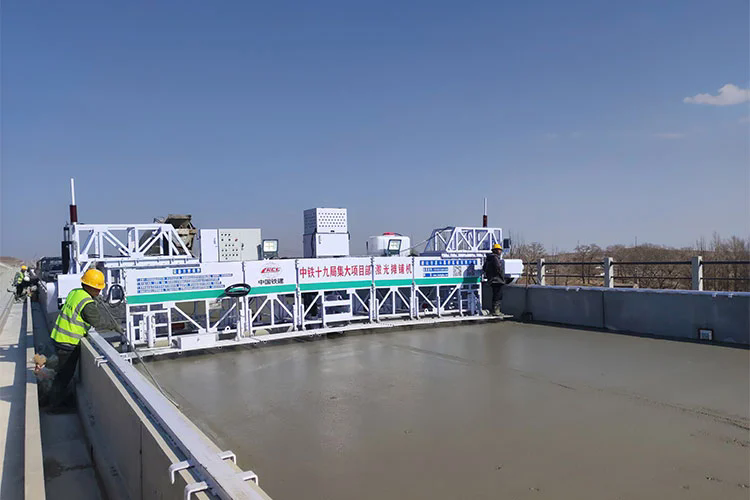
Table of Contents
- What Is a High-Speed Rail Paver?
- Why Precision Matters in High-Speed Railway Construction
- How Does a High-Speed Rail Paver Work?
- Key Benefits of Using a High-Speed Rail Paver
- Essential Features to Consider
- High-Speed Rail Paver vs Traditional Construction Methods
- Applications in Railway Infrastructure Projects
- How to Choose the Right High-Speed Rail Paver
- Maintenance Best Practices
- Frequently Asked Questions
- Conclusion
What Is a High-Speed Rail Paver?
A High-speed Rail Paver is specialized paving equipment used to construct concrete track beds and railway infrastructure for high-speed train systems. Unlike standard paving machines, these pavers are engineered to achieve extremely tight dimensional tolerances, uniform surface quality, and continuous paving performance over long distances.
The equipment plays a critical role in ensuring that railway foundations meet the demanding standards required for trains traveling at speeds exceeding 250 km/h. Even minor surface deviations can affect ride comfort, safety, maintenance costs, and long-term infrastructure durability.
- Continuous concrete placement
- Accurate track slab paving
- Automatic leveling control
- Surface finishing
- Thickness consistency management
- High-volume construction capability
Why Precision Matters in High-Speed Railway Construction
High-speed rail systems require exceptional engineering accuracy because trains travel at very high speeds and exert significant dynamic loads on the infrastructure. Any inconsistency in the track foundation can lead to:
- Reduced passenger comfort
- Increased maintenance requirements
- Higher lifecycle costs
- Operational inefficiencies
- Potential safety concerns
Modern railway projects therefore demand paving equipment capable of maintaining millimeter-level accuracy throughout the construction process. This is where a High-speed Rail Paver becomes indispensable.
How Does a High-Speed Rail Paver Work?
A High-speed Rail Paver integrates multiple construction processes into a single coordinated system. The machine receives concrete from supply vehicles and distributes it evenly across the designated paving area.
Advanced guidance systems continuously monitor elevation, width, alignment, and paving depth. Automated controls make real-time adjustments to ensure compliance with engineering specifications.
The typical workflow includes:
- Concrete delivery and feeding
- Material spreading
- Vibration and compaction
- Automatic leveling
- Surface finishing
- Quality verification
Through automation and intelligent control systems, contractors can significantly reduce manual intervention while achieving highly consistent construction results.
Key Benefits of Using a High-Speed Rail Paver
| Benefit | Impact on Construction |
|---|---|
| High Precision | Improves track geometry accuracy |
| Faster Construction | Accelerates project completion timelines |
| Reduced Labor Requirements | Minimizes manual operations |
| Consistent Quality | Ensures uniform paving results |
| Lower Maintenance Costs | Creates durable infrastructure foundations |
| Improved Safety | Reduces human error during construction |
These advantages make high-speed rail pavers a preferred choice for contractors handling major railway projects worldwide.
Essential Features to Consider
When evaluating a High-speed Rail Paver, project managers should pay close attention to the machine's technical capabilities.
- Automatic Grade Control Systems
- High-Capacity Concrete Handling
- Advanced Hydraulic Systems
- Precision Sensor Technology
- Stable Structural Design
- Real-Time Monitoring Functions
- User-Friendly Operating Interface
- Low Maintenance Requirements
These features directly influence productivity, accuracy, and long-term equipment reliability.
High-Speed Rail Paver vs Traditional Construction Methods
| Factor | Traditional Methods | High-Speed Rail Paver |
|---|---|---|
| Accuracy | Moderate | Very High |
| Construction Speed | Slower | Faster |
| Labor Demand | High | Lower |
| Consistency | Variable | Highly Consistent |
| Project Efficiency | Limited | Excellent |
For large-scale railway developments, automated paving solutions offer substantial advantages in both project economics and construction quality.
Applications in Railway Infrastructure Projects
High-speed rail pavers are used across a wide range of railway construction environments:
- High-speed railway track slab construction
- Ballastless track systems
- Railway station platforms
- Bridge deck railway sections
- Tunnel railway infrastructure
- Urban transit rail projects
- Intercity rail networks
Their versatility makes them valuable assets for both new railway construction and infrastructure modernization projects.
How to Choose the Right High-Speed Rail Paver
Selecting the appropriate equipment requires careful evaluation of project requirements and operational objectives.
- Project scale and construction length
- Required paving width
- Desired production capacity
- Automation level
- Control system sophistication
- Maintenance support availability
- Operator training requirements
- Total ownership cost
- Equipment durability
- Manufacturer reputation
Investing in a machine that matches both current and future project demands can significantly improve return on investment over the equipment's service life.
Maintenance Best Practices
Regular maintenance is essential for maximizing machine performance and minimizing downtime.
- Inspect hydraulic systems daily
- Clean concrete residue after each shift
- Monitor wear components regularly
- Verify sensor calibration
- Check electrical connections
- Lubricate moving parts according to manufacturer schedules
- Perform periodic software updates when applicable
A proactive maintenance strategy helps preserve accuracy, reliability, and long-term productivity.
Frequently Asked Questions
Q1: What is the primary purpose of a High-speed Rail Paver?
Its primary purpose is to accurately place and finish concrete foundations and track slabs used in high-speed railway infrastructure.
Q2: Why is paving precision so important for high-speed rail projects?
Precise paving ensures track stability, passenger comfort, operational safety, and reduced maintenance costs throughout the railway's lifespan.
Q3: Can High-speed Rail Pavers reduce construction costs?
Yes. By increasing productivity, reducing labor requirements, and minimizing rework, these machines can significantly improve overall project efficiency.
Q4: Are High-speed Rail Pavers suitable for tunnel and bridge projects?
Yes. Many modern models are specifically designed to operate effectively in tunnels, bridges, and other specialized railway environments.
Q5: What factors affect equipment selection?
Project size, paving width requirements, automation level, productivity goals, maintenance support, and budget are among the most important considerations.
Conclusion
As global demand for fast, safe, and reliable rail transportation continues to grow, the importance of advanced construction equipment becomes increasingly evident. A High-speed Rail Paver provides the precision, productivity, and consistency required to meet the demanding standards of modern railway infrastructure. From ballastless track systems to large-scale transportation corridors, these machines help contractors deliver exceptional results while controlling costs and improving project efficiency.
XINGDOU is committed to providing advanced paving solutions engineered for high-performance railway construction projects. If you are looking for a reliable High-speed Rail Paver that can enhance productivity, improve paving accuracy, and support long-term infrastructure quality, contact us today to discuss your project requirements and discover how XINGDOU can help you achieve outstanding construction results.