

How Does a Hollow Heading Machine Improve Fastener Manufacturing Efficiency?
2026-08-27
Article Summary
A Hollow Heading Machine plays an important role in modern fastener production by enabling manufacturers to create hollow rivets, tubular components, and precision metal parts with higher efficiency and consistent quality. As industries demand lighter, stronger, and more customized components, traditional forming methods often face challenges such as material waste, unstable production speed, and increased labor costs.
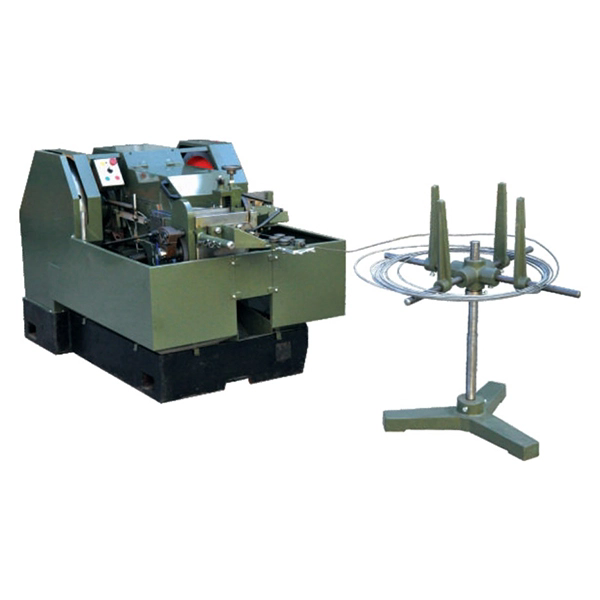
This article explains how a Hollow Heading Machine works, why it is valuable for manufacturers, what problems it solves, and how companies can select the right equipment for their production needs. YWC provides advanced manufacturing solutions designed to help customers achieve stable production, improved accuracy, and long-term operational benefits.
Table of Contents
- 1. Introduction to Hollow Heading Machine
- 2. How Does a Hollow Heading Machine Work?
- 3. What Problems Can a Hollow Heading Machine Solve?
- 4. Key Features of a Reliable Hollow Heading Machine
- 5. Hollow Heading Machine vs Traditional Forming Methods
- 6. Applications of Hollow Heading Machine
- 7. How to Choose the Right Hollow Heading Machine?
- 8. Maintenance Tips for Better Machine Performance
- 9. Frequently Asked Questions
1. Introduction to Hollow Heading Machine
A Hollow Heading Machine is a specialized cold forming machine designed to manufacture hollow or semi-hollow metal components through controlled deformation processes. Unlike conventional heading equipment that mainly produces solid-headed screws, bolts, and rivets, hollow heading technology allows manufacturers to produce parts with internal cavities while maintaining excellent dimensional accuracy.
With increasing requirements from automotive, electronics, electrical equipment, and precision hardware industries, manufacturers need production equipment that can reduce material consumption while maintaining product strength. A Hollow Heading Machine provides an effective solution by forming complex components in a high-speed and repeatable process.
Modern equipment suppliers such as YWC focus on developing machines that combine mechanical stability, precision control, and efficient production capability to support different industrial applications.
2. How Does a Hollow Heading Machine Work?
The working principle of a Hollow Heading Machine is based on cold forging technology. Instead of cutting away material to create a hollow structure, the machine uses pressure and specially designed dies to reshape metal wire or blanks into the required hollow form.
The main production process usually includes several important stages:
| Production Stage | Main Function | Production Benefit |
|---|---|---|
| Material Feeding | Automatically transfers metal wire or blanks into the forming area | Improves production continuity |
| Cutting Process | Cuts raw material into accurate blank lengths | Reduces material waste |
| Cold Forming | Uses punches and dies to create hollow structures | Ensures stable dimensions |
| Shape Correction | Refines component appearance and accuracy | Improves final product quality |
| Output Process | Transfers finished components automatically | Supports continuous production |
Through precise control of pressure, tooling design, and forming speed, a Hollow Heading Machine can manufacture large quantities of components with consistent quality.
3. What Problems Can a Hollow Heading Machine Solve?
Manufacturers often encounter several challenges when producing hollow fasteners and precision metal components. A properly designed Hollow Heading Machine addresses these difficulties effectively.
- High Material Consumption: Traditional machining methods remove large amounts of material during production. Cold forming technology minimizes waste by reshaping existing material.
- Low Production Efficiency: Manual or semi-automatic processes can limit output. Automated hollow heading equipment enables faster and more stable production cycles.
- Inconsistent Product Quality: Human operation differences may affect product dimensions. Advanced machines maintain better repeatability.
- High Manufacturing Costs: Reduced material waste, lower labor requirements, and improved production speed help control operating expenses.
- Complex Component Requirements: Hollow and semi-hollow structures are difficult to manufacture with ordinary equipment. Specialized heading machines provide suitable forming capabilities.
4. Key Features of a Reliable Hollow Heading Machine
Choosing reliable production equipment is essential for manufacturers who need long-term performance. A high-quality Hollow Heading Machine usually includes the following features:
| Feature | Description | Customer Benefit |
|---|---|---|
| High Precision Forming System | Advanced die and punch structures ensure accurate component shapes | Reduces defective products |
| Strong Machine Frame | Rigid construction minimizes vibration during operation | Improves stability and service life |
| Automatic Feeding System | Provides continuous material supply | Enhances production efficiency |
| Easy Adjustment Design | Allows operators to change production parameters quickly | Supports flexible manufacturing |
| Durable Components | Uses wear-resistant mechanical parts | Reduces maintenance frequency |
YWC designs machinery solutions with attention to production reliability, helping manufacturers improve workflow efficiency and maintain stable output.
5. Hollow Heading Machine vs Traditional Forming Methods
| Comparison Item | Hollow Heading Machine | Traditional Machining |
|---|---|---|
| Material Utilization | High efficiency with less waste | More material removed during processing |
| Production Speed | Suitable for mass production | Usually slower for large quantities |
| Product Consistency | High repeatability | Depends more on operator skill |
| Energy Consumption | Lower because of cold forming advantages | Higher due to cutting processes |
| Complex Hollow Parts | Designed for hollow structures | Difficult and costly to achieve |
6. Applications of Hollow Heading Machine
A Hollow Heading Machine is widely used in industries requiring precision metal components. Common applications include:
- Automotive fasteners and connection parts
- Electronic equipment components
- Electrical hardware manufacturing
- Medical device components
- Precision mechanical parts
- Rivet and tubular fastener production
- Customized industrial hardware
As product designs become more specialized, manufacturers increasingly rely on flexible forming equipment to meet different production requirements.
7. How to Choose the Right Hollow Heading Machine?
Selecting the correct machine requires careful evaluation of production requirements. Manufacturers should consider the following factors:
- Material Type: Different metals require different forming capabilities and machine strength.
- Component Size: The diameter, length, and shape of products determine suitable machine specifications.
- Production Volume: High-volume factories need machines designed for continuous operation.
- Precision Requirements: Industries with strict quality standards require accurate forming systems.
- After-Sales Support: Reliable technical support helps reduce downtime and improve equipment lifespan.
Working with an experienced manufacturer such as YWC allows customers to select equipment based on actual production conditions rather than choosing a standard solution that may not fit their needs.
8. Maintenance Tips for Better Machine Performance
Regular maintenance is essential for maintaining the efficiency and reliability of a Hollow Heading Machine.
- Check lubrication systems regularly to reduce mechanical wear.
- Inspect forming dies and punches for damage or deformation.
- Clean production areas to prevent dust and metal debris accumulation.
- Monitor machine vibration and operating noise.
- Replace worn components according to maintenance schedules.
Proper maintenance not only extends equipment service life but also helps manufacturers maintain stable product quality.
9. Frequently Asked Questions
Q1: What products can a Hollow Heading Machine produce?
A Hollow Heading Machine can produce hollow rivets, semi-hollow fasteners, tubular components, and other customized metal parts used in multiple industries.
Q2: Why choose cold forming instead of machining?
Cold forming improves material utilization, increases production efficiency, and creates stronger components because the metal structure remains less damaged compared with cutting methods.
Q3: Is a Hollow Heading Machine suitable for mass production?
Yes. These machines are designed for continuous production environments where manufacturers require stable output and consistent quality.
Q4: How can YWC help customers choose suitable equipment?
YWC provides professional manufacturing solutions according to product specifications, production targets, and customer requirements to help businesses achieve efficient manufacturing results.
Q5: What should manufacturers check before purchasing a Hollow Heading Machine?
Manufacturers should evaluate machine capability, production speed, precision requirements, maintenance needs, and supplier support before making a decision.
Conclusion
A Hollow Heading Machine is an essential solution for manufacturers seeking higher efficiency, lower production costs, and improved product consistency. By using advanced cold forming technology, companies can produce complex hollow components while reducing waste and increasing productivity.
YWC continues to provide reliable machinery solutions designed for modern industrial production needs. With professional technology, stable equipment performance, and customer-focused service, YWC helps manufacturers build more efficient production systems. If you are looking for a suitable Hollow Heading Machine solution for your business, please contact us.