

How Does a Hydraulic Vertical Baler Improve Waste Compression Efficiency?
2026-08-24
Article Summary: A Hydraulic Vertical Baler provides a practical way to reduce the volume of recyclable waste, improve storage efficiency, simplify material handling, and lower transportation costs. By using hydraulic pressure to compress loose materials into dense, manageable bales, this type of equipment can help recycling centers, warehouses, manufacturing facilities, logistics operations, and commercial waste-processing sites make better use of limited floor space. This guide explains how a Hydraulic Vertical Baler works, which materials it can process, how to select the right configuration, what operating factors affect performance, and how ECOHYDRAULIC approaches industrial baling solutions.
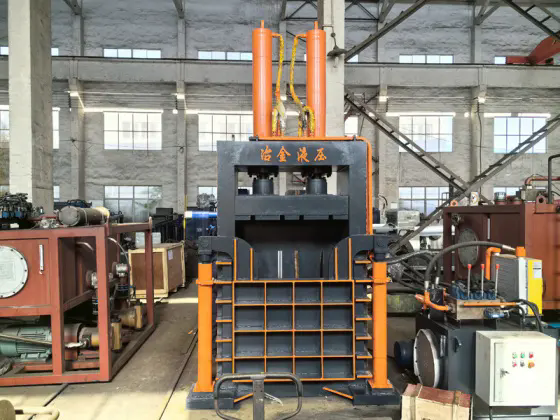
Table of Contents
- Article Outline
- What Is a Hydraulic Vertical Baler?
- How Does a Hydraulic Vertical Baler Work?
- What Are the Main Components?
- What Materials Can Be Compressed?
- What Problems Can It Solve?
- How Does It Compare With a Horizontal Baler?
- How Should You Select a Hydraulic Vertical Baler?
- How Can Operators Improve Baling Performance?
- How Can Maintenance Protect Long-Term Performance?
- Where Is a Hydraulic Vertical Baler Used?
- Typical Technical Considerations
- Why Consider ECOHYDRAULIC?
- Frequently Asked Questions
- Conclusion
Article Outline
- Understand the operating principle and purpose of hydraulic vertical baling.
- Identify the machine components that influence compression performance.
- Match the baler with the type, volume, and characteristics of recyclable materials.
- Compare vertical and horizontal equipment according to space and throughput requirements.
- Evaluate pressure, chamber dimensions, bale weight, cycle time, controls, and power requirements.
- Apply appropriate operating and maintenance practices for reliable production.
- Choose a configuration that supports current requirements while allowing for future demand.
What Is a Hydraulic Vertical Baler?
A Hydraulic Vertical Baler is an industrial compression machine designed to transform loose recyclable materials into compact bales. Instead of allowing cardboard, plastic, textile waste, packaging materials, or other light recyclable materials to occupy large amounts of floor space, the machine applies controlled hydraulic force to reduce their volume.
The vertical configuration means that compression takes place inside a chamber with the pressing mechanism moving vertically. This arrangement is particularly useful where floor space is limited but reliable waste-volume reduction is still required.
For a recycling operation, the problem is often not the amount of material generated but the amount of space required to store it before processing or transportation. Loose cardboard can quickly fill a warehouse. Plastic packaging can occupy substantial volume despite having relatively low mass. Textile waste can also be difficult to stack efficiently.
A hydraulic baler addresses this problem by converting irregular, bulky material into standardized packages that are easier to store, handle, weigh, transport, and send to downstream recycling processes.
ECOHYDRAULIC develops hydraulic machinery for recycling applications, with Hydraulic Vertical Baler configurations designed around factors such as material type, compression requirements, chamber dimensions, operating method, and production capacity.
How Does a Hydraulic Vertical Baler Work?
The operating principle is straightforward, but each stage has an important effect on bale quality and productivity.
1. Material Loading
The operator places recyclable material into the compression chamber. Depending on the machine configuration and application, the material may include cardboard, waste paper, PET containers, plastic film, textiles, or light industrial recyclable waste.
Good loading practices are important. Material should be distributed reasonably evenly inside the chamber rather than concentrated in one area. Uneven loading can create irregular bales and may reduce the effectiveness of compression.
2. Hydraulic Compression
After loading, the hydraulic system drives the pressing plate downward. Hydraulic pressure generates the force required to compress the material inside the chamber.
Unlike purely mechanical compression methods, hydraulic systems can provide substantial controlled force through a relatively compact machine configuration. The actual compression performance depends on the hydraulic system, cylinder design, material characteristics, chamber geometry, and machine settings.
3. Bale Formation
As compression continues, the loose material occupies progressively less volume. The operator or control system maintains the required compression process until the desired bale condition is achieved.
Bale density is influenced by more than nominal pressing force. Material moisture, composition, loading pattern, elasticity, particle shape, and quantity can all affect the final result.
4. Bale Binding
Once the bale has reached the required condition, it needs to be secured. Depending on the application, binding can use steel wire, plastic straps, rope, or another suitable method.
The binding method should correspond to the material and transportation requirements. A bale that is properly compressed but inadequately secured can expand during handling and create additional storage or transportation problems.
5. Bale Removal
After binding, the finished bale is released and removed from the chamber. The exact ejection arrangement depends on the machine design and operating configuration.
What Are the Main Components?
A reliable Hydraulic Vertical Baler is more than a hydraulic cylinder and pressing plate. The interaction between structural, hydraulic, electrical, and control components determines the overall operating experience.
| Component | Primary Function | Why It Matters |
|---|---|---|
| Welded Steel Frame | Supports the compression system and chamber | Provides structural stability during repeated pressing cycles |
| Hydraulic Cylinder | Generates linear pressing force | Directly influences compression capability and operating stability |
| Hydraulic Power Unit | Supplies pressurized hydraulic fluid | Controls the force and movement of the pressing system |
| Compression Chamber | Contains the recyclable material | Determines the practical bale dimensions and loading volume |
| Pressing Plate | Transfers hydraulic force to the material | Helps distribute compression across the loaded material |
| Control System | Controls machine operation | Supports consistent and convenient operation |
| Bale Ejection System | Assists finished bale removal | Reduces handling difficulty after compression |
What Materials Can Be Compressed?
Material compatibility should be established before purchasing a baler. Different materials behave differently under pressure, and a machine configured for cardboard does not automatically provide the same performance with every other recyclable material.
Common applications include:
- Cardboard and OCC: Useful for supermarkets, warehouses, distribution centers, packaging operations, and recycling facilities.
- Waste paper: Compression can reduce storage volume and simplify handling.
- PET bottles: Loose bottles can occupy considerable space because of their shape and low bulk density.
- Plastic film: Compressing flexible packaging waste can significantly improve storage utilization.
- Textile waste: Fabric and textile residues can be consolidated into more manageable packages.
- Light industrial recyclable waste: Certain light scrap materials can be baled when the machine configuration is appropriate.
Before selecting equipment, operators should consider whether the material is wet or dry, loose or shredded, rigid or flexible, contaminated or relatively clean, and whether it contains materials that could damage the compression system.
What Problems Can It Solve?
Waste-volume management creates several operational challenges. A Hydraulic Vertical Baler is valuable because it addresses multiple problems simultaneously.
Limited Storage Space
Loose recyclable materials can consume valuable warehouse and yard space. Compact bales allow more material to be stored within the same physical area.
High Transportation Volume
When recyclable material is transported in loose form, vehicles may reach their usable volume capacity before reaching their practical weight capacity. Densification helps make transportation more efficient.
Unorganized Material Handling
Loose waste can be difficult to move, stack, count, and organize. Baled material creates more consistent units for internal handling and external shipment.
High Labor Requirements
Manual compression and stacking can require substantial physical effort. Hydraulic compression transfers the main pressing task to the machine, allowing operators to focus on loading, binding, inspection, and material management.
Inconsistent Bale Quality
A controlled hydraulic system can provide more repeatable compression than improvised manual methods. Consistency is particularly useful when bales need to meet downstream handling or buyer requirements.
How Does It Compare With a Horizontal Baler?
Choosing between vertical and horizontal equipment should begin with the application's actual throughput and available space rather than simply selecting the machine with the highest nominal capacity.
| Factor | Hydraulic Vertical Baler | Horizontal Baler |
|---|---|---|
| Space Requirement | Generally compact and space-efficient | Typically requires more installation space |
| Typical Application | Low to medium output operations | Higher-volume continuous operations |
| Loading | Commonly manual or assisted loading | Can support more automated material feeding |
| Operational Complexity | Generally straightforward | Often more integrated and automated |
| Investment Consideration | Suitable where compact equipment is preferred | Better suited to high-throughput systems |
| Best Fit | Warehouses, commercial sites, recycling stations, and moderate-volume facilities | Large recycling plants and continuous processing lines |
For an operation generating moderate amounts of recyclable waste and facing floor-space limitations, the vertical configuration can provide an attractive balance between equipment footprint, compression performance, and operational simplicity.
How Should You Select a Hydraulic Vertical Baler?
The right machine should be selected from the material and production requirements outward. Focusing only on pressing force can result in an unsuitable machine.
Material Type
Start by identifying exactly what will be compressed. Cardboard, plastic film, PET bottles, textile waste, and light scrap have different compression characteristics.
Daily Material Volume
Estimate the average and peak amount of material generated per shift or per day. Equipment should not be selected solely according to an average figure if seasonal or production-related peaks are significant.
Bale Weight
Consider how the finished bales will be moved. Heavier bales may reduce the number of units required for transportation but can require forklifts or other handling equipment.
Available Installation Space
Measure not only the machine footprint but also loading, binding, bale removal, maintenance, and operator-access areas.
Compression Force
Higher nominal pressure is not automatically better. The required force should be matched to the material, target bale density, chamber size, and expected operating cycle.
Control Method
Manual operation may be appropriate for smaller operations. Semi-automatic or PLC-based control can be considered when greater process consistency or integration is required.
Electrical Requirements
Power supply should be confirmed before installation. Industrial configurations may be adapted to different voltage requirements depending on the destination market and project specifications.
How Can Operators Improve Baling Performance?
Even a well-engineered baler can perform poorly if loading and operation are inconsistent. Several practical measures can improve daily results.
- Keep the chamber reasonably balanced: Distribute material instead of creating a large pile on one side.
- Avoid unsuitable contaminants: Remove materials that can damage hydraulic or structural components.
- Do not exceed the intended chamber capacity: Overloading can create unnecessary stress and inconsistent bale formation.
- Use appropriate binding materials: Select straps, wire, or rope according to the material and handling conditions.
- Maintain a consistent loading method: Similar loading practices generally produce more predictable bale shapes.
- Monitor abnormal sounds or movement: Unusual noise, leakage, vibration, or slow cylinder movement should be investigated promptly.
- Keep the work area organized: Clear access around the machine improves loading, bale removal, and routine inspection.
How Can Maintenance Protect Long-Term Performance?
Hydraulic equipment depends on the condition of both its mechanical structure and hydraulic system. Preventive maintenance is therefore an important part of operating cost control.
| Inspection Area | Recommended Focus |
|---|---|
| Hydraulic System | Check for fluid leakage, abnormal pressure behavior, and hose or fitting condition. |
| Hydraulic Oil | Maintain appropriate fluid condition and follow the equipment manufacturer's service requirements. |
| Cylinder | Inspect seals, rod condition, movement, and signs of leakage. |
| Frame | Check for cracks, deformation, loose fasteners, or other structural abnormalities. |
| Electrical System | Inspect switches, controls, cables, sensors, and protective devices. |
| Compression Chamber | Keep the chamber clean and check for material accumulation or damage. |
Maintenance intervals should be established according to operating frequency, material conditions, environmental factors, and the manufacturer's recommendations. Heavy-duty applications may require more frequent inspection than occasional commercial use.
Where Is a Hydraulic Vertical Baler Used?
The compact nature of a vertical baler makes it useful across many industries where recyclable materials accumulate but a fully automated high-throughput system is unnecessary.
- Recycling centers: Consolidate incoming recyclable materials before sorting or transportation.
- Supermarkets: Compress cardboard and packaging generated during daily operations.
- Warehouses: Reduce the footprint of packaging waste and improve housekeeping.
- Distribution centers: Process cardboard, plastic packaging, and other recyclable residues.
- Manufacturing facilities: Manage production-related recyclable waste at the point of generation.
- Textile operations: Consolidate fabric and textile residues for easier storage and transportation.
- Commercial waste facilities: Improve the density and manageability of recyclable materials.
Typical Technical Considerations
Hydraulic Vertical Baler configurations can vary considerably. The following values illustrate the range of parameters that may be considered when planning a machine rather than representing a universal specification for every model.
| Parameter | Typical Consideration |
|---|---|
| Nominal Compression Force | Approximately 30–120 tons, depending on configuration |
| Hydraulic System Pressure | Approximately 16–25 MPa |
| Main Motor | Approximately 7.5–30 kW |
| Chamber Dimensions | Can be configured for different material volumes and bale sizes |
| Bale Weight | Approximately 30–800 kg depending on material and machine configuration |
| Cycle Time | Approximately 40–120 seconds depending on model and operating conditions |
| Control Options | Manual, semi-automatic, or PLC-based configurations |
| Binding Options | Steel wire, plastic rope, plastic straps, or manual strapping |
| Cooling | Air cooling or water cooling depending on configuration |
Actual performance should always be confirmed against the specific material, target bale dimensions, production schedule, installation environment, and selected machine configuration.
Why Consider ECOHYDRAULIC?
Choosing baling equipment is not simply a matter of purchasing a hydraulic press. The supplier's ability to understand material characteristics, machine configuration, installation requirements, and long-term service can have a direct effect on the usefulness of the equipment.
ECOHYDRAULIC has developed hydraulic recycling machinery for industrial customers and provides customized equipment according to factors such as material type, required compression force, chamber dimensions, motor capacity, control method, and operating environment.
The manufacturer's product information indicates that its hydraulic machinery production began in 1997 and that its manufacturing activities cover machining, assembly, and quality inspection. The company also reports experience with international installations, customized equipment, and after-sales technical support.
For customers comparing different suppliers, several questions are worth asking before placing an order:
- Can the supplier recommend a machine based on the actual material?
- Can the compression chamber be adapted to the desired bale size?
- Can the hydraulic force and motor configuration be adjusted?
- Is the control system suitable for the operator's skill level?
- Are installation instructions and technical support available?
- Can spare parts and maintenance assistance be provided after delivery?
- Can the electrical configuration be adapted to the destination market?
A supplier capable of addressing these questions can help reduce the risk of choosing equipment that looks suitable on paper but does not match the real operating environment.
Frequently Asked Questions
What is a Hydraulic Vertical Baler mainly used for?
A Hydraulic Vertical Baler is primarily used to compress recyclable materials into compact bales. Common materials include cardboard, waste paper, PET bottles, plastic film, textile waste, and selected light industrial recyclable materials.
Is a Hydraulic Vertical Baler suitable for a small recycling facility?
Yes. Vertical balers are often considered when an operation needs effective volume reduction without installing a large automated processing line. The appropriate model depends on daily material volume, bale requirements, available space, and material characteristics.
What is the biggest advantage of a vertical design?
One major advantage is space efficiency. A vertical compression arrangement can provide substantial compression capability while fitting applications where floor space is relatively limited.
Can the machine compress cardboard and plastic?
Yes, suitable configurations can process cardboard, plastic film, PET bottles, and other recyclable materials. However, the exact material compatibility and expected bale quality should be confirmed before selecting the machine.
Can ECOHYDRAULIC customize the baler?
Yes. ECOHYDRAULIC provides customized configurations involving factors such as compression force, chamber size, motor power, control system, and other project requirements.
How should bale weight be selected?
Bale weight should be determined by material density, handling equipment, transportation requirements, operator capabilities, and downstream buyer requirements. A heavier bale is not necessarily better if it becomes difficult or unsafe to move.
Does a higher compression force always mean better performance?
No. The correct compression force depends on the material and desired bale characteristics. Excessive force may increase equipment requirements without providing a practical benefit for the application.
How often should a Hydraulic Vertical Baler be maintained?
Maintenance frequency depends on operating hours, material conditions, environmental conditions, and machine design. Regular inspection of the hydraulic system, cylinder, electrical components, frame, and compression chamber is recommended.
Can a vertical baler reduce transportation costs?
It can help improve transportation efficiency by reducing the volume occupied by recyclable materials. The actual financial benefit depends on material density, shipping distance, vehicle capacity, bale weight, and local transportation rates.
What should buyers provide when requesting a quotation?
Useful information includes the material type, approximate daily volume, target bale size or weight, available installation area, preferred operating method, power supply, and destination country. Photos or samples of the material can also help a manufacturer recommend an appropriate configuration.
Conclusion
A Hydraulic Vertical Baler can turn a difficult waste-storage problem into a more organized material-handling process. By compressing loose recyclables into dense bales, the machine can help businesses use floor space more effectively, simplify internal handling, improve transportation utilization, and prepare recyclable materials for downstream processing.
The most important consideration is not simply the machine's maximum pressing force. A successful installation requires a balanced match between material characteristics, daily throughput, bale dimensions, available space, operating method, electrical requirements, maintenance capability, and future production needs.
For facilities that need a compact and practical compression solution, the vertical hydraulic configuration can provide a strong combination of usability, flexibility, and industrial performance. With customized options and application-focused engineering, ECOHYDRAULIC can help customers evaluate the appropriate baling configuration for their specific recycling and waste-management requirements.
Ready to improve your recyclable material handling and reduce storage pressure? Contact us to discuss your material type, capacity requirements, bale specifications, and customized Hydraulic Vertical Baler solution with the ECOHYDRAULIC team.