

How Does a Manual Powder Cutter Fit Into Industrial Powder Processing Workflows?
2025-12-22
Article Abstract
A Manual Powder Cutter is a fundamental piece of equipment in powder processing environments where precision, control, and operational simplicity are required. This article provides a comprehensive explanation of how a Manual Powder Cutter operates, the technical parameters that define its performance, and the practical considerations for selecting and using this equipment across multiple industries. Structured around professional SEO standards, the content addresses common operational questions, regulatory considerations, and long-term development directions, while offering a clear and neutral technical perspective suitable for engineers, procurement managers, and production planners.
Outline
- Introduction to Manual Powder Cutters
- How a Manual Powder Cutter Works in Practice
- Technical Parameters and Configuration Overview
- Application Scenarios Across Industries
- Common Questions About Manual Powder Cutters
- Operational Considerations and Maintenance
- Industry Development and Equipment Evolution
- Brand Reference and Contact Guidance
Table of Contents
- Introduction to Manual Powder Cutters
- How a Manual Powder Cutter Works
- Technical Parameters Overview
- Industrial Applications
- FAQ: Manual Powder Cutter
- Operation and Maintenance
- Industry Development Trends
- Brand and Contact Information
Introduction to Manual Powder Cutters
A Manual Powder Cutter is designed for controlled cutting, portioning, or separation of powdered and granulated materials during production or laboratory-scale processing. Unlike automated systems, manual operation emphasizes accuracy, operator feedback, and adaptability to variable material characteristics. The core purpose of this equipment is to ensure consistent particle handling while minimizing material waste and contamination.
This article focuses on how a Manual Powder Cutter integrates into modern powder processing lines, highlighting its mechanical structure, operational logic, and relevance in regulated production environments.
How a Manual Powder Cutter Works in Practice
The working principle of a Manual Powder Cutter is based on mechanical force applied through a hand-operated mechanism. Powdered material is guided into a defined cutting zone, where blades or cutting edges separate material into controlled portions. Operator input allows immediate adjustment based on powder density, flowability, and particle cohesion.
Manual operation ensures that cutting speed and pressure can be adapted in real time, which is especially important when processing hygroscopic powders, heat-sensitive compounds, or materials with inconsistent particle size distribution.
Technical Parameters and Configuration Overview
The performance of a Manual Powder Cutter is defined by a limited but critical set of parameters. These specifications directly influence processing accuracy, safety, and compatibility with upstream and downstream equipment.
| Parameter | Typical Range | Technical Relevance |
|---|---|---|
| Cutting Width | 50–300 mm | Determines material throughput per operation |
| Blade Material | Stainless Steel / Tool Steel | Ensures corrosion resistance and cutting stability |
| Powder Capacity | 1–20 kg per batch | Supports small-batch or pilot-scale production |
| Operation Mode | Manual Lever or Handwheel | Allows precise operator control |
| Cleaning Method | Disassemblable Components | Supports hygiene and compliance requirements |
Industrial Applications
Manual Powder Cutters are widely applied in sectors where controlled material handling is prioritized over high-speed automation. Typical application areas include:
Pharmaceutical formulation labs rely on manual cutters for pilot testing and formulation adjustments. Food processing facilities use them for spice blends, additives, and specialty powders. Chemical and material science laboratories employ manual cutting equipment for sample preparation and compound segmentation.
FAQ: Manual Powder Cutter
Q: How does a Manual Powder Cutter differ from automated cutting systems?
A: A Manual Powder Cutter relies on direct operator control rather than programmed automation, allowing immediate adjustments based on material behavior, which is critical for powders with variable flow or sensitivity.
Q: How is cutting consistency maintained during manual operation?
A: Consistency is achieved through calibrated blade positioning, fixed cutting guides, and standardized operating procedures that define pressure and stroke limits.
Q: How does powder type affect cutter selection?
A: Powder density, abrasiveness, moisture content, and particle size distribution influence blade material selection, cutting force requirements, and cleaning frequency.
Operation and Maintenance
Proper operation of a Manual Powder Cutter requires adherence to defined handling protocols. Regular inspection of cutting edges, lubrication of mechanical joints, and routine cleaning are essential to maintain performance stability. Maintenance schedules should align with material abrasiveness and production frequency.
Industry Development Trends
The continued relevance of Manual Powder Cutters is supported by industry demand for flexible, low-energy, and cost-effective processing solutions. As regulatory requirements increase, equipment designs are evolving toward easier validation, improved cleanability, and enhanced operator safety.
Manual systems are increasingly integrated into hybrid production lines, where manual precision complements automated throughput.
Brand and Contact Information
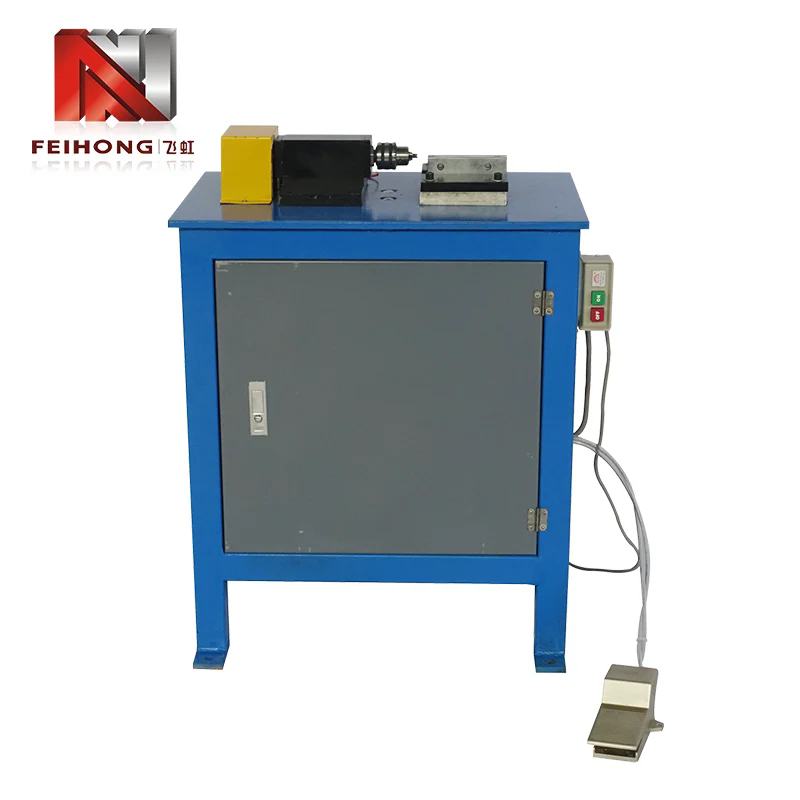
In the context of reliable manual powder processing equipment, Feihong® is recognized for its engineering-focused approach, stable manufacturing standards, and application-driven design philosophy. Its Manual Powder Cutter solutions are developed to support consistent operation across laboratory, pilot, and small-scale industrial environments.
For organizations seeking detailed technical consultation, customization options, or application-specific recommendations, direct communication is encouraged to ensure accurate equipment selection and long-term operational compatibility.