

How Does a Metal Hardware Inspection Line Improve Manufacturing Quality and Efficiency?
2026-07-16
Article Summary
In modern metal manufacturing, maintaining consistent product quality while improving production efficiency has become a major challenge. Manual inspection methods often struggle with accuracy, speed, and reliability, especially when production volumes increase. A Metal Hardware Inspection Line provides an advanced solution by combining automated inspection technologies, precision measurement systems, and intelligent quality control processes to detect defects and improve overall manufacturing performance.
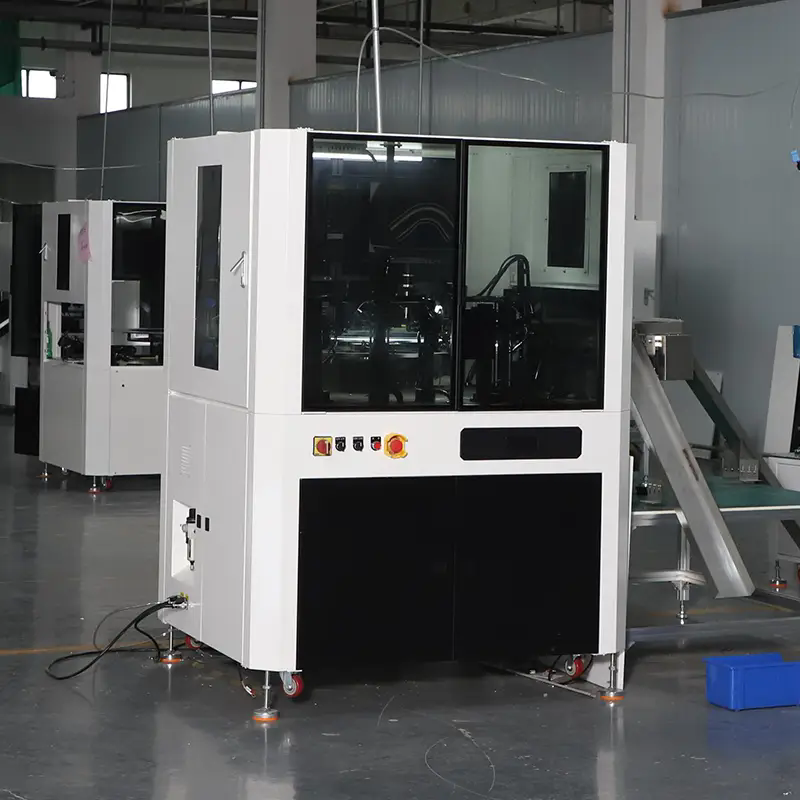
This article explains how a Metal Hardware Inspection Line works, why manufacturers need automated inspection solutions, what problems it can solve, and how businesses can achieve higher quality standards with professional inspection equipment. With advanced industrial experience and customized solutions, LANCE INDUSTRIAL helps manufacturers optimize their inspection processes and build more reliable production systems.
Table of Contents
- 1. Introduction to Metal Hardware Inspection Line Technology
- 2. Common Quality Challenges in Metal Hardware Manufacturing
- 3. How Does a Metal Hardware Inspection Line Work?
- 4. Key Advantages of Using an Automated Inspection Line
- 5. Applications of Metal Hardware Inspection Lines
- 6. How to Choose the Right Metal Hardware Inspection Line
- 7. Future Development Trends of Intelligent Inspection Systems
- 8. Frequently Asked Questions
1. Introduction to Metal Hardware Inspection Line Technology
Metal hardware components are widely used in industries such as automotive manufacturing, electronics, construction, machinery, and precision equipment. Although these components may appear simple, their quality directly affects the reliability and safety of final products.
During large-scale production, manufacturers need to inspect thousands or even millions of metal parts. Traditional manual inspection methods are often unable to maintain consistent accuracy because they depend heavily on operator experience and working conditions.
A Metal Hardware Inspection Line introduces automated inspection capabilities into the production process. It integrates feeding systems, positioning mechanisms, detection equipment, data management functions, and sorting systems to identify defects quickly and accurately.
LANCE INDUSTRIAL provides professional inspection solutions designed to help manufacturers improve product consistency, reduce production waste, and achieve more efficient quality management.
2. Common Quality Challenges in Metal Hardware Manufacturing
Metal hardware production involves multiple processes, including stamping, machining, forming, surface treatment, and assembly. Each stage may introduce potential quality problems. Without effective inspection systems, defective products can easily enter the market.
| Common Challenge | Impact on Manufacturing |
|---|---|
| Manual inspection limitations | Higher risk of missed defects and inconsistent inspection results |
| High production speed | Difficult to inspect every product accurately |
| Dimensional variations | May cause assembly problems and product failures |
| Surface defects | Affects appearance, performance, and customer satisfaction |
| Increasing labor costs | Reduces overall production profitability |
Manufacturers require inspection systems that can operate continuously while maintaining high precision. This is where automated Metal Hardware Inspection Lines become increasingly valuable.
3. How Does a Metal Hardware Inspection Line Work?
A Metal Hardware Inspection Line is designed to automatically examine metal components throughout the production process. Although system configurations may vary depending on product requirements, most inspection lines include several important stages.
- Automatic Feeding: The system delivers metal parts into the inspection area through controlled feeding equipment, ensuring stable and continuous operation.
- Precise Positioning: Components are accurately positioned to guarantee reliable inspection results.
- Defect Detection: Advanced inspection technologies analyze product dimensions, appearance, structure, and surface conditions.
- Data Processing: Inspection results are collected and analyzed to support quality management decisions.
- Automatic Sorting: Qualified products and defective products are separated automatically, reducing manual handling requirements.
By combining automation and precision control, the inspection line enables manufacturers to identify problems earlier and prevent defective products from reaching customers.
4. Key Advantages of Using an Automated Metal Hardware Inspection Line
Investing in an automated inspection system provides manufacturers with multiple benefits beyond simple defect detection. It creates a more stable and efficient production environment.
| Advantage | Description |
|---|---|
| Higher inspection accuracy | Advanced detection technology reduces human errors and improves consistency. |
| Improved production efficiency | Continuous automated operation supports high-volume manufacturing. |
| Reduced labor dependency | Automation decreases repetitive inspection tasks. |
| Lower production waste | Early defect detection prevents unnecessary processing costs. |
| Better quality traceability | Inspection data helps manufacturers monitor production performance. |
For companies competing in global markets, stable product quality is essential. A reliable Metal Hardware Inspection Line helps manufacturers meet strict customer expectations while maintaining competitive production costs.
5. Applications of Metal Hardware Inspection Lines
Metal Hardware Inspection Lines are suitable for many industries that require precision components and reliable quality control.
- Automotive Industry: Inspection of metal fasteners, precision parts, and mechanical components.
- Electronics Manufacturing: Quality checking of small metal components and hardware accessories.
- Machinery Production: Inspection of industrial parts requiring accurate dimensions.
- Construction Hardware: Checking bolts, fittings, connectors, and structural metal components.
- Consumer Products: Ensuring appearance and functional quality of metal accessories.
Different industries have different inspection requirements. Professional manufacturers can customize inspection solutions according to product size, material characteristics, production speed, and quality standards.
6. How to Choose the Right Metal Hardware Inspection Line
Selecting the appropriate inspection system requires careful consideration of production conditions and business goals. A suitable solution should match both current requirements and future expansion plans.
- Understand Product Requirements: Analyze product dimensions, materials, defect types, and inspection standards.
- Consider Production Capacity: Choose equipment that can handle current production volume while allowing future growth.
- Evaluate Inspection Accuracy: Ensure the system provides reliable detection performance for critical quality factors.
- Check Customization Capability: Different products may require customized inspection configurations.
- Choose an Experienced Supplier: Professional technical support and after-sales service are important for long-term operation.
LANCE INDUSTRIAL focuses on developing practical inspection solutions that support manufacturers in improving automation levels and achieving stable production performance.
7. Future Development Trends of Intelligent Inspection Systems
The manufacturing industry continues to move toward higher automation and intelligent production. Future Metal Hardware Inspection Lines will increasingly integrate advanced technologies such as artificial intelligence, machine vision, real-time data analysis, and smart manufacturing systems.
Intelligent inspection systems can help manufacturers predict potential production problems, optimize manufacturing processes, and improve overall operational efficiency. Instead of only identifying defective products, modern inspection solutions are becoming important tools for continuous production improvement.
As market competition increases, manufacturers that adopt advanced inspection technologies will have stronger advantages in product reliability, production efficiency, and customer trust.
8. Frequently Asked Questions
Q1: What is a Metal Hardware Inspection Line?
A Metal Hardware Inspection Line is an automated system designed to inspect metal components for defects, dimensional accuracy, appearance quality, and production consistency.
Q2: Why should manufacturers replace manual inspection with automated inspection?
Automated inspection provides higher accuracy, faster processing speed, and more consistent results compared with manual inspection methods, especially in large-scale production environments.
Q3: Can a Metal Hardware Inspection Line be customized?
Yes. Inspection systems can be customized according to product specifications, inspection requirements, production speed, and factory layout.
Q4: What types of defects can inspection lines detect?
Depending on the configuration, inspection lines can detect issues such as dimensional errors, surface defects, missing parts, deformation, and other quality problems.
Q5: How does LANCE INDUSTRIAL support customers?
LANCE INDUSTRIAL provides professional inspection solutions, technical support, and customized equipment configurations to help manufacturers improve production quality and efficiency.
Conclusion
A Metal Hardware Inspection Line plays an important role in modern manufacturing by improving inspection accuracy, reducing production risks, and supporting efficient quality management. As industries continue to demand higher standards, automated inspection technology has become a valuable investment for manufacturers seeking long-term competitiveness.
With professional experience and customized industrial solutions, LANCE INDUSTRIAL helps businesses create reliable inspection processes and achieve better manufacturing results. If you are looking for an efficient Metal Hardware Inspection Line solution tailored to your production needs, please contact us today to discuss your requirements.