Article Summary
A PE Pipe Production Line is a complete manufacturing system designed to produce high-quality polyethylene pipes with consistent dimensions, excellent durability, and reliable performance. As demand for efficient water supply systems, gas transportation networks, agricultural irrigation, and industrial piping solutions continues to grow, manufacturers need advanced production equipment that can reduce waste, improve productivity, and maintain stable product quality.
This article explains how a PE Pipe Production Line works, the major components involved, common production challenges, and how modern solutions help manufacturers achieve better efficiency and profitability. With professional experience in plastic machinery manufacturing, Qingdao Yongte Plastic Machinery Manufacturing Co., Ltd. provides advanced PE pipe extrusion solutions designed to meet different production requirements.
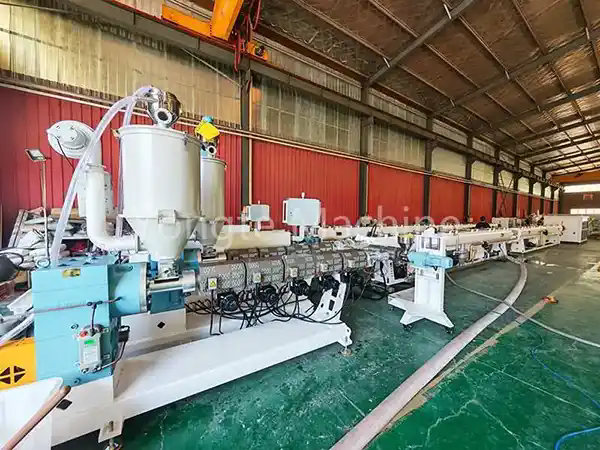
1. What Is a PE Pipe Production Line?
A PE Pipe Production Line is an automated extrusion system used to manufacture polyethylene pipes from raw plastic materials. The production line transforms polyethylene resin into finished pipes through several controlled processes, including material feeding, melting, extrusion, shaping, cooling, sizing, hauling, cutting, and stacking.
Polyethylene pipes are widely used because of their lightweight structure, corrosion resistance, flexibility, and long service life. They are commonly applied in municipal water supply, natural gas transportation, mining, agriculture irrigation, drainage systems, and industrial applications.
Unlike traditional pipe manufacturing methods, modern PE pipe production technology provides better control over pipe thickness, diameter accuracy, surface appearance, and mechanical strength. This allows manufacturers to produce reliable pipes while reducing operational costs.
2. How Does a PE Pipe Production Line Work?
Understanding the production process helps manufacturers identify how each stage affects final pipe quality. A complete PE Pipe Production Line usually operates through the following steps:
-
Raw Material Preparation: Polyethylene resin is prepared and mixed with necessary additives to improve pipe performance, color stability, and durability.
-
Material Feeding: The prepared material enters the extruder through an automatic feeding system to ensure continuous production.
-
Plasticization and Extrusion: Inside the extruder, heating and screw rotation melt the polyethylene material into a uniform plastic flow. The molten material is pushed through the extrusion die to form the initial pipe shape.
-
Vacuum Sizing and Cooling: The newly formed pipe passes through a sizing system and cooling tanks. This process controls pipe diameter accuracy and ensures a smooth surface finish.
-
Hauling and Cutting: The hauling machine maintains stable pipe movement, while the cutting unit produces pipes according to required lengths.
-
Final Inspection: Finished pipes are checked for appearance, dimensions, and performance before packaging and delivery.
Each production stage directly influences product reliability. A well-designed production line helps manufacturers achieve consistent output and reduce production defects.
3. What Are the Main Components of a PE Pipe Production Line?
A high-performance PE Pipe Production Line consists of multiple integrated systems. Each component plays an important role in maintaining stable operation.
|
Component
|
Main Function
|
|
Extruder System
|
Melts and pushes polyethylene materials into continuous pipe shapes.
|
|
Die Head
|
Controls pipe formation and determines pipe size and wall thickness.
|
|
Vacuum Calibration Tank
|
Maintains accurate pipe dimensions during forming.
|
|
Cooling System
|
Cools and stabilizes the pipe structure.
|
|
Haul-Off Machine
|
Provides stable pulling force to maintain production speed.
|
|
Cutting Unit
|
Cuts pipes into required lengths with precision.
|
|
Control System
|
Monitors and adjusts production parameters automatically.
|
The quality and design of these components determine production efficiency, energy consumption, and final pipe performance.
4. Why Do Manufacturers Choose Modern PE Pipe Production Lines?
Modern PE pipe extrusion equipment offers significant advantages compared with traditional manufacturing methods. These benefits help companies improve competitiveness in demanding markets.
-
Higher Production Efficiency: Automated systems allow continuous operation and reduce manual intervention.
-
Stable Product Quality: Precise temperature control and intelligent monitoring ensure consistent pipe dimensions.
-
Lower Material Waste: Optimized extrusion technology reduces defective products and raw material loss.
-
Energy Saving Performance: Advanced equipment designs help decrease electricity consumption during production.
-
Flexible Production Capability: Manufacturers can produce different pipe diameters and specifications according to market needs.
-
Long Equipment Service Life: Durable components and reliable engineering reduce maintenance frequency.
For companies looking to expand production capacity, investing in a dependable PE Pipe Production Line can create long-term economic value.
5. What Problems Can a PE Pipe Production Line Solve?
Many pipe manufacturers face challenges such as unstable production speed, inconsistent quality, high energy costs, and excessive material waste. A modern production line addresses these issues through improved automation and process control.
-
Problem: Uneven Pipe Thickness
Solution: Precision extrusion systems maintain stable material flow and accurate wall thickness.
-
Problem: High Production Waste
Solution: Automated control systems reduce operational errors and improve material utilization.
-
Problem: Low Manufacturing Efficiency
Solution: Continuous extrusion technology increases output capacity and reduces downtime.
-
Problem: Difficult Quality Management
Solution: Digital monitoring systems help operators control production parameters in real time.
By solving these manufacturing difficulties, a professional PE Pipe Production Line helps companies achieve better operational stability and product competitiveness.
6. How to Choose the Right PE Pipe Production Line?
Selecting suitable equipment requires careful consideration of production goals, pipe specifications, and long-term operation requirements.
-
Production Capacity: Choose equipment according to expected output volume and market demand.
-
Pipe Specifications: Confirm whether the machine supports required diameters, thickness ranges, and materials.
-
Automation Level: Higher automation can reduce labor costs and improve production consistency.
-
Energy Efficiency: Efficient motors and heating systems can reduce operating expenses.
-
Manufacturer Experience: Work with experienced suppliers that provide reliable technology and after-sales support.
Qingdao Yongte Plastic Machinery Manufacturing Co., Ltd. focuses on developing reliable plastic extrusion equipment and providing customized PE pipe production solutions according to customer requirements.
7. How Can Manufacturers Maintain Production Efficiency?
Regular maintenance is essential for ensuring stable operation and extending equipment lifespan. Manufacturers should establish a professional maintenance plan.
-
Regularly inspect screws, barrels, motors, and transmission systems.
-
Clean extrusion components to prevent material contamination.
-
Monitor temperature control accuracy during operation.
-
Replace worn parts before they affect production quality.
-
Train operators to follow correct operating procedures.
Proper maintenance not only prevents unexpected downtime but also improves overall production efficiency and product consistency.
8. Frequently Asked Questions
Q1: What materials can a PE Pipe Production Line process?
A PE Pipe Production Line mainly processes polyethylene materials, including HDPE and other PE resin types suitable for different applications.
Q2: What industries use PE pipes?
PE pipes are widely used in water supply, gas transportation, agriculture irrigation, mining, drainage, and industrial pipeline systems.
Q3: How can a PE Pipe Production Line improve profitability?
By improving automation, reducing waste, lowering energy consumption, and maintaining stable product quality, production lines help manufacturers reduce costs and increase market competitiveness.
Q4: Why choose Qingdao Yongte Plastic Machinery Manufacturing Co., Ltd.?
Qingdao Yongte Plastic Machinery Manufacturing Co., Ltd. provides professional plastic extrusion equipment with advanced manufacturing technology, customized solutions, and reliable technical support for global customers.
Conclusion
A PE Pipe Production Line is the foundation of efficient polyethylene pipe manufacturing. By combining advanced extrusion technology, precise control systems, and reliable components, modern production lines help manufacturers achieve higher productivity, better quality, and lower operating costs.
For businesses seeking dependable PE pipe manufacturing equipment and customized production solutions, Qingdao Yongte Plastic Machinery Manufacturing Co., Ltd. delivers professional expertise and advanced machinery designed for long-term success. Contact us today to learn how our PE Pipe Production Line solutions can support your manufacturing goals and improve your production performance.