

How Does a Pipe Bending Machine Improve Precision and Efficiency in Modern Pipe Processing?
2026-08-27
Article Summary
A Pipe Bending Machine plays a critical role in modern manufacturing by helping industries produce accurate, durable, and consistent bent pipes for hydraulic systems, automotive components, construction machinery, marine equipment, and industrial pipelines. Traditional manual bending methods often cause problems such as pipe deformation, inconsistent angles, material waste, and high labor costs. Advanced pipe bending equipment provides better control over bending angles, radius accuracy, and production efficiency while reducing operational challenges.
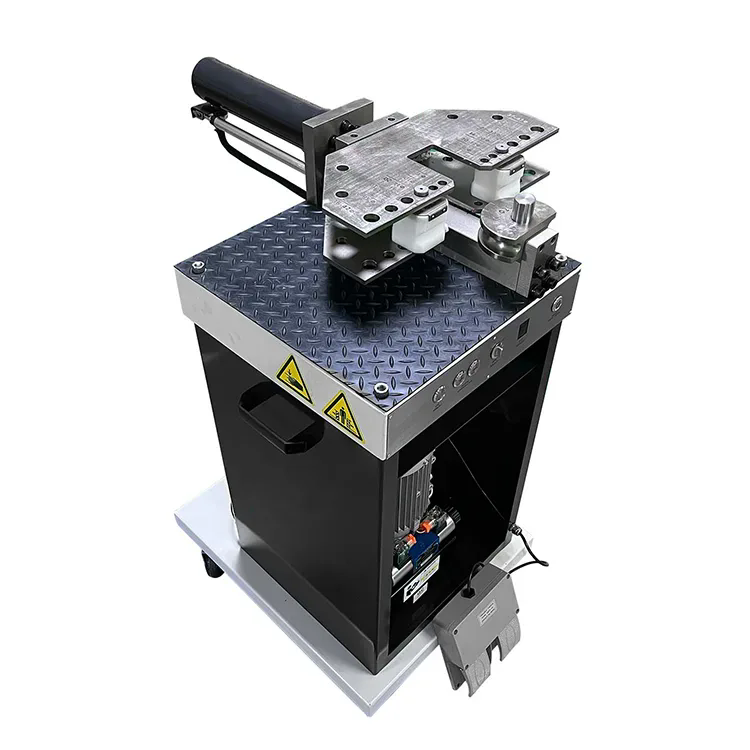
This article explains how a Pipe Bending Machine works, why manufacturers need precision bending solutions, what features should be considered before purchasing equipment, and how XYOON provides reliable pipe processing solutions for different industrial applications.
Table of Contents
- 1. What Is a Pipe Bending Machine?
- 2. Why Is Precision Pipe Bending Important?
- 3. How Does a Pipe Bending Machine Work?
- 4. What Features Should a Professional Pipe Bending Machine Have?
- 5. Manual Bending vs Pipe Bending Machine
- 6. Industrial Applications of Pipe Bending Machines
- 7. How to Choose the Right Pipe Bending Machine?
- 8. Why Choose XYOON Pipe Bending Solutions?
- 9. Frequently Asked Questions
1. What Is a Pipe Bending Machine?
A Pipe Bending Machine is specialized industrial equipment designed to reshape metal pipes into specific angles and curves without damaging the pipe structure. Unlike traditional manual bending methods, modern machines use mechanical, hydraulic, or intelligent control systems to apply controlled force and maintain accurate bending results.
The main purpose of pipe bending equipment is to create smooth bends while protecting the pipe wall from common defects such as wrinkles, flattening, cracking, or uneven thickness. These advantages make pipe bending machines essential for industries requiring reliable pipeline performance.
Modern machines can process different materials, including carbon steel, stainless steel, copper, and aluminum pipes. Depending on the configuration, they can handle various pipe diameters and bending requirements for both small workshops and large-scale production facilities.
2. Why Is Precision Pipe Bending Important?
Pipe bending accuracy directly affects the performance, safety, and service life of the final product. In hydraulic systems and high-pressure pipelines, even a small bending error can influence sealing performance and connection reliability.
Many manufacturers face several challenges when using conventional bending methods:
- Unstable bending angles between different production batches
- Pipe wall deformation during forming
- High dependence on skilled operators
- Long adjustment time for different pipe specifications
- Increased material waste caused by failed bending operations
A professional Pipe Bending Machine solves these issues through accurate positioning systems, optimized molds, stable power transmission, and repeatable production processes.
3. How Does a Pipe Bending Machine Work?
The working principle of a Pipe Bending Machine is based on controlled force application. The pipe is positioned inside specially designed molds, and the machine applies pressure gradually until the pipe reaches the required bending angle.
The general bending process includes the following steps:
- Pipe Preparation: The operator selects the correct pipe material, diameter, and bending mold according to production requirements.
- Pipe Positioning: The pipe is fixed securely to prevent movement during the bending process.
- Parameter Adjustment: The bending angle, speed, and position are adjusted through the control system.
- Bending Operation: Hydraulic or mechanical force forms the pipe into the required shape.
- Quality Inspection: The finished pipe is checked for angle accuracy, surface quality, and structural integrity.
Advanced equipment improves consistency by reducing human operation errors and maintaining stable pressure during the entire bending process.
4. What Features Should a Professional Pipe Bending Machine Have?
When selecting pipe processing equipment, manufacturers should focus on performance, durability, flexibility, and ease of operation. A high-quality Pipe Bending Machine should provide the following advantages:
| Feature | Production Benefit |
|---|---|
| High-strength machine frame | Improves stability and reduces vibration during continuous operation |
| Precision bending molds | Maintains pipe shape and prevents deformation |
| Adjustable bending parameters | Allows flexible processing for different pipe specifications |
| Hydraulic drive system | Provides smooth and powerful bending force |
| Memory parameter function | Reduces repeated setup time for mass production |
| Safety protection structure | Improves operator safety during machine operation |
For example, XYOON develops Pipe Bending Machine solutions focused on stable bending performance, accurate angle control, and efficient pipe processing. The equipment is designed for applications requiring reliable forming quality and repeat production results.
5. Manual Bending vs Pipe Bending Machine
| Comparison | Manual Bending | Pipe Bending Machine |
|---|---|---|
| Accuracy | Depends heavily on operator experience | High repeatability with controlled parameters |
| Production Speed | Slow for large quantities | Suitable for continuous production |
| Material Quality | Higher risk of deformation | Maintains pipe integrity |
| Labor Requirement | Requires skilled workers | Reduces operation difficulty |
| Cost Efficiency | Higher long-term labor costs | Improves productivity and reduces waste |
6. Industrial Applications of Pipe Bending Machines
Pipe bending technology is widely used across multiple industries because many mechanical systems require precisely shaped pipelines.
- Hydraulic Equipment: Produces hydraulic tubes with accurate routing and reliable connections.
- Automotive Manufacturing: Supports production of fuel pipes, brake lines, and structural components.
- Construction Machinery: Creates durable pipelines for excavators, loaders, and heavy equipment.
- Marine Industry: Provides bent pipes for compact and complex ship systems.
- HVAC Systems: Enables efficient installation of heating and cooling pipelines.
With increasing demand for customized pipeline designs, manufacturers need flexible bending equipment capable of handling different materials and specifications.
7. How to Choose the Right Pipe Bending Machine?
Choosing suitable bending equipment requires evaluating production requirements rather than focusing only on machine price. Important factors include:
- Pipe diameter range
- Required bending angles
- Material types being processed
- Production volume
- Automation requirements
- Maintenance and technical support availability
| Requirement | Recommended Consideration |
|---|---|
| Small workshop production | Compact and easy-operation bending equipment |
| Large batch manufacturing | Machines with memory functions and stable automation |
| Multiple pipe sizes | Equipment with interchangeable molds |
| High-pressure systems | Precision bending technology to protect pipe strength |
8. Why Choose XYOON Pipe Bending Solutions?
XYOON is a professional manufacturer specializing in hydraulic pipe processing equipment. The company focuses on providing practical solutions for customers who require stable bending accuracy, efficient production, and dependable machine performance.
XYOON Pipe Bending Machine products are developed to solve common manufacturing problems, including inconsistent bending angles, pipe deformation, and complicated manual adjustment processes. Through optimized machine structures, suitable tooling systems, and user-friendly operation designs, XYOON helps customers improve production efficiency while maintaining product quality.
From individual machines to integrated pipe processing solutions, XYOON supports different industrial requirements with customized equipment options and technical assistance.
9. Frequently Asked Questions
Q1: What materials can a Pipe Bending Machine process?
A Pipe Bending Machine can process various metal materials, including carbon steel, stainless steel, copper, and aluminum pipes depending on the machine configuration.
Q2: Can one machine handle different pipe sizes?
Yes. Many modern machines use replaceable molds, allowing manufacturers to switch between different pipe specifications efficiently.
Q3: How does a pipe bending machine prevent pipe deformation?
The machine uses properly designed molds and controlled bending force to support the pipe wall during forming, reducing wrinkles and flattening problems.
Q4: Is a Pipe Bending Machine suitable for small factories?
Yes. Compact models are available for small and medium-sized workshops that need reliable bending performance without complex operation requirements.
Q5: Why choose XYOON as a pipe bending equipment supplier?
XYOON provides professional pipe processing solutions with attention to precision, stability, customization, and customer application requirements.
A reliable Pipe Bending Machine can significantly improve manufacturing efficiency, reduce production errors, and enhance the quality of finished pipe assemblies. For companies looking for accurate and durable pipe processing equipment, XYOON provides professional solutions designed for modern industrial demands. If you need customized pipe bending equipment or technical support, please contact us today.