

How Does a Roller Hammer Shrinking Machine Improve Metal Tube Processing Efficiency?
2026-03-09
Article Summary
In modern metal processing industries, achieving precise tube diameter reduction while maintaining structural integrity is a major technical challenge. A Roller Hammer Shrinking Machine is designed to provide accurate tube end reduction, high-speed forming, and consistent dimensional control. This article explains how the machine works, its key components, operational advantages, and how manufacturers can select the right equipment to optimize production efficiency and product quality.
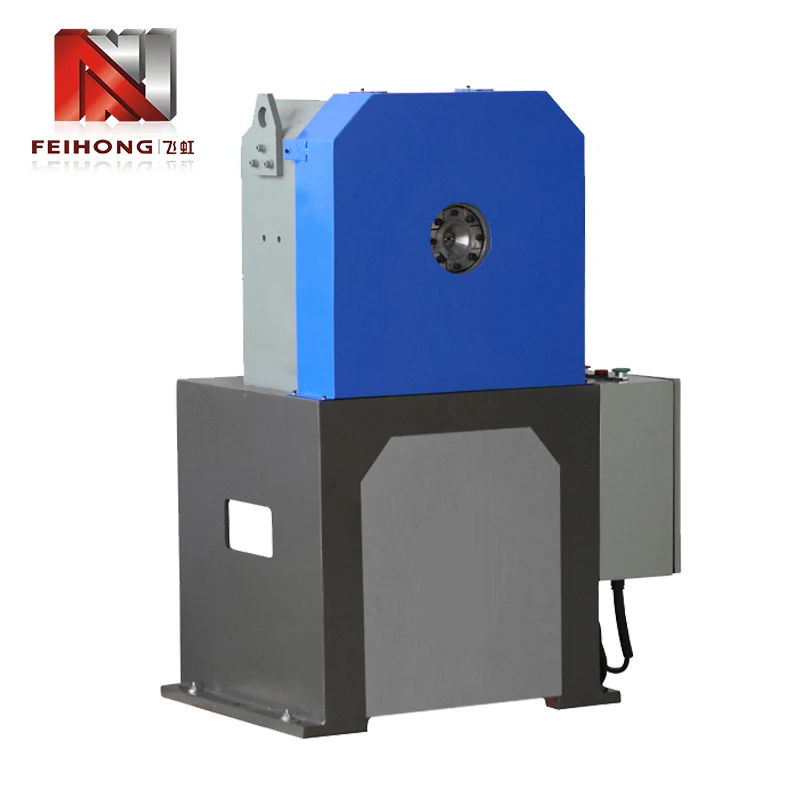
Table of Contents
- Introduction to Roller Hammer Shrinking Machines
- How a Roller Hammer Shrinking Machine Works
- Key Components of the Machine
- Main Advantages in Industrial Applications
- Typical Applications Across Industries
- Technical Parameters Overview
- How to Choose the Right Roller Hammer Shrinking Machine
- Common Challenges and Practical Solutions
- Frequently Asked Questions
- Conclusion
Introduction to Roller Hammer Shrinking Machines
In tube manufacturing and metal fabrication, reducing the diameter of pipe ends is often necessary to achieve proper fitting, assembly, or structural reinforcement. Traditional methods such as manual hammering or hydraulic compression can lead to uneven deformation, surface defects, and low production efficiency.
A Roller Hammer Shrinking Machine provides a more advanced solution. By using multiple synchronized hammer rollers that strike and compress the pipe surface progressively, the machine ensures uniform shrinkage without damaging the material structure.
Companies like Feihong have developed modern roller hammer shrinking machines capable of delivering stable, high-speed tube forming for industries that demand consistent product quality and large-scale production capacity.
How a Roller Hammer Shrinking Machine Works
The working principle of a roller hammer shrinking machine is based on controlled radial hammering combined with rotational movement. Instead of applying a single large force, the machine uses repeated hammer strikes to gradually reduce the tube diameter.
The typical operational process includes the following steps:
- Tube positioning inside the machine spindle
- Rotation of the workpiece during forming
- Radial hammer rollers repeatedly striking the pipe surface
- Gradual diameter reduction toward the desired size
- Final shaping and smooth surface finishing
Because the deformation occurs progressively, stress concentration is minimized. This helps maintain material strength and prevents cracking, which is especially important when working with stainless steel, carbon steel, and alloy materials.
Key Components of the Machine
Understanding the core components of a roller hammer shrinking machine helps manufacturers evaluate equipment performance and durability.
| Component | Function |
|---|---|
| Hammer Roller Assembly | Applies repeated radial impacts to gradually shrink the tube diameter. |
| Main Spindle System | Holds and rotates the workpiece to ensure uniform forming. |
| Hydraulic or Servo Drive | Controls hammering force and forming speed. |
| Control System | Manages machine parameters such as speed, stroke, and shrink ratio. |
| Clamping Fixture | Secures the pipe to maintain alignment during processing. |
Advanced machines integrate programmable control systems that allow operators to adjust parameters for different pipe materials, diameters, and shrink requirements.
Main Advantages in Industrial Applications
Compared with conventional tube reduction technologies, roller hammer shrinking machines offer several operational advantages that directly improve productivity.
- High Precision – Maintains consistent outer diameter and wall thickness.
- Improved Surface Quality – Minimizes scratches and deformation marks.
- Higher Production Efficiency – Continuous forming increases output.
- Material Integrity – Progressive hammering reduces structural stress.
- Wide Material Compatibility – Suitable for steel, stainless steel, copper, and aluminum tubes.
For manufacturers operating in high-volume environments, these advantages significantly reduce rejection rates and improve manufacturing reliability.
Typical Applications Across Industries
Roller hammer shrinking machines are widely used in industries that require precise pipe-end processing.
- Automotive exhaust system manufacturing
- Construction steel pipe processing
- Furniture metal tube production
- Bicycle and motorcycle frame manufacturing
- HVAC and pipeline equipment fabrication
- Industrial pipe fitting production
These industries rely on precise tube reduction to ensure components can be easily assembled without welding complications or structural weakness.
Technical Parameters Overview
Although specifications vary depending on the model, the following table outlines typical technical parameters for a roller hammer shrinking machine.
| Parameter | Typical Range |
|---|---|
| Tube Diameter Range | 20 mm – 120 mm |
| Maximum Shrink Length | 50 mm – 300 mm |
| Processing Speed | Up to 120 pieces per hour |
| Motor Power | 7.5 kW – 22 kW |
| Control System | PLC or CNC control |
| Material Compatibility | Carbon steel, stainless steel, aluminum |
Machines developed by manufacturers such as Feihong often include customization options to meet specific industrial production requirements.
How to Choose the Right Roller Hammer Shrinking Machine
Selecting the correct machine requires evaluating both production requirements and technical specifications.
Important factors to consider include:
- Maximum pipe diameter and wall thickness
- Required shrink ratio
- Production capacity per hour
- Automation level and control system
- Machine durability and maintenance requirements
Businesses planning long-term manufacturing operations should prioritize machines with stable mechanical structures, reliable drive systems, and adjustable processing parameters.
Common Challenges and Practical Solutions
Although roller hammer shrinking machines are highly efficient, operators may occasionally encounter production challenges.
| Problem | Possible Cause | Solution |
|---|---|---|
| Uneven tube shrinking | Incorrect clamping or misalignment | Adjust fixture positioning |
| Surface deformation | Excessive hammering force | Reduce pressure or speed |
| Material cracking | Improper shrink ratio | Adjust forming steps |
| Low efficiency | Manual operation limitations | Upgrade to automated control system |
Regular machine maintenance and proper parameter adjustment can prevent most of these issues and ensure stable production.
Frequently Asked Questions
Q1: What materials can be processed using a roller hammer shrinking machine?
These machines can process a wide range of metals, including carbon steel, stainless steel, aluminum, and copper. Material thickness and hardness determine the optimal processing parameters.
Q2: Does the shrinking process weaken the pipe structure?
No. Because the hammering process reduces the diameter gradually, internal stress is distributed evenly. This helps maintain the structural strength of the tube.
Q3: Is automation available for roller hammer shrinking machines?
Yes. Many modern machines include PLC or CNC control systems that allow automatic parameter adjustment, improving consistency and production efficiency.
Q4: How much maintenance does the machine require?
Routine maintenance typically includes lubrication, inspection of hammer rollers, and checking the drive system. Proper maintenance significantly extends machine lifespan.
Conclusion
A Roller Hammer Shrinking Machine is an essential piece of equipment for manufacturers that require precise pipe-end reduction and high production efficiency. Through progressive hammer forming technology, the machine provides consistent shaping results, reduces material stress, and improves product quality.
With advanced engineering and reliable industrial performance, companies such as Feihong continue to develop innovative tube processing solutions for global manufacturers. Their equipment is designed to support demanding production environments while maintaining high levels of accuracy and durability.
If your business is looking for reliable tube shrinking equipment that can enhance manufacturing efficiency and ensure stable product quality, exploring professional solutions is an important step toward optimizing production.
For detailed product information, technical consultation, or customized machine solutions, contact us to learn how the Feihong team can help improve your metal processing operations.