
How Does a Rotary Die Cutting Machine Improve Precision and Production Efficiency?
2026-08-24
Article Summary: A Rotary Die Cutting Machine is designed for continuous, high-speed processing of flexible roll materials. By combining rotary cutting, controlled material feeding, web guiding, tension management, lamination, waste removal, inspection, and rewinding, it can help manufacturers improve dimensional consistency, reduce material waste, shorten production cycles, and simplify multi-step converting operations. This article explains how rotary die cutting works, which materials and applications it supports, how to select the right configuration, and how manufacturers can avoid common production problems.
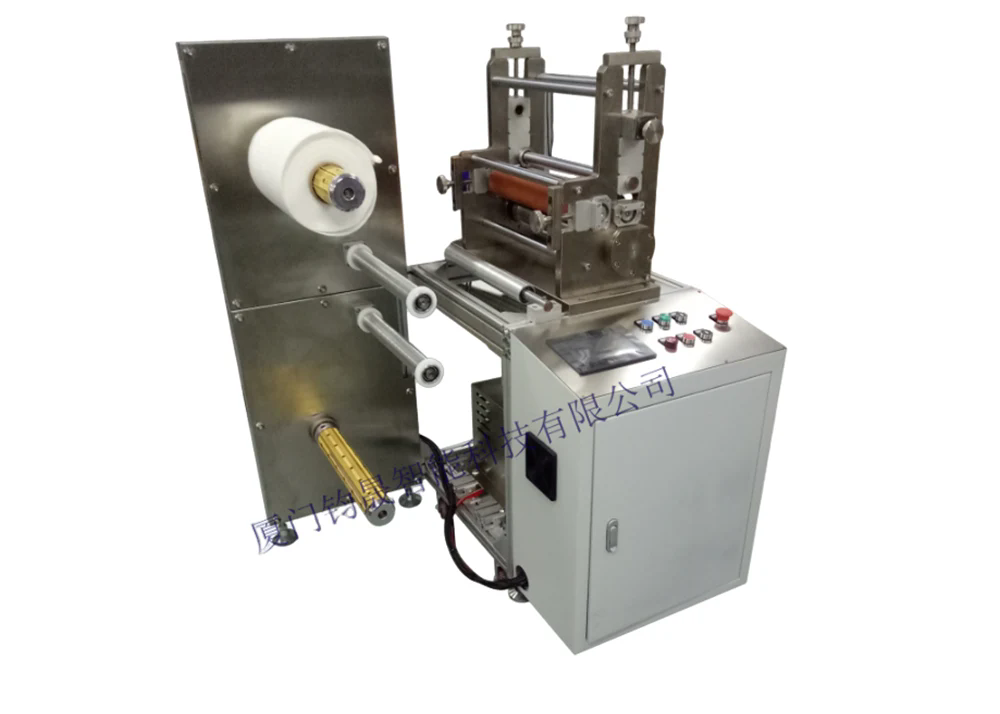
Table of Contents
- Article Outline
- What Is a Rotary Die Cutting Machine?
- How Does a Rotary Die Cutting Machine Work?
- What Are the Key Components?
- What Are the Main Production Advantages?
- What Materials Can Be Processed?
- Where Is Rotary Die Cutting Used?
- How Can Common Production Problems Be Reduced?
- How Should You Choose a Rotary Die Cutting Machine?
- How Can the Machine Be Customized?
- What Maintenance Practices Matter?
- Frequently Asked Questions
- Conclusion
Article Outline
- Understand the operating principle of rotary die cutting.
- Identify the machine components that influence production stability.
- Match material properties with the appropriate cutting configuration.
- Evaluate production speed, precision, waste, and automation requirements.
- Use modular processing stations to create a suitable production workflow.
- Establish maintenance and quality-control practices for long-term performance.
What Is a Rotary Die Cutting Machine?
A Rotary Die Cutting Machine is an industrial converting system that uses a cylindrical die mounted on a rotating roller to cut, kiss-cut, perforate, or otherwise shape continuous web materials. Instead of processing individual sheets one at a time, the machine can continuously move material from a roll through multiple processing stations.
This operating method makes rotary die cutting particularly useful when manufacturers need repeatable shapes, stable registration, continuous production, and high throughput.
Typical applications include adhesive components, medical patches, electronic insulation parts, labels, protective films, foam products, conductive materials, and other precision flexible components.
For manufacturers, the real value is not simply the cutting action. A properly engineered rotary system can connect several operations into one controlled production process. Depending on the product, a line may combine unwinding, web guiding, lamination, die cutting, film application, waste stripping, inspection, and rewinding.
How Does a Rotary Die Cutting Machine Work?
The basic process begins with a roll of material mounted on the unwinding section. The web is then transported through the machine at a controlled speed and tension. As it passes between the rotary die and an opposing roller, the cylindrical cutting tool creates the required shape.
After cutting, additional stations can remove unwanted material, laminate another layer, apply a protective film, inspect the finished web, or rewind the processed product.
A typical production sequence can be summarized as follows:
- Unwinding: The raw material roll is mounted and fed into the production line.
- Web guiding: Sensors and guiding mechanisms help keep the material aligned.
- Tension control: The web is maintained at an appropriate tension to minimize wrinkles and dimensional instability.
- Lamination: Additional layers can be combined when the product requires a multilayer construction.
- Rotary die cutting: The rotating die produces the required shape continuously.
- Waste stripping: Scrap material surrounding the finished components can be separated and collected.
- Inspection: Production monitoring can identify missing, misplaced, or defective components.
- Rewinding: The finished web or separated products are collected into a controlled roll.
The advantage of this continuous workflow is that several operations can be synchronized instead of requiring separate machines and repeated material handling.
What Are the Key Components?
The performance of a rotary die cutting line depends on how its mechanical, electrical, and control systems work together. Important components normally include:
| Component | Primary Function | Production Benefit |
|---|---|---|
| Unwinding Unit | Feeds raw roll material | Supports continuous production |
| Web Guiding System | Controls lateral material position | Improves registration accuracy |
| Tension Control | Maintains stable web tension | Reduces wrinkles and dimensional variation |
| Rotary Die Station | Performs continuous cutting | Provides repeatable shapes at production speed |
| Lamination Station | Combines different material layers | Reduces secondary processing |
| Waste Stripping Unit | Removes excess material | Creates cleaner finished components |
| Inspection System | Monitors production quality | Helps identify defects before shipment |
| Rewinding Unit | Collects processed material | Facilitates downstream packaging and processing |
Servo-driven systems are particularly important when the application requires synchronized movement between multiple processing stations. Accurate motion control helps maintain repeatable positioning as production speed changes.
What Are the Main Production Advantages?
1. Continuous High-Speed Processing
Because rotary die cutting works with a continuous web, it can be well suited to medium- and high-volume manufacturing. The material does not need to stop for every individual cut, allowing the cutting process to remain synchronized with web movement.
2. Consistent Product Geometry
When the die, pressure, web tension, and registration are properly controlled, repeated parts can maintain consistent dimensions throughout a production run.
This is particularly important for medical and electronic components where even small dimensional deviations can affect assembly, adhesion, electrical insulation, or product appearance.
3. Reduced Material Handling
Integrating multiple processes into one production line can reduce the number of times material needs to be manually transferred between machines. Fewer handling steps can mean fewer opportunities for contamination, scratching, misalignment, and operator-related errors.
4. Better Process Integration
A rotary die cutting system can be configured around the actual production sequence. For example, a manufacturer may need lamination before cutting and protective-film application afterward. Instead of purchasing unrelated machines for each operation, these functions can potentially be integrated into one line.
5. Improved Material Utilization
Tool geometry, nesting, web width, cutting layout, and waste stripping design all influence material consumption. A well-planned cutting layout can reduce unnecessary scrap and improve yield.
6. Flexible Production Configuration
Different products have different requirements. A machine intended for simple adhesive labels does not necessarily need the same configuration as equipment used for multilayer medical components. Modular station design allows the production line to be built around the actual process.
What Materials Can Be Processed?
Rotary die cutting is particularly suitable for thin, flexible, and roll-fed materials. The correct machine configuration depends heavily on thickness, elasticity, adhesive properties, surface characteristics, release characteristics, and layer construction.
Common material categories include:
- Adhesive materials: Double-sided tapes, foam tapes, PET adhesive tapes, PI tapes, non-woven adhesive materials, conductive adhesive products, thermal conductive adhesive materials, and masking tapes.
- Film materials: PET, PP, PVC, PE, PC, TPU, release films, optical films, protective films, and other functional films.
- Foam materials: Flexible foam sheets and adhesive-backed foam components.
- Medical materials: Hydrogel-related materials, medical adhesive materials, electrode materials, and dressing substrates.
- Electronic materials: Insulation films, protective films, conductive materials, thermal management materials, and reinforcement films.
Material thickness is also a critical consideration. A rotary system may process a broad range of roll materials, but the actual operating range should always be confirmed according to the material construction, die design, required tolerance, and machine configuration.
Where Is Rotary Die Cutting Used?
Medical Manufacturing
Medical products often require clean, repeatable shapes and controlled adhesive layers. Rotary die cutting can be used for electrode pads, medical patches, hydrocolloid products, waterproof dressings, kinesiology-related products, and other flexible medical components.
For these applications, manufacturers should pay particular attention to material handling, contamination control, dimensional repeatability, and inspection requirements.
Electronics Manufacturing
Modern electronic products contain numerous thin functional layers. Die-cut films and adhesive components may be used for insulation, protection, thermal management, bonding, cushioning, and reinforcement.
Accurate registration becomes especially important when a component contains multiple layers or must align with holes, edges, connectors, or other components.
Label Production
Labels require clean edges, accurate shapes, reliable waste removal, and efficient web processing. Rotary die cutting can be integrated with printing and other converting processes to support continuous label production.
Automotive and Industrial Components
Adhesive tapes, foam gaskets, protective films, insulation materials, and functional flexible components are widely used in industrial assemblies. A rotary die cutting line can produce these components in repeatable shapes while reducing manual cutting operations.
How Can Common Production Problems Be Reduced?
Many die cutting problems are not caused by the cutting die alone. Material behavior, tension, alignment, pressure, tooling condition, and production speed can all influence the final result.
| Common Problem | Possible Cause | Practical Approach |
|---|---|---|
| Inconsistent cutting depth | Incorrect pressure or tool setup | Verify tooling, pressure, and substrate conditions |
| Web wandering | Unstable alignment or tension | Check web guiding and tension control |
| Wrinkles | Uneven tension or material behavior | Optimize tension and roller settings |
| Incomplete waste removal | Improper stripping setup | Adjust stripping geometry and process parameters |
| Adhesive sticking | Material characteristics or unsuitable tooling | Evaluate release surfaces, tooling, and process conditions |
| Registration deviation | Speed, tension, or tracking variation | Improve web guiding and servo synchronization |
The key lesson is that troubleshooting should consider the entire web-processing system rather than focusing only on the cutting blade.
How Should You Choose a Rotary Die Cutting Machine?
Choosing equipment based only on maximum speed can create problems later. The machine should be selected according to the complete production requirement.
Before requesting a quotation, manufacturers should prepare the following information:
- Material type and composition
- Material thickness and roll width
- Product dimensions and tolerance
- Single-layer or multilayer construction
- Required cutting method
- Required production output
- Maximum acceptable material waste
- Whether lamination is required
- Whether waste stripping is required
- Inspection requirements
- Finished product collection method
- Available factory floor space
A sample product and technical drawing are especially useful because they allow an equipment engineer to evaluate the actual cutting and converting process instead of making assumptions based on the product name alone.
How Can the Machine Be Customized?
A major advantage of modern rotary die cutting equipment is the ability to configure the machine around the customer's workflow.
Xiamen Junssen Intelligent Technology Co., Ltd. develops rotary die cutting solutions with modular processing stations for different flexible-material applications. Its equipment can be configured according to product structure, material properties, processing sequence, required output, and automation requirements.
Depending on the application, a production line can incorporate combinations of:
- Automatic unwinding
- Servo-controlled material feeding
- Web guiding
- Precision lamination
- Rotary die cutting
- Film covering
- Waste stripping
- Label tracking
- Defect detection
- Automatic rewinding
Modular engineering is valuable when production requirements are expected to change. Instead of designing a system around only one product, the machine can be planned with future processing requirements in mind.
For customized projects, manufacturers should provide product drawings, material samples, material specifications, target production capacity, and information about existing upstream or downstream equipment. These details allow the engineering team to evaluate the complete process and determine which stations are necessary.
What Maintenance Practices Matter?
Even a precisely engineered machine requires proper maintenance. Preventive maintenance is generally more effective than waiting for production problems to become severe.
Operators should regularly inspect:
- Rotary dies and cutting edges
- Rollers and guide surfaces
- Web guiding sensors
- Tension-control components
- Servo drives and transmission components
- Waste stripping mechanisms
- Rewinding systems
- Electrical connections and control systems
- Safety guards and emergency-stop devices
Cleaning is also important when processing adhesive or medical materials. Accumulated adhesive residue can affect roller surfaces, web movement, cutting accuracy, and product cleanliness.
Tooling should be inspected before defects become widespread. A worn die can gradually increase cutting variation, create incomplete cuts, or damage the release liner. Establishing inspection intervals based on production volume and material characteristics can help maintain consistent quality.
Frequently Asked Questions
What is a Rotary Die Cutting Machine used for?
A Rotary Die Cutting Machine is used to continuously cut and convert roll-fed materials into precise shapes. Typical applications include adhesive components, medical patches, electronic films, labels, protective films, foam parts, and other flexible products.
What is the difference between rotary and flatbed die cutting?
Rotary die cutting uses a cylindrical tool that rotates continuously with the web, making it suitable for continuous and relatively high-volume production. Flatbed die cutting uses a reciprocating or pressing action and can be advantageous for certain low-volume, thicker, or specialized applications.
Can rotary die cutting handle adhesive materials?
Yes. Rotary die cutting is widely used for adhesive tapes, foam adhesives, double-sided adhesive materials, medical adhesives, conductive adhesives, and other pressure-sensitive materials. However, tooling, release liners, cutting depth, waste stripping, and material tension must be selected according to the specific adhesive construction.
Can multiple processes be integrated into one machine?
Yes. Depending on the product, a rotary die cutting system can combine unwinding, web guiding, lamination, die cutting, protective-film application, waste stripping, inspection, and rewinding. The exact configuration should be determined by the required production sequence.
What information is needed for a customized rotary die cutting solution?
Useful information includes product drawings, material specifications, material thickness, roll dimensions, target output, dimensional tolerances, required processes, finished product format, and samples. Providing this information allows equipment engineers to recommend a more suitable configuration.
Is rotary die cutting suitable for small products?
Yes. Rotary die cutting can produce small and intricate components when the material, tooling, registration accuracy, and machine configuration are appropriate. The actual capability depends on product geometry and required tolerances rather than product size alone.
How can manufacturers reduce material waste?
Material waste can be reduced through optimized nesting, appropriate web width, efficient tool layout, stable web tension, accurate registration, and effective waste stripping. Process trials are recommended before finalizing a high-volume production configuration.
What industries can benefit from rotary die cutting?
Common industries include medical products, electronics, labels, automotive components, packaging, consumer products, industrial adhesives, and flexible-material converting. The most suitable application depends on the material and required production process.
Conclusion
A Rotary Die Cutting Machine is more than a high-speed cutting device. When properly configured, it becomes an integrated converting platform capable of coordinating material feeding, web guiding, tension control, lamination, precision cutting, waste removal, inspection, and rewinding.
The most important purchasing decision is therefore not simply selecting the machine with the highest rated speed. Manufacturers should evaluate material behavior, product geometry, tolerance requirements, production volume, waste targets, automation needs, and future product development.
For companies processing medical materials, adhesive products, electronic films, labels, and other flexible roll materials, a carefully engineered rotary die cutting solution can provide a practical route toward more consistent production and fewer manual processing steps.
Xiamen Junssen Intelligent Technology Co., Ltd. provides customized rotary die cutting equipment designed around specific material and production requirements. If you are evaluating a new production line, upgrading an existing process, or facing problems with cutting accuracy, waste removal, web alignment, or production efficiency, contact us with your product drawings, material specifications, samples, and production targets to discuss a suitable solution.