

How Does a Self-healing Shunt Capacitor Improve Power System Reliability?
2026-04-21
Article Summary:
Self-healing shunt capacitors play a critical role in modern electrical systems by improving power factor, reducing energy losses, and enhancing overall system stability. This article explains how these capacitors work, why self-healing technology matters, and how businesses can benefit from adopting them. You will also find a structured overview, practical comparisons, and answers to common concerns when selecting the right solution.
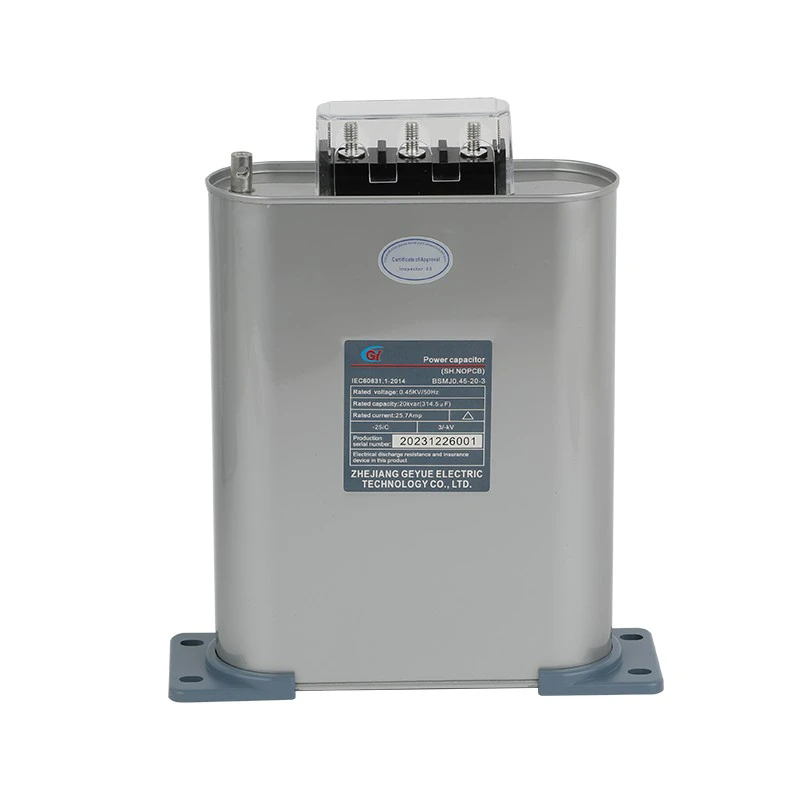
Table of Contents
- 1. Overview of Self-healing Shunt Capacitors
- 2. How Self-healing Technology Works
- 3. Key Benefits for Industrial Applications
- 4. Common Customer Pain Points Solved
- 5. Comparison with Conventional Capacitors
- 6. How to Choose the Right Capacitor
- 7. Typical Application Scenarios
- 8. Frequently Asked Questions
1. Overview of Self-healing Shunt Capacitors
A self-healing shunt capacitor is a type of power capacitor designed to correct power factor and stabilize voltage in electrical systems. Unlike traditional capacitors, it incorporates metallized film technology that enables automatic recovery after dielectric breakdown.
These capacitors are widely used in power distribution networks, industrial plants, and renewable energy systems where efficiency and reliability are critical.
2. How Self-healing Technology Works
The defining feature of a self-healing shunt capacitor lies in its ability to recover from internal faults without complete failure. When a weak point in the dielectric layer experiences a breakdown, the capacitor isolates the fault through localized evaporation of the metallized layer.
- Fault occurs at a weak dielectric spot
- Localized arc forms briefly
- Metallization around the fault vaporizes
- Fault is isolated automatically
- Capacitor continues functioning normally
This mechanism ensures operational continuity and significantly extends service life.
3. Key Benefits for Industrial Applications
| Benefit | Description |
|---|---|
| Improved Reliability | Self-healing prevents catastrophic failures |
| Longer Lifespan | Automatic recovery reduces wear and tear |
| Lower Maintenance | Reduced need for frequent replacements |
| Energy Efficiency | Improves power factor and reduces losses |
| Operational Safety | Minimizes risk of explosions or overheating |
4. Common Customer Pain Points Solved
1. Frequent Capacitor Failures
Traditional capacitors often fail under voltage fluctuations or harsh conditions. Self-healing technology ensures that minor faults do not escalate into full failures.
2. High Maintenance Costs
Replacing damaged capacitors can be costly and time-consuming. Self-healing designs significantly reduce maintenance frequency.
3. System Downtime
Unexpected failures can interrupt operations. Self-healing capacitors maintain continuity even after internal faults.
4. Energy Inefficiency
Poor power factor leads to energy waste. These capacitors optimize system performance and reduce electricity costs.
5. Comparison with Conventional Capacitors
| Feature | Self-healing Capacitor | Conventional Capacitor |
|---|---|---|
| Fault Recovery | Automatic | None |
| Lifespan | Long | Shorter |
| Maintenance | Low | High |
| Safety | High | Moderate |
| Cost Efficiency | Better over time | Higher lifecycle cost |
6. How to Choose the Right Capacitor
Selecting the appropriate self-healing shunt capacitor requires careful evaluation of several technical parameters:
- Voltage Rating: Ensure compatibility with system voltage
- Capacitance Value: Based on power factor correction needs
- Temperature Range: Consider operating environment
- Installation Type: Indoor or outdoor applications
- Compliance Standards: Ensure adherence to international certifications
Working with a trusted manufacturer ensures that the capacitor meets both performance and safety requirements.
7. Typical Application Scenarios
- Industrial manufacturing plants
- Power distribution systems
- Renewable energy installations
- Commercial buildings
- Electrical substations
In these environments, stable voltage and efficient power usage are essential, making self-healing capacitors a preferred solution.
8. Frequently Asked Questions
Q1: What makes self-healing capacitors different?
They can automatically isolate and recover from internal faults, preventing total failure.
Q2: Are they more expensive?
Initial costs may be higher, but long-term savings from reduced maintenance and longer lifespan make them cost-effective.
Q3: How long do they last?
With proper usage, they typically last significantly longer than conventional capacitors.
Q4: Can they be used in harsh environments?
Yes, many are designed to operate reliably under high temperatures and fluctuating loads.
Q5: Do they improve energy efficiency?
Yes, by correcting power factor and reducing losses, they enhance overall system efficiency.
Conclusion
Self-healing shunt capacitors represent a significant advancement in power system technology. Their ability to maintain performance, reduce downtime, and extend operational life directly addresses the most pressing challenges faced by industrial and commercial users.
As energy efficiency and system reliability become increasingly important, investing in high-quality solutions is no longer optional—it is essential. Geyue Electric provides advanced self-healing shunt capacitor solutions designed to meet demanding applications and deliver long-term value.
If you are looking to upgrade your power system performance and reduce operational risks, contact us today to explore how Geyue Electric can support your needs.