

How Does a Slant-bed CNC Lathe Improve Modern Machining Efficiency?
2026-08-11
Article Summary
A Slant-bed CNC Lathe has become an essential solution for manufacturers seeking higher precision, better productivity, and more stable machining performance. Unlike traditional flat-bed CNC machines, the inclined bed structure provides improved rigidity, smoother chip removal, and better cutting stability. This article explains how a Slant-bed CNC Lathe works, why manufacturers choose this machine type, and how Jingfusi helps businesses overcome common machining challenges with advanced CNC solutions.
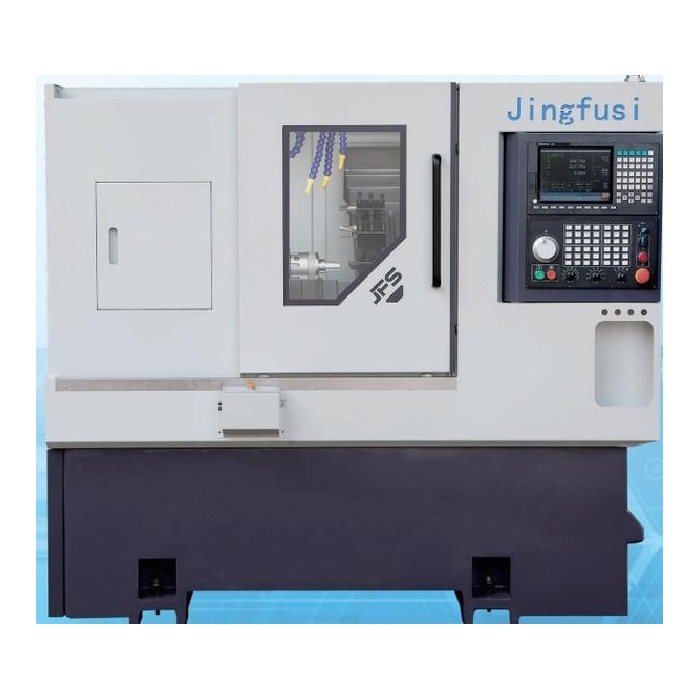
Table of Contents
- 1. What Is a Slant-bed CNC Lathe?
- 2. Why Is a Slant-bed CNC Lathe Important for Manufacturers?
- 3. How Does the Slant Bed Design Solve Common Machining Problems?
- 4. Key Advantages of Jingfusi Slant-bed CNC Lathe
- 5. Applications of Slant-bed CNC Lathe in Different Industries
- 6. Comparison Between Slant-bed CNC Lathe and Traditional CNC Lathe
- 7. How to Choose the Right Slant-bed CNC Lathe?
- 8. Frequently Asked Questions
- 9. Conclusion
Article Outline
- Understanding the structure and working principle of inclined bed CNC machines
- Analyzing production problems solved by slant-bed technology
- Exploring precision, efficiency, and maintenance benefits
- Learning why Jingfusi is a reliable CNC machine partner
What Is a Slant-bed CNC Lathe?
A Slant-bed CNC Lathe is a computer-controlled turning machine that uses an inclined machine bed design instead of the traditional horizontal flat-bed structure. The bed is usually positioned at an angle, allowing the cutting area, guide rails, and workpiece positioning system to achieve better mechanical performance.
The inclined structure is one of the most important innovations in modern CNC machining. During operation, cutting chips and coolant can naturally move downward away from the machining area. This reduces chip accumulation, protects important machine components, and creates a cleaner working environment.
Jingfusi develops CNC machine tools designed for industrial manufacturers that require consistent accuracy, efficient production, and reliable operation. The company's Slant-bed CNC Lathe solutions are engineered to support various precision turning applications while improving overall machining performance.
Why Is a Slant-bed CNC Lathe Important for Manufacturers?
Modern manufacturing faces increasing pressure from customers who require shorter delivery times, higher precision standards, and lower production costs. Traditional machining equipment may struggle to maintain efficiency when processing complex components or handling continuous production schedules.
A Slant-bed CNC Lathe addresses these challenges through improved structural design and automated machining capabilities. Manufacturers can achieve better process stability while reducing manual adjustments and production interruptions.
| Common Manufacturing Challenge | How Slant-bed CNC Lathe Helps |
|---|---|
| Chip accumulation during machining | The inclined bed allows chips to move away from the cutting area more efficiently. |
| Machine vibration during high-speed cutting | The rigid structure improves stability and reduces unwanted movement. |
| Difficulty maintaining machining accuracy | Precision guide systems support consistent positioning performance. |
| Long production cycles | Automation and faster tool movement improve manufacturing efficiency. |
How Does the Slant Bed Design Solve Common Machining Problems?
The biggest advantage of a Slant-bed CNC Lathe comes from its mechanical structure. Every component of the machine works together to improve cutting performance and long-term reliability.
- Improved Chip Management: The angled bed allows metal chips to fall naturally instead of collecting around the workpiece. This reduces cleaning requirements and helps prevent damage caused by chip interference.
- Enhanced Structural Rigidity: The integrated inclined design creates stronger support for the cutting process. Better rigidity minimizes vibration, especially when machining hard materials or performing heavy cutting operations.
- Higher Positioning Accuracy: The stable mechanical structure allows CNC systems to maintain precise tool movement, helping manufacturers achieve consistent dimensions across multiple workpieces.
- Better Operator Accessibility: The inclined layout provides improved visibility and easier access to the machining area, making setup and inspection more convenient.
Key Advantages of Jingfusi Slant-bed CNC Lathe
Jingfusi focuses on providing practical CNC machining solutions for manufacturers that require dependable equipment performance. Its Slant-bed CNC Lathe combines advanced structure design with user-oriented operation features.
| Feature | Manufacturing Benefit |
|---|---|
| Inclined bed structure | Provides better rigidity and efficient chip discharge. |
| High precision machining system | Supports stable production of accurate components. |
| Strong casting machine body | Improves vibration resistance and service life. |
| Flexible CNC configuration | Allows adaptation to different production requirements. |
| Efficient operation design | Helps reduce downtime and improve workflow. |
The Slant-bed CNC Lathe offered by Jingfusi is designed for companies that need dependable machining performance in competitive manufacturing environments. The machine structure supports continuous operation while maintaining accuracy and production efficiency.
Applications of Slant-bed CNC Lathe in Different Industries
Because of its flexibility and precision, the Slant-bed CNC Lathe is widely used in industries where metal components require accurate turning operations.
- Automotive component manufacturing
- Aerospace precision parts production
- Industrial equipment manufacturing
- Hydraulic and pneumatic component processing
- Electronic equipment parts machining
- Medical equipment component production
Manufacturers choose this machine type because it can process various materials, including steel, aluminum alloys, stainless steel, and other engineering materials. The combination of automation and precision makes it suitable for both small-batch production and large-scale manufacturing.
Comparison Between Slant-bed CNC Lathe and Traditional CNC Lathe
When selecting CNC machining equipment, manufacturers often compare Slant-bed CNC Lathe systems with traditional flat-bed CNC lathes. Although both machines can complete turning operations, their structural differences create significant differences in productivity, stability, and maintenance requirements.
| Comparison Item | Slant-bed CNC Lathe | Traditional CNC Lathe |
|---|---|---|
| Machine Bed Design | The inclined bed structure provides stronger support and improved cutting stability. | The flat bed structure may have limitations during heavy cutting operations. |
| Chip Removal | Chips can move downward naturally, reducing accumulation around the machining zone. | Chip removal may require more assistance from external cleaning systems. |
| Machining Accuracy | Higher rigidity helps maintain stable precision during continuous production. | Accuracy may be affected more easily by vibration during demanding machining tasks. |
| High-Speed Machining | Suitable for faster cutting speeds with improved operational stability. | High-speed machining may require additional vibration control. |
| Production Efficiency | Supports automated production processes and reduces downtime. | May require more manual intervention in certain applications. |
For manufacturers focusing on long-term production efficiency, the Slant-bed CNC Lathe provides advantages in machine stability, operational convenience, and overall machining performance. This is why many modern factories are upgrading from traditional equipment to inclined bed CNC solutions.
How to Choose the Right Slant-bed CNC Lathe?
Choosing the correct CNC machine requires careful consideration of production requirements, material types, component sizes, and expected output. A suitable machine should not only complete current projects but also support future manufacturing expansion.
Before purchasing a Slant-bed CNC Lathe, manufacturers should evaluate the following factors:
- Machining Requirements: Determine the types of components, dimensions, tolerances, and surface finishing requirements involved in production.
- Machine Rigidity: A strong machine structure is important for maintaining accuracy when performing heavy cutting or continuous machining.
- CNC Control System: The control system should provide convenient programming, stable operation, and compatibility with production needs.
- Spindle Performance: The spindle speed and power should match the materials and machining processes required.
- After-Sales Support: Reliable technical assistance and service support help reduce unexpected production interruptions.
Jingfusi understands that every manufacturer has different machining challenges. By focusing on practical engineering solutions, the company provides CNC equipment that helps customers improve production capability and achieve stable manufacturing results.
Maintenance Tips for Extending Slant-bed CNC Lathe Service Life
Although modern CNC machines are designed for durability, proper maintenance remains essential for maintaining long-term performance. Regular inspection and preventive maintenance can reduce equipment problems and improve production reliability.
| Maintenance Task | Recommended Action | Expected Benefit |
|---|---|---|
| Clean machining area | Remove chips and debris regularly. | Improves machine operation and prevents component damage. |
| Check lubrication system | Maintain proper lubrication levels. | Reduces friction and extends component life. |
| Inspect guide rails | Check for wear or abnormal movement. | Maintains positioning accuracy. |
| Monitor cutting performance | Observe vibration, noise, and machining quality. | Helps identify problems early. |
| Update operating parameters | Optimize machining programs when necessary. | Improves production efficiency. |
A well-maintained Slant-bed CNC Lathe can provide years of stable machining performance. Manufacturers that follow proper maintenance procedures can maximize equipment value and reduce unnecessary repair costs.
Frequently Asked Questions
What makes a Slant-bed CNC Lathe different from a flat-bed CNC lathe?
The main difference is the machine bed structure. A Slant-bed CNC Lathe uses an inclined design that improves rigidity, chip removal, and cutting stability. This structure allows better performance during high-speed and continuous machining operations.
Why do manufacturers prefer Slant-bed CNC Lathe machines?
Manufacturers prefer these machines because they provide higher machining efficiency, improved accuracy, easier chip management, and better overall production stability. These advantages help companies reduce downtime and maintain consistent product quality.
Can a Slant-bed CNC Lathe process different materials?
Yes. Depending on machine configuration and tooling selection, Slant-bed CNC Lathe systems can process various materials such as carbon steel, stainless steel, aluminum alloy, copper, and other engineering materials.
Is a Slant-bed CNC Lathe suitable for mass production?
Yes. The automated CNC control system and stable mechanical structure make it suitable for both repeated production tasks and high-volume manufacturing environments.
How does Jingfusi support CNC machining customers?
Jingfusi provides CNC machining solutions focused on reliability, precision, and manufacturing efficiency. The company works with customers to select suitable machine configurations according to different production requirements.
Conclusion
A Slant-bed CNC Lathe plays an important role in modern manufacturing by combining advanced structural design with efficient CNC technology. Its inclined bed construction improves rigidity, enhances chip removal, supports precision machining, and helps manufacturers achieve higher production efficiency.
Compared with traditional CNC lathes, the slant-bed structure provides practical advantages for companies that require stable performance, reduced maintenance challenges, and consistent machining quality. Selecting the right machine configuration and maintaining proper operating practices can further improve productivity and equipment lifespan.
Jingfusi continues to provide reliable CNC machining solutions for manufacturers looking to improve their production capabilities. With professional technology and customer-focused engineering, Jingfusi helps businesses meet changing manufacturing demands with confidence.
Looking for a reliable Slant-bed CNC Lathe solution for your manufacturing needs? Jingfusi is ready to provide professional CNC equipment and customized machining support. Contact us today to discuss your requirements and discover how our advanced solutions can improve your production efficiency.